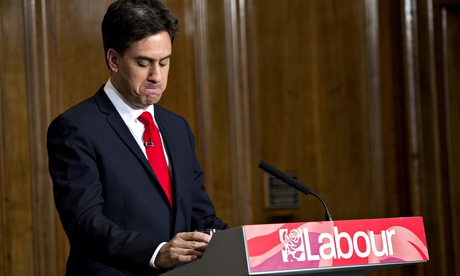
The most alluring bit of post-election dissection thus far comes from Janan Ganesh in the FT. “Labour is thinking too much,” he proclaims. Call it analysis paralysis. “Labour lost the election for reasons any bus driver or part-time florist could diagnose in a sentence: its prospectus was too leftwing and its leader was a liability… There is nothing structurally wrong with the left that leadership and moderation cannot fix.” QED.
So who needs more months of maundering introspection before the relief of September’s vote? Just over a fortnight after what David Cameron called the most important ballot of modern times, it’s time for the politicians, pundits, leader writers and editors to move on. There’s a summer of barbecues and beaches to look forward to. Who wants to waste the balmiest months obsessing over debt ratios, NHS funding and the BBC? It’s over: let it go. Ganesh vaults into the saddle of his high pink horse and gallops away.
But not quite so fast. The FT – pulling for a Con-Lib coalition – didn’t get 7 May right. Nor (same prescription) did the Economist or the Indy. The Mirror and the Guardian – voting Ed – were similarly adrift. The Express loved and lost with Ukip before Kim Il Nige began his purges. The rest of the commentocracy, transfixed by YouGov, was little better. Getting it wrong isn’t some swift shrug and forgetfulness. Getting it wrong demands hair shirts.
We know now that the Lib Dems’ middle-way strategy was a disaster: though few predicted its epic scale. We know now that Tory jaws dropped in amazement as their overall majority grew. But now we also know that Labour is facing a “profound cultural collapse” (T Hunt); that it tardily embraces an EU referendum (A Burnham); that Miliband made it seem “anti-growth and ultimately anti-worker” (Y Cooper); that spending in the noughties soared too high (L Kendall plus chorus); that the party’s shrunken, minimalist pitch with “a few money bribes” was a deluded trip into a dark place (J Cruddas). So who, pray, spotted the inevitability of such a debacle before it unfolded?
The question matters because the advice and analysis offered before 7 May matter. “Increasingly voting Conservative is a transgressive act, like being a punk or emo,” Ganesh wrote then. Of course surfing the waves of opinion is not like voting. Of course advising your readers is not like pushing slips into a box. Of course, for the most part, getting it right is not a career maker or breaker, no Ed Balls fickle finger of sudden fate. But influence and respect come as part of the pundit package. There’s a relationship between prophecy and outcome.
Which is where awkward problems begin. For it is not just politicians who have to learn lessons when things don’t go to plan. The real questions don’t fade in a fortnight, smothered by boredom. Was the baleful effect of a largely Tory press decisive – or an excuse that didn’t reach beyond the Scottish border? Can the Liberals come back from this humiliation in five, 10 or 20 years? Where does Europe fit in the mix? If there are shy Tories, are there also somnolent socialists? Is what Hampstead thinks today what Doncaster thinks tomorrow? Or vice versa?
The interrogation, to be sure, includes very little for Fleet Street comfort. It’s far easier for the prophets of the press to choose “principle” over reality and carry on inveighing as though nothing had happened – or to go Ganesh, offering a neat parcel of assertions and moving on fast. But if you can think too much, you can also reflect far too little. “Simple can be harder than complex,” said Steve Jobs, in a mantra that Ganesh adores. And sometimes simple is brutally inescapable.