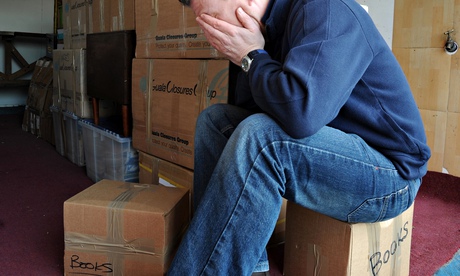
I’m moving house this week, and the council is digging up my street. Moving house is emotional enough without having to carry everything an extra four blocks past pathetic fallacy dressed in hi-vis jackets. The biggest wrench of all, of course, physical and spiritual, is the books. The library has grown in the years I’ve lived here. It has been expanded, re-indexed, and deepened. It’s even been colour-coded. It fills many, many boxes. And that’s after getting rid of most of it.
This column comes to an end this month as well, after three years of thinking and writing abut ebooks, the internet, and literature. Despite the onslaught of apps and gizmos, nothing has persuaded me that two-to-four hundred pages of text can be improved upon as a medium – only better written, edited, transmitted, and distributed. What has changed is my desire to hang on to physical copies, as almost all of my new purchases are electronic. It’s not just the prospect of shifting all those boxes, but something else: a dematerialisation of my desire for paper and a corresponding accommodation with the ephemeral, absolutely and incontrovertibly caused by the experience of the internet.
Most of the books I’m losing have disappeared, appropriately, into an app. We Buy Books lets you scan the barcodes, and prices the items accordingly. If you have enough – and I certainly did – they will even come and collect them. And so the bulk of the library disappears, some to be resold and, inevitably, some to be recycled. The UK pulps millions of books a year. The resultant slurry turns into cardboard boxes, or into streets – according to Tarmac, who use pulp to bind their road surfaces, 45,000 books go into every mile of motorway. As I carry it past the paving machine outside my house, I hold the last saved box particularly tightly.