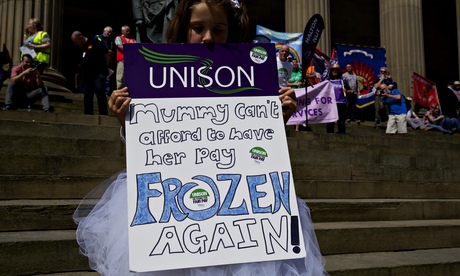
Some Labour advisers talk about the 2015 election as one to lose. With much of the electorate baying for balanced budgets to end years of deficits – if only out of fear of ever-growing debts – any new administration will be under pressure to make cuts that are so deep and prolonged there is bound to be unrest. Five years of public sector pay freezes are the last thing many Labour MPs want to preside over.
There is no doubt that few in the public sector understand the severity of cuts planned by George Osborne and his lieutenant, the Liberal Democrat chief secretary to the Treasury, Danny Alexander.
After what will seem in retrospect the relatively mild 6% cut in local authority funding this year, 2015 heralds year after year of double-digit spending reductions. In Whitehall, some departments are expected to lose as much as 40% of their budget by 2019, including the Ministry of Justice. Across the public sector, one million posts will have disappeared by the end of the decade, according to forecasts by the Office for Budget Responsibility (OBR). Any sector suffering that kind of pain is going to lash out. There will be plenty of disputes. This week’s strikes are just a foretaste.
There is a view popular on the left that higher public sector pay (and general government spending) can be paid for by cutting benefits to big corporations and taxing the rich. One recent report estimated that corporations enjoy £85bn of subsidies and tax breaks that could be reduced to maintain public spending.
But while this analysis is undoubtedly a fair assessment of the benefit culture that has embraced UK business activity, it is one businesses often depend on – especially those that employ a lot of people. And business owners, who have grown used to healthy, government-subsidised profits, can increasingly look elsewhere to manufacture or sell if they are withdrawn.
We know that the £28bn tax credit bill subsidises low wages and that £9bn of the £25bn housing benefit bill goes straight to private landlords. Hand-wringing about what to do occupies plenty of thinktank time, but there are no quick ways to resolve the situation. A crackdown on Amazon et al would be welcome, but is not going to bridge the multi billion pound gap in public spending.
The same goes for the 50p tax proposed by Labour and other potential income tax rises, which, experience shows, are easy for the rich to dodge, at least in the short term.
Another possible payday for public sector workers comes from higher growth. This was predicted by the OBR to be the nation’s saviour, coincidentally by 2015, bringing with it enough income tax and corporate tax receipts to balance the budget.
It hasn’t turned out that way. Income tax receipts were forecast to jump this year, but the recovery has failed to create well-paying jobs. Instead, the extraordinary rise in employment is fuelled by women returning to the workforce into low-paid jobs, men doing much the same and around 40% taking up self-employment. Around 35% of the self-employed earn below £10,000 and don’t pay tax at all. Most of the others joining the workforce won’t pay a net tax contribution after their tax credits and housing benefit are taken into account.
On Saturday, trades unions will march in London, calling for pay rises for all and campaiging against low pay. While Labour has announced it would increase the minimum wage to £8 an hour and give the Low Pay Commission more teeth, the coalition government shows few signs of bowing to the pressure.
If anything, last week’s report by the Institute for Fiscal Studies on public sector pay makes it easier for those who point to pay freezes as an easy way to balance the books. Because even though the report substantiates the trade union claim that the value of public sector pay has fallen since 2010, it remains on a par with the private sector and even slightly ahead, though more senior roles are better paid in the private sector. And then there are public service pensions, which the IFS points out are better than almost all but a few final salary schemes in the private sector.
Still, there will be plenty of impetus to fight for at least inflation-proofing pay increases. Workers can’t eat their pensions.