
ST. LOUIS _ At 7:51 p.m. on Sept. 14, Lisa Evans' evening was interrupted by a call from the Environmental Protection Agency. Their after-hours message: An extension granted earlier had suddenly been rescinded, and public comments regarding the overhaul of state regulations on coal ash _ one of the most voluminous forms of toxic, industrial waste in the country _ were now due in barely four hours, at midnight.
Evans, an attorney focusing on hazardous waste at the environmental law organization, Earthjustice, was helping coordinate comments on behalf of 50 groups. The last-minute notification from the EPA left her, and by extension, the public, with almost no time to weigh in on the disposal of a coal-power byproduct laced with heavy metals and other toxins and tied to spills and leakages that have cost billions of dollars to clean up.
To public interest groups, the proposed changes to coal ash regulations _ which would give states broad "flexibilities" in their oversight of the waste _ were troubling enough for being practically unenforceable. But they say abruptly ending the comment period is especially irksome _ a bully tactic used to shut out meaningful public input.
"It's like kids playing on the playground. It's just not professional conduct," said Maxine Lipeles, director of the Interdisciplinary Environmental Clinic at Washington University, who rushed to submit at least brief comments after being alerted of the changed deadline by Evans. "I've never seen anything like this."
Those watchdog groups worry that the conduct is a reflection of the way the agency now does business under newly appointed administrator Scott Pruitt: respond to industry influence while showing blatant disregard for a fair and earnest public feedback process.
"We have a one-two punch," Evans said. "First, we don't get an enforceable rule, and the EPA cuts us out of the process guiding its formation."
According to Evans, the EPA was originally prompted to reconsider coal ash regulations after a request from utility industry representatives.
The agency on Aug. 15 released a guidance document that outlined requirements for states aiming to deviate from federal coal ash rules with individually tailored state-by-state policies.
Public interest groups say the guidelines under consideration are unlawfully loose, providing a number of ways for states to weaken enforcement of coal ash regulation below federal standards.
"(The EPA) can't change the regulations overnight, but they can approve weak state programs," said Lipeles. "That's what this guidance sets up criteria for."
Comments submitted by Lipeles briefly summarize that the guidelines would allow states to cease groundwater monitoring near coal ash sites, set less protective groundwater standards, and exempt facilities from required clean-up.
"Those are major deviations and weakenings of the federal program," Lipeles said. "But they didn't give us a chance to make that point."
Evans added that, historically, the EPA has put a clearly defined rule in place that states must abide by when developing their own programs to regulate certain pollutants. But she said that clarity was not provided this time.
"(The) EPA has refused to write a rule guiding the authorization process," she said. "It's always done through a process that's governed by regulations. ... It has never yet been done by guidance, which is an unenforceable set of guidelines."
Critics say the timetable for the public to comment on the EPA's guidance was tight to begin with.
The agency gave the public a deadline of Sept. 14 _ just one month _ to submit comments. But on Sept. 8, the agency told Evans that a 30-day extension had been granted _ only to call six days later saying, without explanation, that the extension had been revoked.
Unsurprisingly, Lipeles says the comments rushed in before the deadline were unable to adequately address the substance of the policies at stake. The bulk of her two-page submission instead discusses how the agency is "denying the public basic procedural fairness," before expressing broad concern with some of the guidelines.
The EPA did not respond to requests for comment.
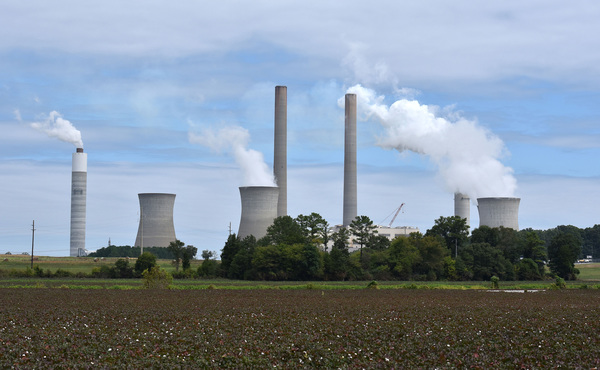
Though higher-profile coal ash spills have occurred in states such as Tennessee and North Carolina, groups have raised concerns about contamination from the material in Missouri, where nearly 80 percent of the state's energy comes from coal. In the St. Louis region, coal ash at Ameren's power plants is often stored in ponds in floodplains. The ponds have traditionally been prone to leakage, and the area's increased vulnerability to floods has raised alarm about them being overrun by adjacent rivers, even though they are protected by berms.
Ameren said it supports state-based, as opposed to federal, oversight of the material.
"We like the idea of state regulations," said Rick Smith, Ameren's director of environmental strategy and analysis. "A state program is preferable because it allows Missouri regulators to consider site-specific conditions ... and adjust regulatory seams appropriately, instead of a one-size-fits-all approach by the federal government."
Ameren denied that the new guidelines under consideration would let states relax rules beneath federal requirements. The St. Louis-based power provider is a member of the Utilities Solid Waste Activities Group, a key industry organization engaged with the EPA on the potential shift in coal ash regulation. Regardless of the outcome, Smith said Ameren will proceed with plans to phase out its ash ponds and convert to dry ash handling systems.
The EPA has not indicated whether additional comments will be accepted in the process, going forward.
Even in lieu of public dialogue, Evans said legal hurdles may at least slow the Pruitt EPA's perceived rush to loosen coal ash rules.
"As the Pruitt administration has seen, the Obama regulations are protected by the Administrative Procedure Act," said Evans. "It has to have a rational basis for whatever steps they propose. ... The Pruitt EPA may have to proceed more slowly, but they may find discretion under the law to weaken the (coal ash) rule."