One of the most obvious legacies of the global financial crisis is the sharp increase in public debt. Countries scrambling to avert the collapse of their economies or banking systems built up stocks of debt at a pace previously unseen during peacetime.
Attention has more recently turned to how quickly that debt should be paid down. In the UK, Chancellor George Osborne has made cutting the national debt as a share of GDP a key pledge.
But now economists at the International Monetary Fund have explored the potential merits of a more radical approach to all this debt: doing nothing at all. In other words, “just live with it”, they propose.
Some countries, such as Greece, have no choice but to pay down debts because they are close to a debt limit at which markets may demand a huge risk premium or even deny them access, according to a staff discussion note written by Jonathan Ostry, Atish Ghosh and Raphael Espinoza from the IMF’s research department.
But the case for cutting is not so simple for other countries, those whose debts fall into what the authors call a “green zone”.
“While there are some countries where clearly debt needs to be brought down, there are others which are in a more comfortable position to fund themselves at exceptionally low interest rates, and which could indeed simply live with their debt (allowing their debt ratio to decline through growth or windfall revenues),” Ostry and Ghosh write in a blogpost to accompany the discussion note.
Sharp rise in debt ratios
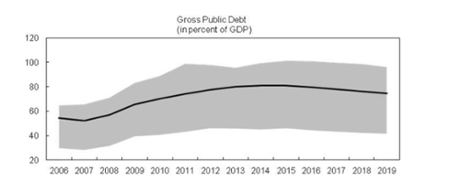
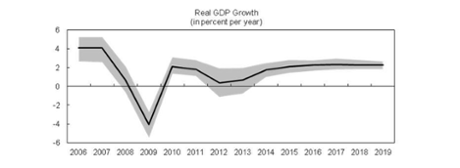
The context for such an argument is one where governments have taken on huge debt piles but have “little or no more public infrastructure to show for it”. At the same time economic growth since the crisis has only been moderate.
The IMF experts note that debt is bad for growth, thanks to the distortionary taxation needed to service public debt. “But it does not follow that paying down the debt is good for growth,” they add.
“This is a case where the cure may be worse than the disease: paying down the debt would require further distorting the economy, with a corresponding toll on investment and growth,” says the discussion note, which the Fund points out does not necessarily represent IMF views or IMF policy.
Lacklustre growth
There is no one-size-fits-all policy when it comes to public debt, say the authors. Deciding whether a country is in the “green zone” is “not a mechanical exercise but will require judgments based on stress-testing fiscal balance sheets to withstand extreme shocks”. But their final words provide plenty of food for thought for those finance ministers wedded to the idea of getting debt down.
“The mantra that it is always desirable to reduce public debt must not go unquestioned. A comparison of costs and benefits must underpin policy advice. For countries in the green zone, the case for living with the debt is a strong one.”