Welcome to Signal Boost, our weekly roundup of blog posts over the past week.
Susan Greenfield has been back in the news recently, promoting her new book on ‘mind change’. But as a recent talk at the RSA highlights, why is she so reluctant to engage with her critics? Pete Etchells and Chris Chambers discuss.
Milk first, or milk after? Dean Burnett explains the science behind the correct way to make a cup of tea. For us, it’s definitely milk after.
‘Nick and Tesla’s super-cyborg gadget glove’ is possibly the best book title ever. Grrlscientist has a rundown of new books received this week.
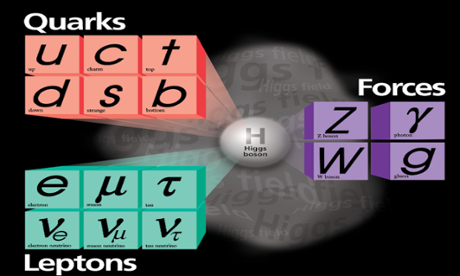
Ever heard of a majorana fermion? Neither did we, until this week. Particle physicists at Princeton announced the discovery of this new fundamental particle earlier in the week. Jon Butterworth explains what all the fuss is about.
Fermilab’s new NOvA detector is up and running. Jon Butterworth takes a look at what the experiment hopes to achieve, using an 800km neutrino beam.
If you’ve been to a live show by TV psychic Sally Morgan, you might have bumped into Mark Tilbrook. He’s been handing out information to help people come to a more informed decision about the content of the shows. And he’s also been the target of abuse from Morgan’s team.

1, 2, 2, 1, 1, 2, 1, 2, 2, 1, 2, 2, 1, 1, 2, 1, 1, … No, it’s not a mic check - it’s called the Kolakoski sequence. Alex Bellos talks to Neil Sloane about his favourite number sequences.
A new study by Professor Ineptias of The Department for Hysterical Analysis (University of Hyperbole, Hull), conclusively proves that the Daily Mail is harmful to your health. Dean Burnett explains this groundbreaking new work.
In a new three-part series, Naomi Elster takes a look at the history of chemotherapy, and what the future poses for the treatment. This fascinating account follows the story from its birth out of the trenches of the first world war, to more modern-day targeted therapies, and the implications of drug resistance.
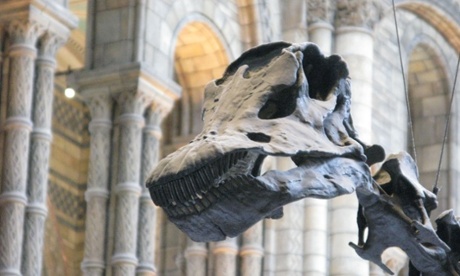
A new study has shed light on how supersized sauropods evolved to eat different types of food. Dave Hone delves into the work, providing some interesting insights into prehistoric ecology.
A group of scientists from across Europe has issued an open letter to policy makers, arguing that they have completely lost touch with scientific research. Jenny Rohn highlights the letter over at Occam’s Corner.
Eric Harshbarger has been following the US box office top ten movies with an increasing sense of giddy excitement over the past few months. Alex Bellos explains why - and what it has to do with foxes and dogs.

Public health stories are often overlooked by Hollywood. But Tania Browne argues that it doesn’t need to be this way - epidemiology plays host to a wealth of exciting storylines, just waiting for their chance in the limelight.
Note: This article was updated on 17th October 2014 to include a missing hyperlink.