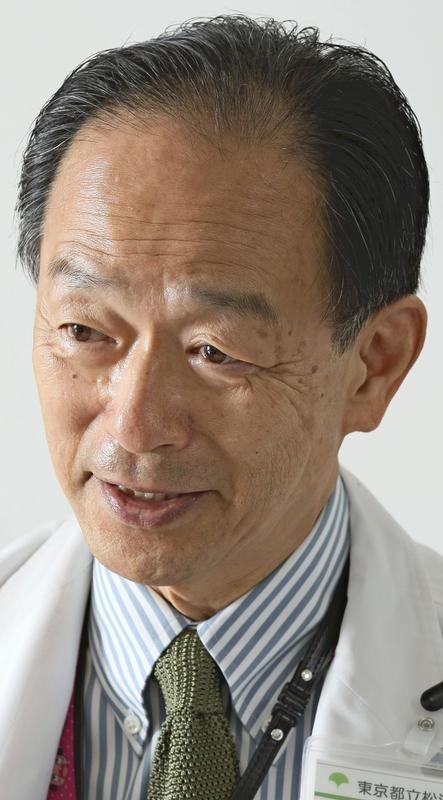
Equipped with about 900 beds for inpatients, Tokyo Metropolitan Matsuzawa Hospital is known as one of the largest psychiatric hospitals in the nation. In April it established a ward for patients infected with the novel coronavirus and has accepted many people who also have such ailments as dementia, schizophrenia and depression, and therefore are difficult to care for at general hospitals.
Amid the growing number of patients being treated at medical institutions for mental conditions, how should anti-coronavirus measures be implemented for people in this situation? Yomiuri Shimbun Senior Writer Ritsuko Inokuma recently interviewed Masahiko Saito, the director of Matsuzawa Hospital, to ask about the situation and the issues that need to be tackled.
Question: What led your hospital to accept coronavirus patients?
Saito: We swiftly made preparations after receiving an inquiry in February about whether we could accept virus patients from the Diamond Princess cruise ship. We established a countermeasures headquarters, and doctors and nurses of psychiatry and internal medicine received training in handling infectious diseases, as did clerical workers.
Through consultations with the chairman of the Association of Tokyo Psychiatric Hospitals, we made arrangements for our hospital to accept patients who tested positive or were suspected to be infected with the coronavirus. Other psychiatric hospitals would accept patients suffering from diseases other than the coronavirus.
It was decided to use the ward for tuberculosis patients, which has about 20 beds, for coronavirus patients. Tuberculosis patients were transferred to another ward. We've accepted about 400 people with the coronavirus.
Q: These patients ranged in age from their 20s to their 90s, and were previously at general and psychiatric hospitals, nursing care facilities or at home, is that right?
A: Nine of the 10 people we accepted in the initial period were elderly people with dementia, and the remaining person was mentally disabled. Mass virus infections occurred in the facilities to which they'd been admitted or the day care centers they visited, and all of these people were judged to be difficult candidates for hospitalization because they could not remain quiet at a hospital and pulled out intravenous tubes.
If they followed instructions at our hospital, oxygen inhalation would have been enough to treat them. But because they removed the oxygen tubes, we had no choice to sedate them and use a ventilator through tracheal intubation.
In late May, we accepted 26 patients from a Tokyo psychiatric hospital where a mass infection occurred. Most were schizophrenics. As we couldn't get them to cooperate with their medical treatment, we had no alternative but to restrain them physically when we gave them intravenous drips and other medical treatments.
Q: Matsuzawa Hospital has promoted a policy of "no physical restraint," not tying up inpatients since you became director eight years ago. The hospital is famous for its efforts to drastically reduce the rate of restraining patients.
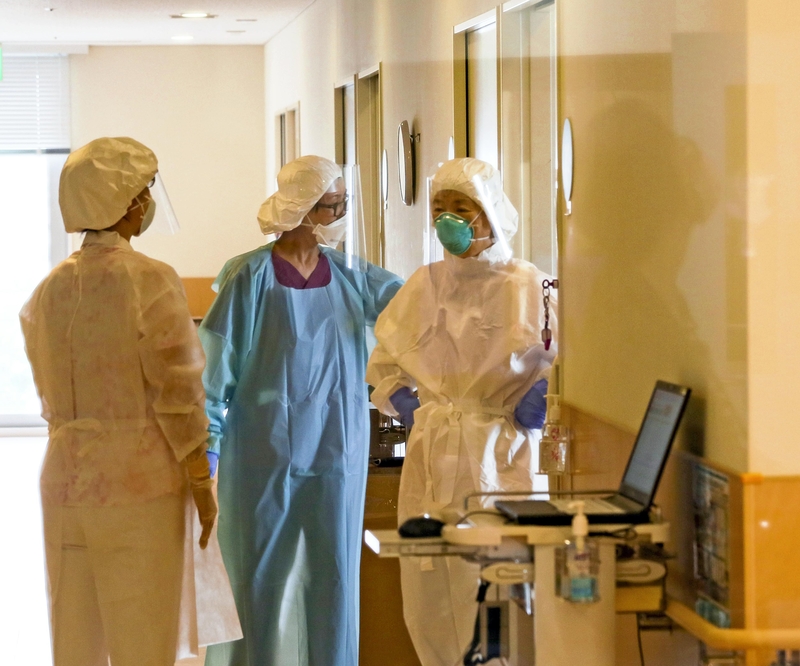
A: Nurses on a night shift usually monitor inpatients on a screen and if they discover something wrong, they rush to their rooms to prevent them from falling down and pulling out an intravenous tube. But this couldn't be done in the ward for coronavirus inpatients. Even if nurses rush to a patient's room after putting on surgical masks or face shields, gloves and gowns, they can't arrive in time.
Due to temporary restraint, there was a decline in activities of daily living (ADL) for 12 of 26 inpatients after their hospitalization, compared to before it. All the inpatients recovered eventually and returned to the hospitals where they had previously been treated. We now accept an increasing number of patients suffering from dementia.
Q: According to a survey conducted by Hiroshima University of special nursing homes for the elderly and other nursing care centers, about 20% of the 56 facilities where patients tested positive or were suspected to be infected with the coronavirus said their inmates were refused admittance for reasons including dementia and transferring them was difficult. Do you think it's inevitable that hospitals refused such patients?
A: It's realistically impossible to hospitalize those who develop such symptoms as agitation and delusions. But it's very difficult to take care of patients at nursing care centers. Cooperation from people involved in medical treatment is indispensable. Zoning, such as different uses for different floors, is also necessary.
Even at psychiatric hospitals, there are problems. For example, there are no clinical departments and there is a limit to what can be done at small such hospitals. According to a survey by the Japan Public Hospital Association for Psychiatry, there are regrettably few municipal and public hospitals ― except for Matsuzawa Hospital ― that accept psychiatric patients who require measures against the coronavirus. Matsuzawa Hospital can do it because it was better able to make arrangements in terms of personnel and financing than municipal and other public hospitals outside Tokyo.
It is all the more necessary for public hospitals to accept patients in serious condition, I think, but they've lost their capacity to do so due to the streamlining of operations and an emphasis on profitability. I feel that the spread of coronavirus infections this time revealed a variety of issues to be dealt with, including the roles to be played by municipal and other public hospitals, the way health centers should be, the presence or absence of a "control tower" and delays in digitization.
Q: If it's not realistic that all the hospitals responding to virus infections have knowledge about such diseases as dementia and schizophrenia, will it become necessary for medical institutions to divide roles?
A: I think it is better to consider measures on a community basis.
In the case of a private psychiatric hospital in Ehime Prefecture where a mass infection occurred, it received support from external medical staff, considering it desirable to retain infected residents and continue treatment in the hospital.
This formula is acceptable if there is a firm control tower within a hospital. There can be also the option of establishing a base that has a certain capacity to deal with both mental illness and infectious diseases, as in the case of Matsuzawa Hospital, and cooperating with other hospitals. Due to the occurrence of mass infections, I hear that the Kanagawa prefectural government has expanded its arrangement of medical institutions that focus on treatment of coronavirus patients. If cooperation from clinical departments can be ensured, using beds in the psychiatric department of a general hospital exclusively for coronavirus patients may be a realistic option.
Q: What do you want to emphasize?
A: By hearing from hospitals and care-giving facilities that were hit by mass infections about what they felt were the most difficult matters and the most effective measures, administrative offices, individual medical institutions and nursing care organizations should be well prepared so they can make good use of these opinions and verification results in dealing with future crises.
It is also essential to establish a cooperative system even in ordinary times, and on a community basis. If medical practitioners, for example, visit public hospitals regularly and bear part of the medical burden of coping with infectious diseases, it will be helpful when external support is needed to deal with not only infectious diseases but also in times of disaster.
-- Profile of Masahiko Saito
Born in 1952, Saito is a graduate of the University of Tokyo. He studied at the Institute of Psychiatry, Psychology and Neuroscience of King's College London, the University of London. Having served in such positions as director of Midorikai Wako Hospital, which specializes in dementia, he has held his current post since 2012.
Read more from The Japan News at https://japannews.yomiuri.co.jp/