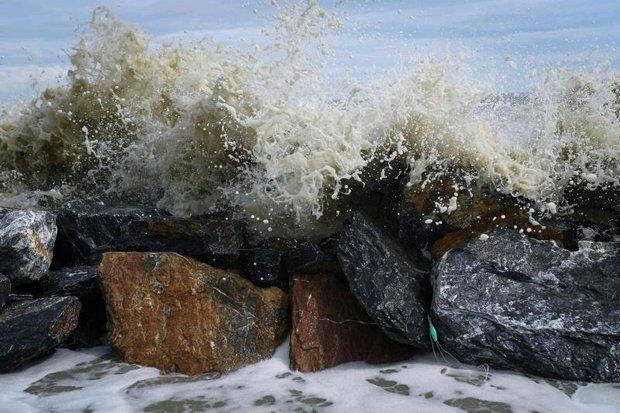
Super storms fuelled by climate change are costing Asian countries money and lives. Thailand is the latest country to deal with the threat to both lives and property, with Pabuk being the first tropical storm in 2019 to hit the country's southern resort islands outside of the monsoon season for around 30 years.
Thailand is the latest in a long line of countries and regions dealing with the dangerous aftermaths of major storms. In Hong Kong and Macau in 2018, Super Typhoon Mangkhut wreaked extensive and extremely costly havoc, with insurance claims exceeding US$1 billion (32 billion baht) -- far beyond the cost of 2017's Typhoon Hato.
These astronomical costs will only increase. Storm intensities will not abate, as our surrounding ocean waters are getting warmer, making typhoons even stronger. We need to discuss all possible ways to safeguard our communities and economies against the next super storm and the physical and economic threats of climate change.
It's now clear that reefs and mangroves provide a buffer against the storm surges that would otherwise damage coastlines and lead to the kind of destruction that Asia is seeing on an increasingly regular basis.
With over 2,600 kilometres of coastline, Thailand's coastal areas are an important natural resource which is the focus of considerable socio-economic activity, with tourism and fisheries contributing significantly to its economic development. However, Thailand's economic development has resulted in a widespread reduction of coastal habitat. This is clearly having serious consequences.
A new study by The Nature Conservancy confirms the protective benefits of coral reefs, giving us solid estimates of how valuable they are at protecting coastlines from flooding during storms. Coral reefs act as natural breakwaters, dissipating much of the energy and destructive force massive waves bring. The study shows that a loss of only one metre in reef height can double the cost of flood damage during storms, and that the costs of such a loss in height would exceed US$400 million a year annually for Asian countries such as Indonesia, Malaysia and the Philippines.
Across all reef-protected coastlines globally, the annual losses could reach a total of US$4 billion. And these figures are averages, accounting for typical storm patterns in normal years. Super storms are causing much greater losses.
Mangroves also play a key role in coastal protection. It is not just Thai coastal areas that are losing mangrove habitats which is resulting in unforeseen consequences: mangrove loss in the Philippines has resulted in flooding affecting more than 267,000 people every year. Restoring mangroves would bring the country more than US$450 million per year in flood protection benefits -- but without mangroves, flood damages would increase annually by approximately 25%.
Healthy reefs and mangroves can reduce wave energy by as much as 97%, making them as effective as man-made seawalls and much less expensive.
Many people in Asia also depend on these natural habitats for food. Reefs offer huge financial benefits through their ability to support healthy and productive fisheries. More than a quarter of all marine species spend at least some part of their life cycle in coral reefs, and many of the rest of the ocean species rely on those species for food. Coral reef tourism also benefits local communities and generates an estimated US$36 billion a year globally.
Efforts to protect reefs and mangroves are making headway, but we are still in the early stages of understanding what measures offer the most promise. Advances in reef science are helping us develop strategies for restoration after the widespread bleaching events that have begun to occur, most famously at the Great Barrier Reef in Australia, as our oceans warm. We are learning how to seed new reefs and restore mangroves after storms, and gaining more insight into the ways that healthy coastal habitats have far more resilience than those under stress from pollution, overfishing and careless development.
Better valuations of the benefits of coral reefs and mangroves, provided in economic terms familiar to decision makers, can help them recognise the value and ensure the protection of these critical habitats.
Recently, Australia pledged US$379 million to the world's largest coral reef recovery effort. Countries in Asia must follow suit because we are most at risk -- with tens of millions depending on reefs and mangroves for food and hundreds of millions of us in harm's way in the next big storm. Governments need to take drastic action in order to save the world's reefs and mangroves: lives and livelihoods depend on it.
Charles Bedford is Regional Managing Director, Asia-Pacific Region, of The Nature Conservancy.