Ever wondered what to do to store your telescope?
Or how to ensure it’s ready for those clear nights when you’re up for stargazing?
If you’ve invested good money in your telescope already, then surely protecting the lens and preventing dust and other specs from ruining a perfect shot are no less important than actually using the telescope.
Why It's Good to Keep Your Telescope Covered
Sensitive and easily upset, a telescope requires a kind of calm, clean, and pure environment to thrive. If it’s not covered and is outside, it can get dusty, moist, or even insect-infested. All of this can impact its performance and lifespan.
But if you encase it in a dome, things remain more stable. The wind doesn’t buffet it, the air indoors stays more uniform, and your instrument remains safe from abrupt weather changes.
A dome provides your telescope with a controlled environment in which it can sit unattended. That way, when you want to view the sky, you won’t spend time having to set everything up.
What an Observatory Dome Does
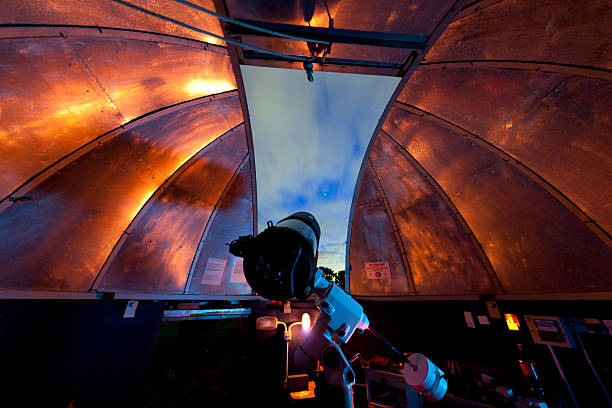
Consider an observatory dome as a special room for your telescope. It’s formed such that by opening a section, you’re able to see the sky, while the dome protects your setup from all sides.
Many domes can be turned easily, so you can point your telescope in exactly the direction you want, without moving the whole works.
If you live in a location that has variable weather, or if you have been experiencing moisture on your telescope, a dome can help prevent this. It’s just a simple barrier between your setup and the outside world, for starters, and that in itself makes a huge difference.
So, if you’re in the market for some options currently, here’s one of the many different types. Some are portable and easily collapsible, such as pop-up tents. Others are more permanent, designed to remain in your backyard or rooftop for the long haul.
Why More People Are Using Observatory Domes
People who do wind up getting a dome frequently ask themselves, “Why did I not get this sooner? It’s a huge time saver to have a permanent space all set up. Instead of blazing fresh trails through the universe, the telescope patiently waits for your next session. Not to mention, you don’t have to worry about dirt or strong wind messing up the alignment.
And here’s where it makes even more sense. So, if you’re an astrophotographer or someone who likes to take long images of the sky all night, the dome helps to keep it in line.
The equipment inside doesn’t rattle much, and there’s less light from the surrounding environs to get in the way. It’s a strong option for anybody who wants good, clean images.
Easy Options for Different Needs
You don’t necessarily need a full-size dome when you’re getting started. If you’re a beginner or don’t have a lot of room, lightweight or portable versions are fine. That’s these tents and soft domes; they can be packed up and taken anywhere without heavy mounting.
But for those who already own larger telescopes or stationary mounts, stronger domes may be worth a look. Some even feature full automation so you don’t even have to leave the house; you just control everything from your computer.
In the UK, it’s even more pertinent with our particularly changeable weather. For most users of telescopes in the UK, a dome is a popular item to have as it offers a secure feeling. Whether it's misting or simply cold, the dome can handle it, and your telescope remains undisturbed.
Helps in Getting Better Results
The primary reason for using a dome is this: your telescope works better. The images are sharper when everything is steady. You will have better views and you will have better pictures.
It’s More Convenient Than You Might Think
Picture yourself: You are coming home from work, and you look up at the sky, and it is perfectly fine. You know you’d like to be able to point your skywatcher telescope at some stars, but the idea of setting up that entire thing is just exhausting.
But if it’s already in a dome, you simply open the top and go. No lost time, no wasted energy. Just pure sky watching.
Some domes even allow you to have your camera and its cords attached. You can, therefore, save even more time by not having to start everything over each night. It’s all on there just as you left it.
Final Thoughts
If you’re serious about your telescope at all and want to ensure it outlasts its years, a dome is a good idea. It protects, it saves time, and it enables your telescope to do what it is made to do: yield bright, sharp images. You don’t have to start with the biggest one first. Even the diminutive types can provide you with comfort and better results. Just find the one that is right for your rig and you’ll discover just how much easier and more enjoyable stargazing can be.