MINNEAPOLIS — Jurors began hearing competing arguments Monday morning about fired Minneapolis police officer Derek Chauvin's guilt or innocence in the death George Floyd last year, and then they will head into deliberations.
Proceedings resumed shortly after 9 a.m. before Hennepin County District Judge Peter Cahill, who has been presiding over the case since March 8, when defense and prosecution lawyers began selecting jurors. Cahill began by reading jury instructions on the law.
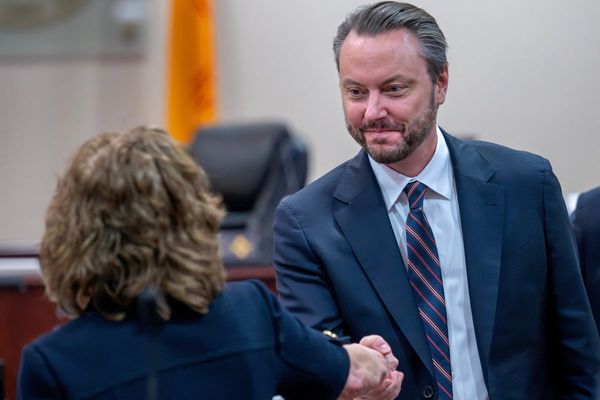
Prosecutor Steve Schleicher was up first to begin his argument spanning 1 hour and 45 minutes that Chauvin's pinning of Floyd on the pavement at 38th and Chicago robbed the 46-year-old man of oxygen until he died as a bystander recorded the restraint on her cellphone and shared it with the world on social media.
"The only thing about defendant's intent that we have to prove is that he applied force to George Floyd on purpose," Schleicher said. "Somebody's telling you they can't breathe and you keep doing it. You're doing it on purpose. ... How can you justify the continued force on this man when he has no pulse."
The prosecutor reminded jurors that Floyd said "I can't breathe" 27 times in the first 4 minutes and 45 seconds of this encounter.
"Was George Floyd resisting when he was trying to breathe? No," he said, adding that Chauvin chose to mock Floyd by saving, "It takes a lot of oxygen to complain."
Wrapping up after focusing on the officer's actions, his training and the medical evidence in the case, Schleicher called on the jurors to convict Chauvin on all counts because "it is not an excuse for the shocking abuse you saw with your own eyes" thanks to a teenage bystander's video of Floyd's detention on the pavement as he drew his last breath on May 25.
"You can believe your eyes," the prosecutor said. "It's what you felt in your gut, it's what you felt in your heart."
Defense attorney Eric Nelson will follow. His mission is to convince the jurors that there is enough reasonable doubt to acquit the 45-year-old Chauvin of second-degree unintentional murder, third-degree murder and second-degree manslaughter.
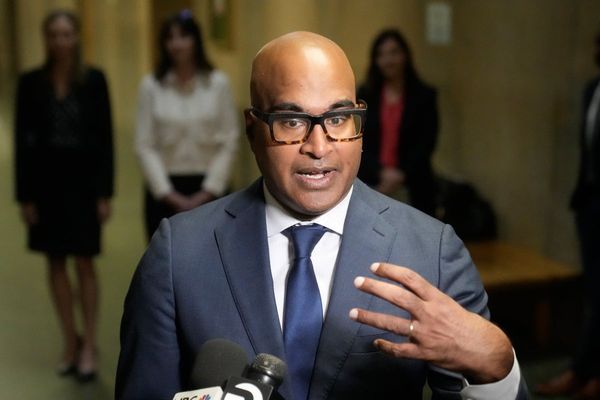
The prosecution then has the option to make a brief rebuttal to the defense's contentions. That task will fall to prosecutor Jerry Blackwell.
In the opening minutes and all through his presentation, Schleicher mentioned 9 minutes and 29 seconds repeatedly as he meticulously told of the moments of Floyd's restraint as he "struggled to make enough room in his chest to breathe. But the force was too much. He was trapped [by] the unyielding pavement as unyielding as the men who were pushing him."
"All that was required was a little compassion, and none was shown that day" by Chauvin, the prosecutor said during his address, which was interspersed with photos and video from the scene that were part of the previously submitted evidence. "All that was needed was some oxygen."
Schleicher said Floyd called police "Mr. Officer" and "he pleaded with Mr. Officer. George Floyd's final words were ... 'Please, I can't breathe.' And he said those words to Mr. Officer. He said those words to the defendant."
The prosecutor then made clear that Chauvin is on trial and not his profession, saying: "The defendant is not on trial for being a police officer. It's not the State of Minnesota vs. the police. He's not on trial for what he was, he is on trial for what he did, and that is what he did that day. Nine minutes and 29 seconds."
"Sometimes you ask for the truth and sometimes you insist on the truth, and the truth is the defendant was on top of him for 9 minutes and 29 seconds," Schleicher continued, noting that there was no reason Chauvin didn't know Floyd was in grave danger. "He had to know. He had to know."
Schleicher reintroduced to the jurors some of the witnesses to Floyd's arrest, noting two of them called the police on the police. He explained that Floyd was compliant from the moment he had a police officer's gun close to his face all the way until officers tried to put him in a squad car, but balked as he said he was claustrophobic.
"He tried to explain himself to the officers that he had anxiety, that he had claustrophobia," he said of Floyd's reaction to squad car back seat that looked like a "cage."
Schleicher said that once the officers gave up their efforts, "what did George Floyd say when they pulled him out of the car? 'Thank you.'"
But then the officers pushed him down onto his side and placed him on his stomach.
"Proning him was completely unnecessary and this is where the excessive force begins," Schleicher said. "They didn't just lay him prone. They didn't do that. They stayed on top of him."
Chauvin kept his eyes down as the prosecutor played an officer's body camera video of Floyd being forced onto his side on the street.
Schleicher then went after the defense's case that various factors led to Floyd dying, among them a heart attack, health problems, illicit drugs and possibly carbon monoxide from a nearby squad car.
He said it would be "an amazing coincidence [that] he chose at that moment to die of heart disease. ... Is that common sense or is that nonsense?" He reminded the jurors that the defense possibilities can still be contributing factors and not negate Chauvin being guilty.
Nearly an hour into his outline of the prosecution's case, Schleicher turned to the medical evidence and the experts to supported that Floyd died from a lack of oxygen and that he did not die from what the defense suggested with its witnesses.
"It wasn't cardiac arrest," he said. "It wasn't a drug overdose. You know how George Floyd died. It was the low level of oxygen, it was the asphyxia that caused him to die" as he was pressed against the pavement by Chauvin and two fellow officers.
He did not die of a drug overdose, that's not how he died," Schleicher said. "He did not die of excited delirium. ... There are no superhumans."
The prosecutor used the defense's medical expert against Chauvin, noting that "even Dr. [David] Fowler was critical" under cross-examination last week that neither the defendant nor anyone else gave Floyd medical care.
When Schleicher played a few seconds of the viral bystander video showing Chauvin's knee on Floyd's neck, the former officer did not look up. Schleicher showed some autopsy pictures of George's face, shoulders and knuckle scraped from pavement. Chauvin looked up quickly at first then down again.
"Somebody's telling you they can't breathe, everybody knows this, everybody know what happens when you push someone against the pavement," he said, showing the photos. "You learn this pretty early on."
As the prosecutor went through the second- and third-degree murder charges and what needs or does not need to be proven, he said, "The dangers of prone restraint have been known for about 30 years. The defendant's actions created a high-risk of death."
Despite the pleadings of bystanders and the suggestion from a fellow officer to roll Floyd on his side, Chauvin was unwavering, Schleicher said, adding: "He knew better; he just didn't do better. ... This isn't protection. This isn't courage. And it certainly wasn't compassion."
While guiding the jurors through the manslaughter count, Schleicher noted the "indifference" displayed by Chauvin and the other officers. They picked a rock out the squad car tire near Floyd's head, complained about the smell of Floyd's feet. "His negligence includes his failure to act," the prosecutor said.
Schleicher spelled out how Floyd posed no threat and then played back Chauvin's bodycam video that included him saying to a witness that he kept Floyd on the pavement because he was a big man and possibly high on drugs.
"Being large and being on something is not a justification for a use of force," he said. "The defendant's entire basis, this explanation to Charles McMillian after he got up off Mr. Floyd, tossed him on the gurney and walked away like he was nothing, that was his explanation."
He added that what Chauvin did was "not procedure. It's not the use of force procedure. It's not following the rules."
Attorneys cannot present new evidence during final arguments and are prohibited from sneaking in new arguments. The lawyers can object if they detect the other side is straying beyond what's already been told to the jury.
"Most attorneys are pretty good about adhering to that," said David Schultz, law professor at the University of Minnesota and at Mitchell Hamline Law School in St. Paul. "Cahill is pretty strict, but he's going to give them as much leeway as possible."
Before final arguments, Cahill instructed the jurors on how they should apply the law on each count alleged against Chauvin. Attorneys interviewed said jurors often do not absorb instructions all that well, and their importance tends to be more about a judge giving them correctly in order to not inspire defense appeals.
"There have been lots of times judges have given the wrong instructions," Schultz said. "Getting the instructions right is really important. ... This is the judge summarizing the law. And if the judge gets it wrong, the repercussions are enormous."
The Minnesota Judicial Branch, in its jury handbook, does its best to encourage jurors to avoid tuning out the instructions from the bench.
"Please listen carefully," this section of the handbook reads in part. "Remember that you are governed by the law as the judge explains it to you. Do not attempt to change it or ignore it, even if you disagree with the law."
Before sending the jury into deliberations, Cahill will excuse two of the 14 jurors who heard the case as alternates. Which two end up being sent home is left to the judge, Schultz said.
One option is to dismiss the last two chosen, "but it doesn't have to be," he said. "He could draw straws or something like that."
Once in deliberations, the jurors' first task is to select a foreperson whose duties include ensuring that each juror has a chance to participate in deliberations and that the issues that arose during the trial are contemplated completely. They will have a laptop computer and monitor to review the substantial amount of video and other exhibits presented over the past few weeks. What they won't have is a transcript of the testimony. Instead, the jurors must rely on their collective notes and memories.
Jurors are likely to have questions for the court during deliberations. Rather than have the jury return to the courtroom for an answer, this communication will be done by video conference out of caution amid the COVID-19 pandemic. Deliberations for this case are being done at an undisclosed location, presumably not in the Hennepin County Government Center.
The jurors will remain sequestered throughout their deliberations and until the verdicts are read in court and livestreamed to a worldwide audience.
Three other fired officers who assisted in Floyd being restrained stomach-down for more than 9 minutes — J. Alexander Kueng, Thomas Lane and Tou Thao — are scheduled to be tried in August on charges of aiding and abetting murder and manslaughter.
———
(Star Tribune staff writers Chao Xiong and Rochelle Olson contributed to this report.)