Rent payments have become a problem for businesspeople in areas where the state of emergency and calls for shutdowns continue due to coronavirus pandemic. While major real estate companies have started providing financial assistance, even small and medium-sized businesses who own properties, as well as individual property owners with limited funds, are trying to overcome the difficulties together with their tenants to prevent a joint failure.
-- 47% worry about payment
"I have no income. Sometimes I can't sleep at night," Koji Oyama, 49, said. Oyama runs a bar called "Bar Keith" in a building in the Kabukicho entertainment district in Shinjuku Ward, Tokyo. Oyama closed the bar on April 11, following a business-closure request by the Tokyo metropolitan government due to the state of emergency. One concern for him is several hundred thousand yen in monthly rent, which accounts for 30% of the total cost for his business.
"I'm worried because I don't know when I can open my bar again," he said.
Tokyo-based Synchro Food Co., which operates a website to provide information such as on vacant restaurant properties, conducted a survey in March on its members' businesses.
According to the results, with multiple answers allowed, "Paying fixed expenses such as rent" was the third-biggest source of worry in the wake of the pandemic, with 47% of respondents naming it as a cause for concern.
Major real estate companies, including Mitsubishi Estate Co. and Mori Building Co., have started dialogues with tenants of properties they own, such as the Marunouchi Building and Roppongi Hills complex, over rent payment arrangements.
Only 0.8% of about 330,000 real estate companies in the nation are capitalized at 100 million yen or more, according to the Real Estate Transaction Promotion Center. Nearly 70% of them have capital of less than 10 million yen.
"Since many building owners use rent payments to repay loans for the construction of their buildings and to pay maintenance fees, it is difficult for them to delay payment deadlines or to reduce rent payment," said an official of the National Federation of Real Estate Transaction Associations, which deals with small and medium-size real estate companies. "But if they don't delay, their tenants could go under, and the building owners will suffer alongside them."
The government and the ruling coalition parties have decided to provide subsidies to pay two-thirds of the rent for six months to small and midsize businesses and retail stores that are having difficulties paying rent. The government plans to pass the second supplementary budget during the current Diet session to earmark money to finance the subsidies.
-- Loan program meeting
Under such circumstances, some small and medium-size businesses that own properties, as well as individual property owners, have started working to support their tenants.
A seven-story building known as "Gotanda Hills" in the Nishi-Gotanda district in Shinagawa Ward, Tokyo, accommodates about 40 pubs and bars. Tadayoshi Masaki, 67, who owns 10 of the units in the building as a co-owner of Gotanda Hills along with several other co-owners, invited local credit bank officials last month to hold a meeting to explain the bank's loan programs for shops.
It was held in a well-ventilated building courtyard to help prevent the spread of the virus. Masaki thought of organizing the meeting because he had seen many of the building tenants having a tough time understanding how to apply for the programs.
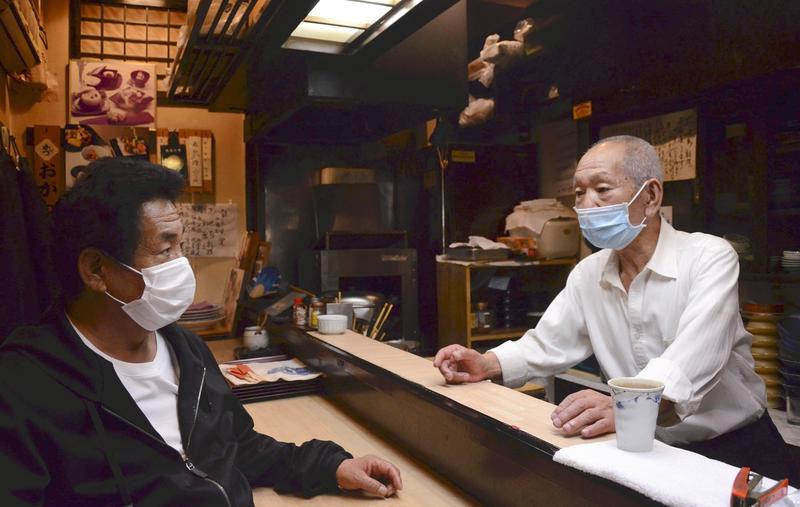
"I would feel uneasy when I am alone, but I feel reassured because I feel a closeness to my landlord," said Shiro Ogawa, 71, who runs a small Japanese restaurant in the Gotanda Hills building.
After the meeting, some of the co-owners have agreed to reduce rent payments.
"We want to work hard as a whole building to keep the town alive," Masaki said.
Mimatsu Kigyo, a company that owns four buildings in the Susukino entertainment district in Sapporo, will distribute 100,000 yen each to about 150 tenants to purchase masks and other items for use after they reopen their shops. Mimatsu Kigyo will also allow delaying rent payments for April, May and June until next year.
"Although it's hard on us as well, we wanted to help alleviate the anxiety our tenants feel," a Mimatsu official said.
Tohosyoji Co. in Nagano City will reduce rent pay by 20% for April, and 50% for May and June for tenants in the building it owns in bustling streets in the city.
Read more from The Japan News at https://japannews.yomiuri.co.jp/