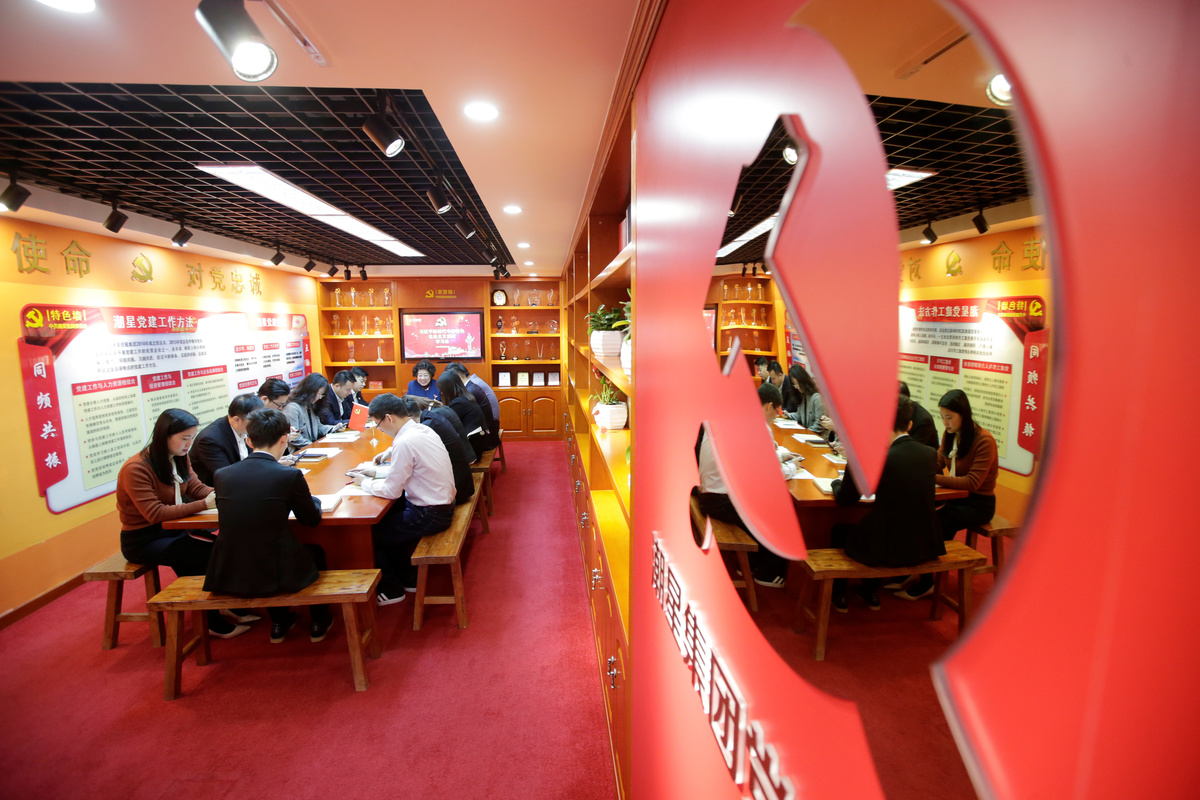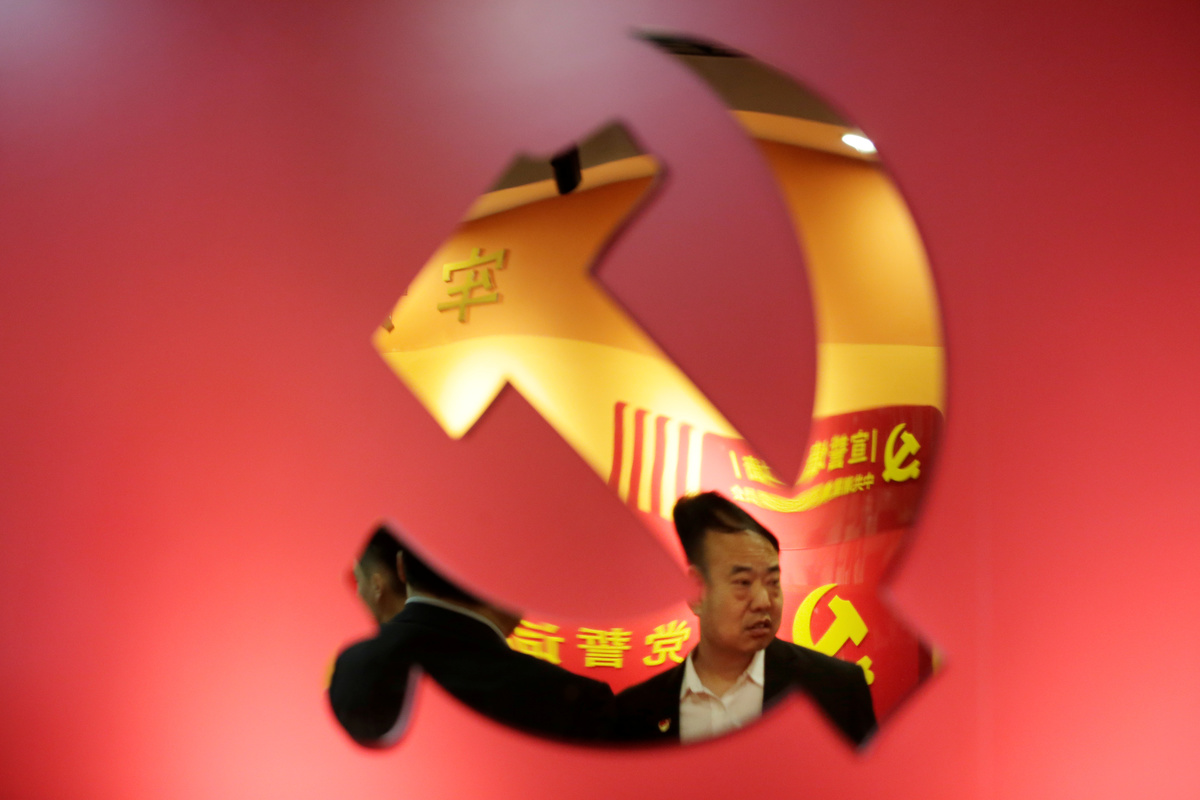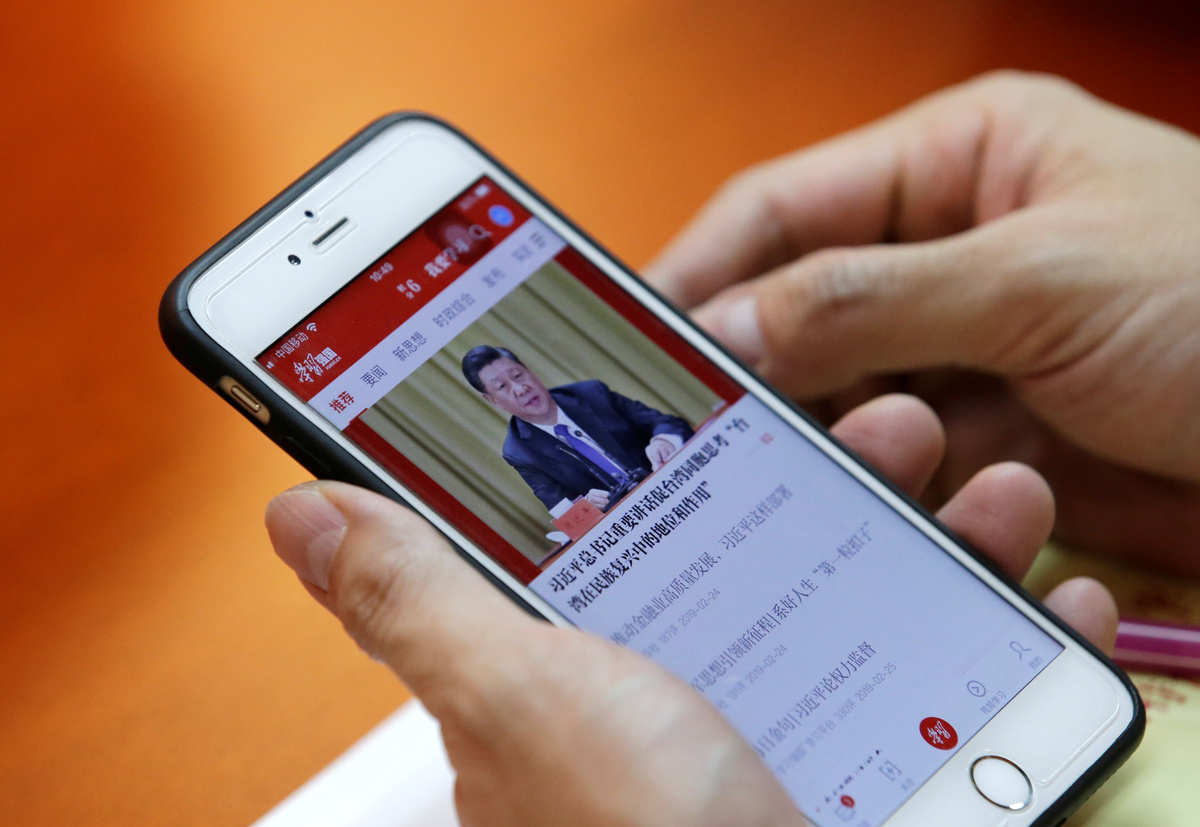
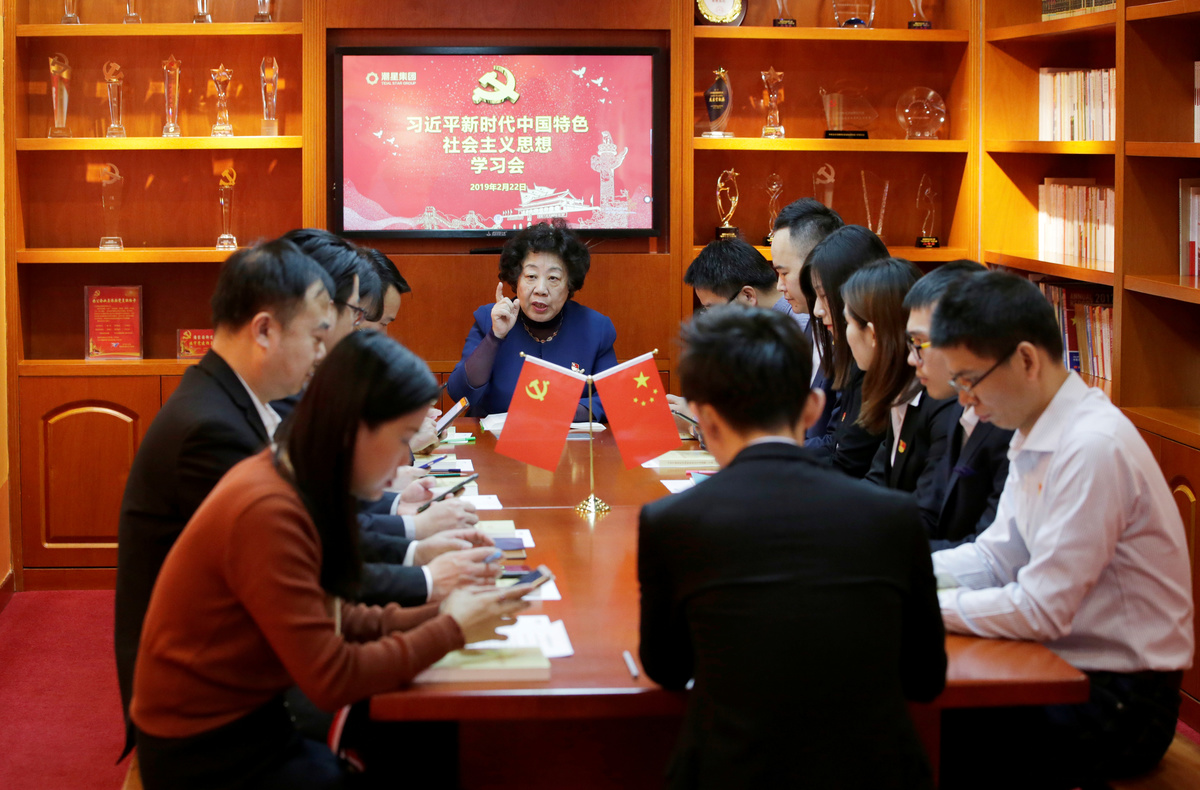
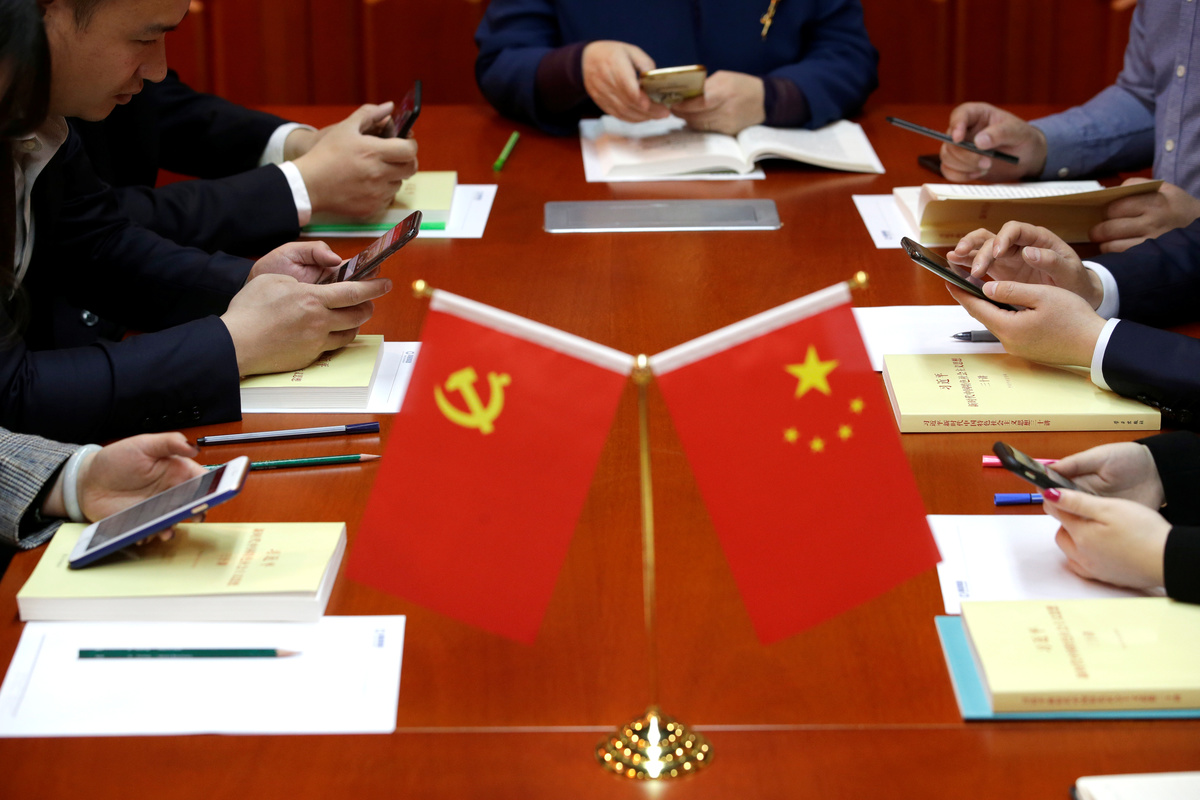
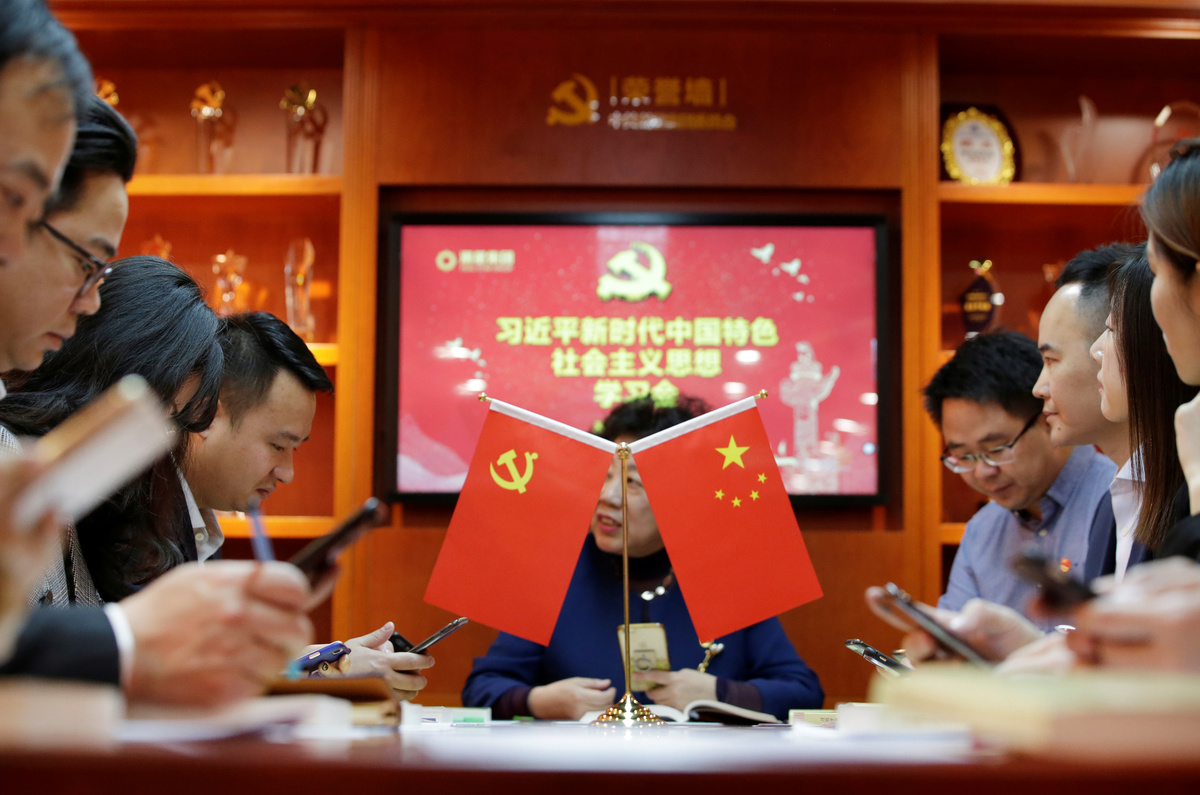
BEIJING (Reuters) - In a bright red office in south Beijing, some of China's most studious Communist Party members are gathered around their smartphones.
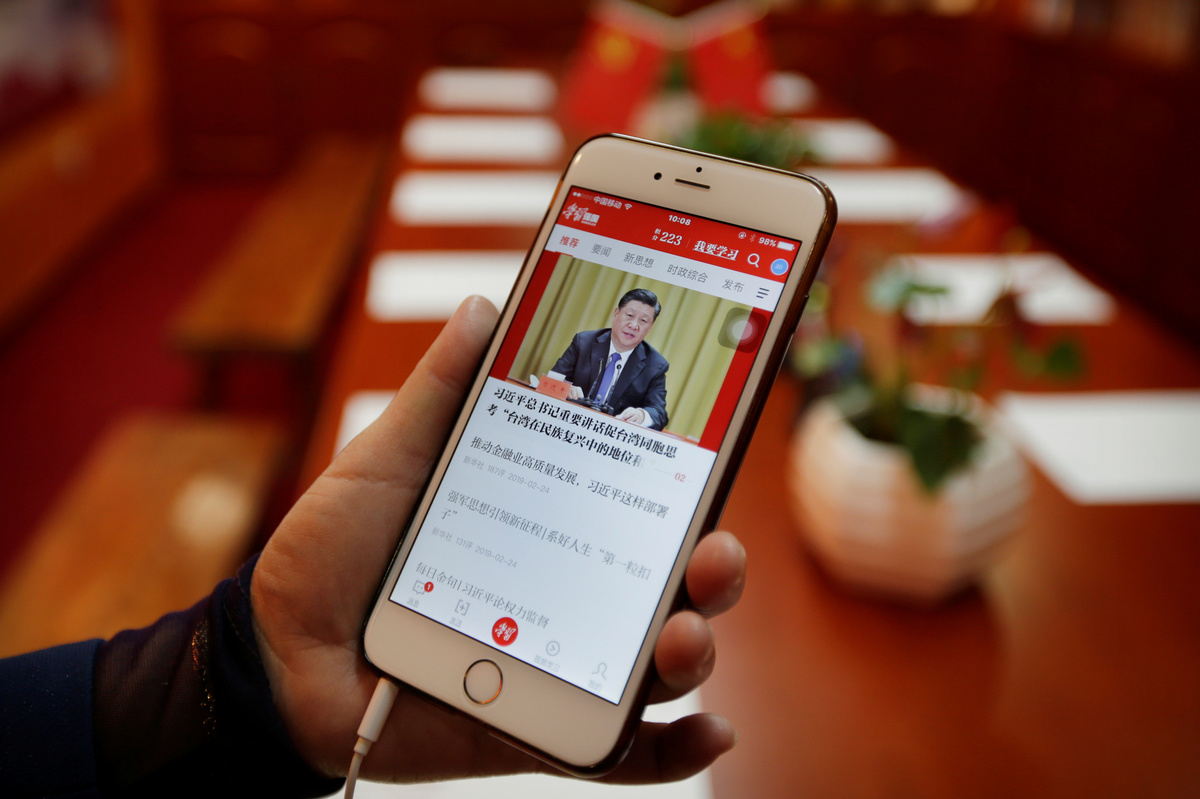
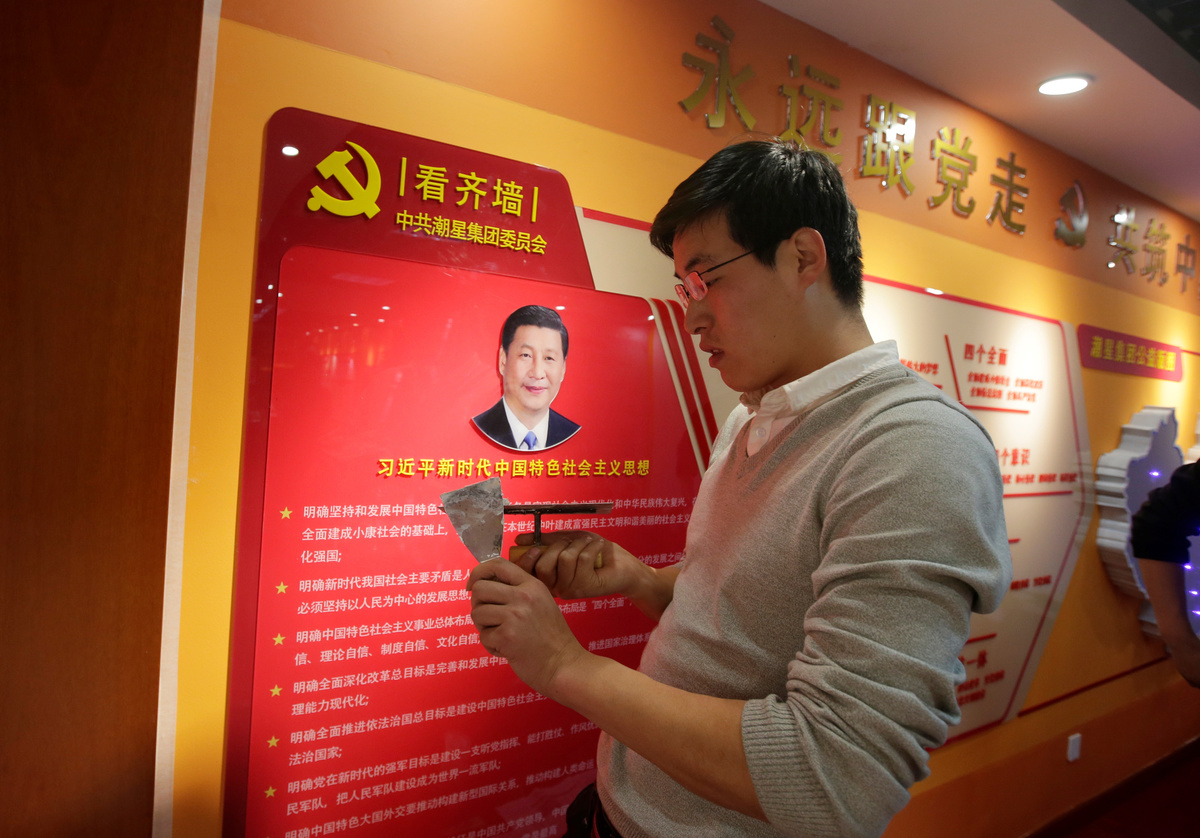
The focus of their attention is a range of mobile apps and websites which allow them to study the speeches of Chinese President Xi Jinping, including one developed by their own employer, Beijing-based conglomerate Tidal Star Group.
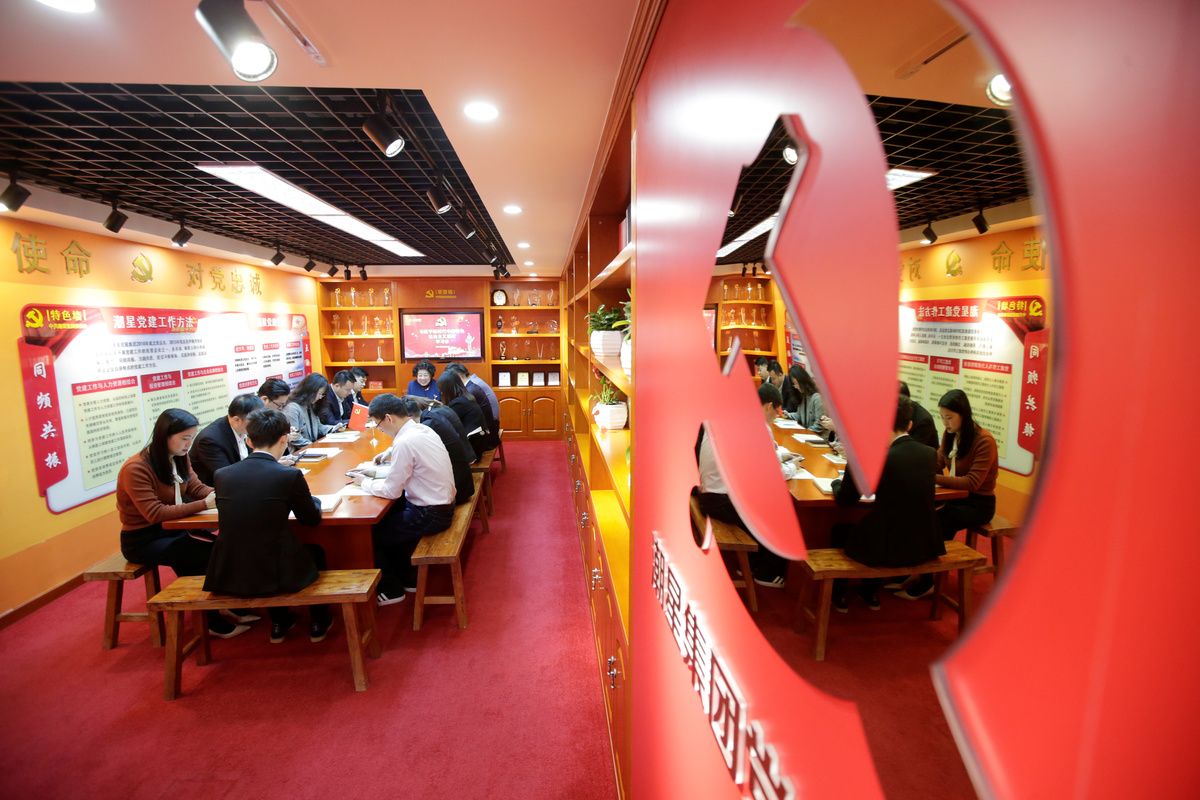
Tidal Star is among a rising number of Chinese firms working for, or taking inspiration from, the country's ruling Communist Party to develop high-tech propaganda tools aimed at spreading the party's message among a tech-savvy younger generation.
The party's mass propaganda toolkit has been upgraded from strident posters and Mao Zedong's "Little Red Book" to include artificially intelligent news readers, viral social media campaigns and "compulsory" quiz apps.
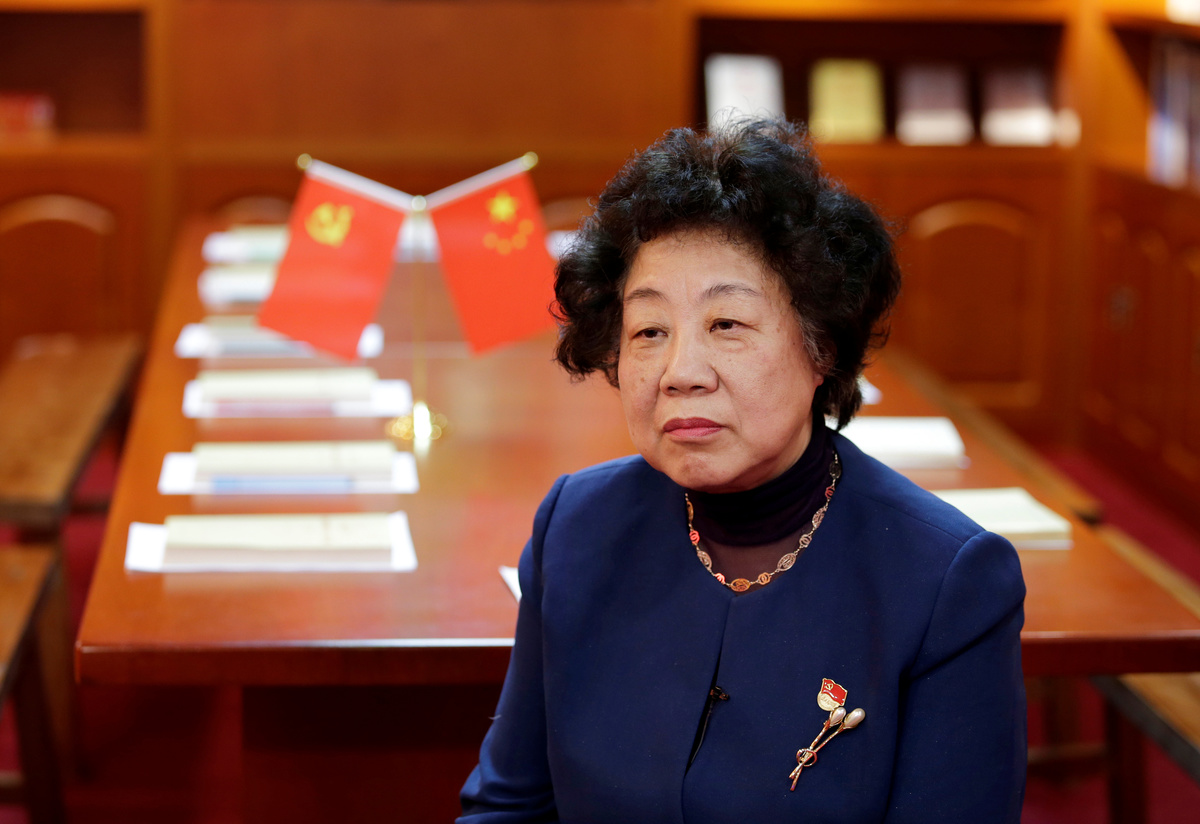
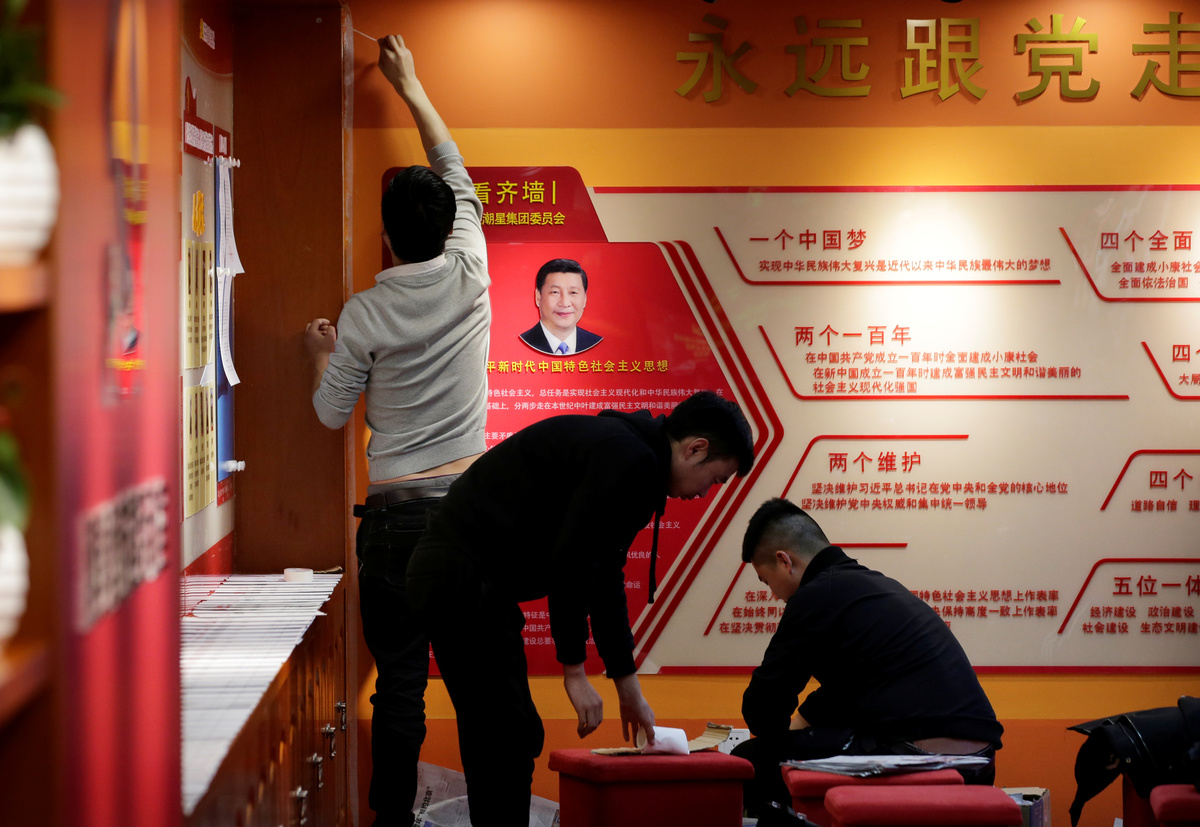
"Of course we study the spirit of Xi Jinping's speeches in the traditional way, but now that we have the app, party members can basically learn the excellent ideas of the national leaders every day," said Cheng Hong, who heads Tidal Star's party committee.
Staff who don't perform well on app quizzes will be "encouraged to improve their enthusiasm" while high scores are rewarded with praise and awards, Cheng added.
Much of the new tech has been rolled out and upgraded ahead of the National People's Congress (NPC), China's top political meeting, which kicked-off on Tuesday.
The annual parliamentary meeting typically sees a ramping-up of propaganda in Chinese state media.
"It's a massive revolution and at the same time a huge challenge for the propaganda department, to keep relevant and have a stake, when everything propaganda-wise is now in cyberspace," said Graeme Smith, a Fellow at the Department of Pacific Affairs at the Australian National University.
RED MILLENNIALS
Last month, an app called "Xuexi Qiangguo" which tracks how much time users spend learning Communist Party teachings and how they are progressing with their study, became the most downloaded app on Apple's China app store.
The app, developed by Alibaba Group Holding Ltd, has since chalked up around 75 million downloads, according to estimates by Beijing-based consultancy Qimai.
It is just one of dozens of Chinese Communist Party apps available on Android app stores and Apple's China App Store, including "Party Member eHome", "Wisely Build the Party", "Party Member's Little Backpack".

"Since 2016, one central publicity purpose for the Party is to make 'red millennials'," said a Beijing-based manager at a major U.S.-listed Chinese news feed app.
His company had collaborated with the Chinese Communist Party to promote stories written by state media outlets higher up in search results.
"Official news is always the top priority. There is no news until official news," said the person, who declined to be named because he was not authorized to speak to media.
On Sunday, state news agency Xinhua and U.S.-listed search firm Sogou Inc, also released the first official performance of a female AI news anchor called "Xin Xiaomeng", whose first job was to present a story about delegates attending China's largely rubber-stamp parliament meeting.
China will get even better at telling its story to the world due to its "innovative application of communication means and technology," said Guo Weimin, a spokesman for parliament's largely ceremonial advisory body. "I believe that our voice will spread farther and farther."
The Communist Party Propaganda Department did not respond to a request for comment.
'ALL HOURS OF THE DAY'
The shift in the Party's propaganda outreach stretches to other areas such as media and popular culture.
State media outlet Xinhua on Sunday released a patriotic English language rap song by Chinese musician Su Han.
The fast-paced song lauds China's recent moon-landing, powerful supercomputers and ability to clone monkeys, alongside sometimes clumsy English references to kidney stones and cartoon character Popeye.
Xinhua also released videos of foreigners praising China's political system, calling NPC press conferences "a journalist's dream" and laying out the benefits of a Chinese-style democracy, using footage of Chinese basketball star Yao Ming.
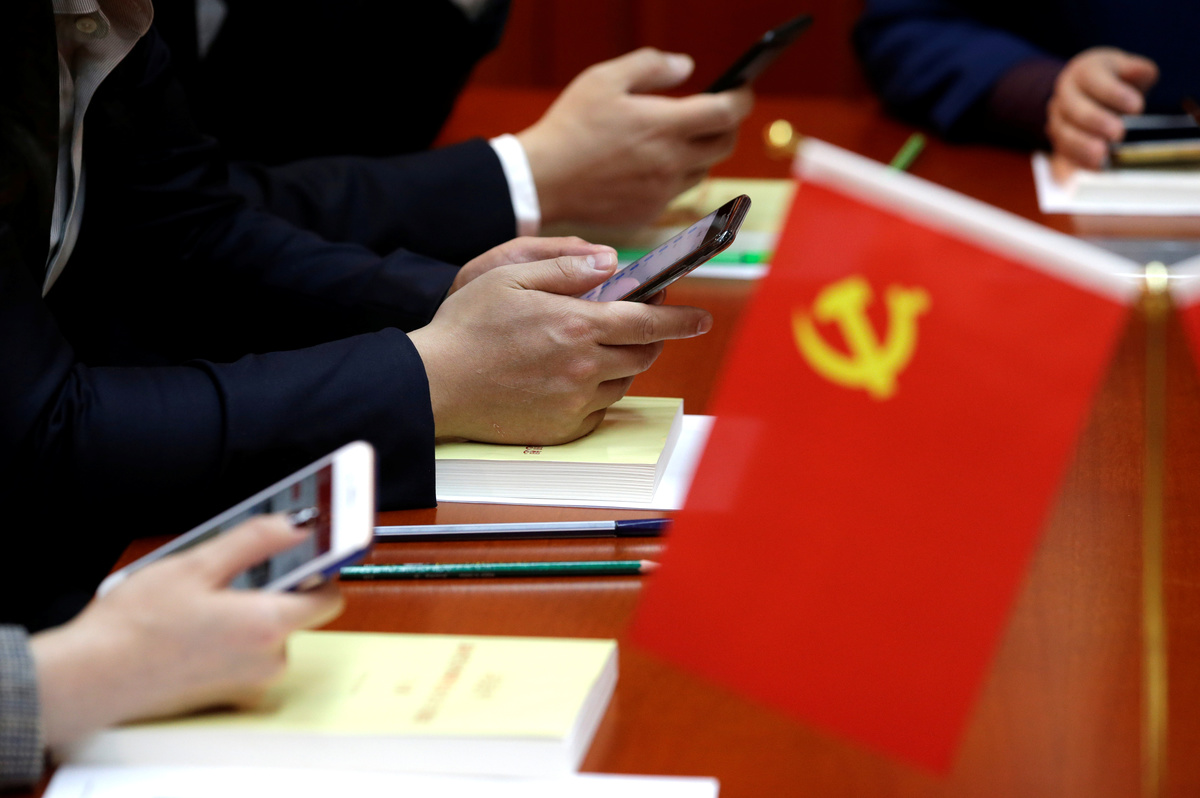
Party members said the new propaganda push means political study now consumes more of their time than ever before.
Universities, provincial party units and companies have recently issued public notices urging staff and officials to download Xuexi Qiangguo.
Three sources from different Party units say online study scores now factor into their performance reviews.
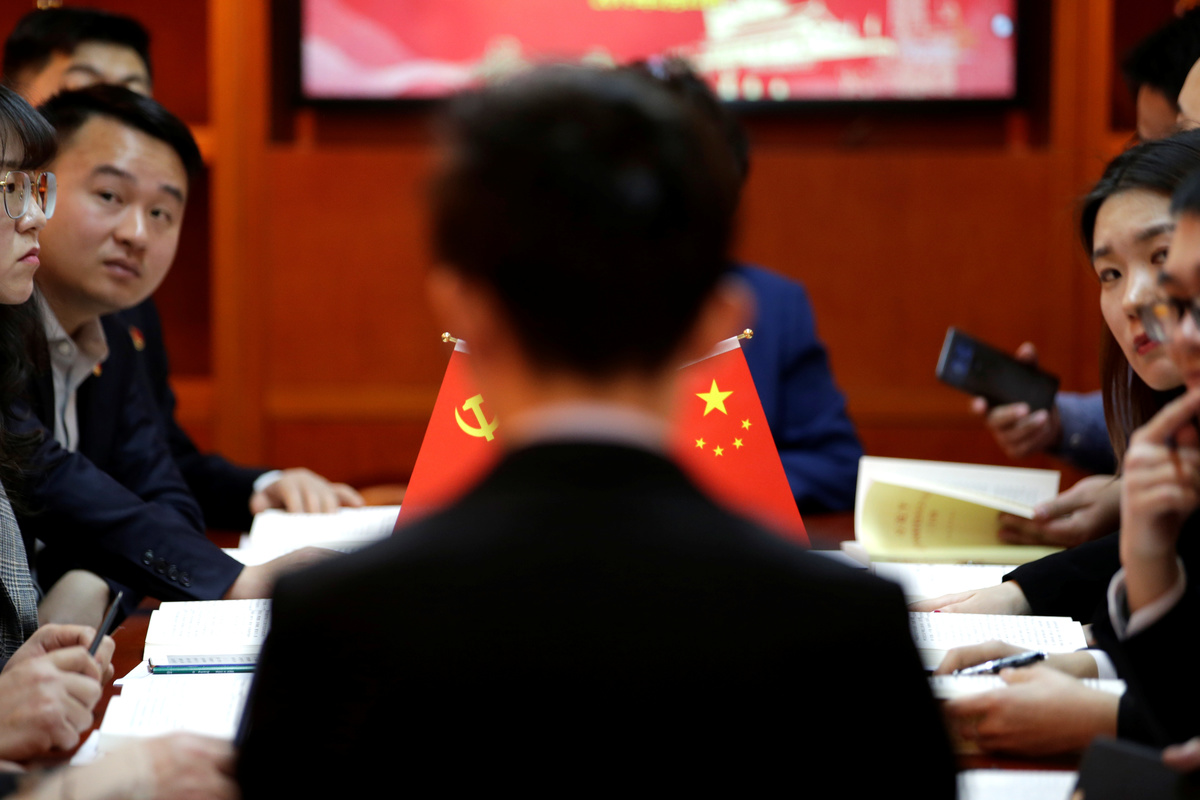
One staff member at a university in southern China told Reuters they are required to complete at least 160 hours of official study online per year.
"It's not too boring, but the Party used to be a part of my work," said a 35-year old researcher surnamed Liu at a Beijing university, who declined to give her full name due to the sensitivity of the topic.
"Now it is part of my life at all hours of the day."
(Reporting by Cate Cadell, Additional peporting by Joyce Zhou and Ben Blanchard; Editing by Brenda Goh and Lincoln Feast.)