When California reversed tough-on-crime policies earlier this month many cheered, saying the state blazed a trail for a more enlightened approach to crime and punishment across the United States.
Mike Reynolds didn’t cheer. He thought of the promise made long ago to his dying daughter Kimber, of his astonishing success in keeping criminals behind bars, and how liberal activists were undoing his work.
“It will come back to haunt them. It always does,” he told the Guardian. “You don’t turn a blind eye to aggression.”
Crime rates will begin to expand like a toxic orchid, he predicted. “No question about it. It won’t happen overnight. It’ll be like a flower blooming on a slow-motion camera.”
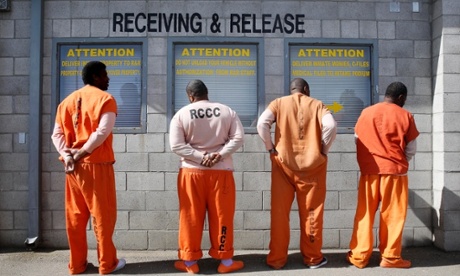
On 4 November, Californians approved a sweeping ballot measure known as proposition 47. The measure reduced penalties for drug and other non-violent crimes, triggering instant releases for hundreds of inmates and shortened jail time for potentially tens of thousands of others. Combined with other reforms, it effectively ended America’s most notorious tough-on-crime experiment.
“It’s a very big deal,” said Lenore Anderson, the executive director of the advocacy group Californians for Safety and Justice, and a co-author of the law. “Prop 47 has the opportunity to instigate a sea change across the United States in our approach to criminal justice and spending. California is an influencer state.”
Reynolds fears she could be right – that other states will repeat what he believes to be a grievous mistake. “Voters have been sold on this. But when there’s no punishment for breaking a law, that’s not a law.”
The role of Cassandra is new. Reynolds, 70, was a leading architect of California’s three-strikes law, which mandated courts to impose harsher sentences on habitual offenders. It was the toughest in the US and, according to Reynolds, it spared thousands of families the grief of losing someone to murder – something he knows about.
On 29 June 1992, two men on a stolen motorbike roared up to his daughter as she left a Fresno restaurant and tried to steal her purse. When the18-year-old resisted one put a .357 Magnum to her ear and pulled the trigger. She died 26 hours later.
Reynolds, a wedding photographer, made a vow by her bedside to fight to protect other families from violent crime.
Articulate and impassioned, he touched a public nerve on talk radio and became the driving force for a proposed law dubbed “three strikes and you’re out”, which mandated a de facto life sentence after a third conviction. In 1994 almost three-quarters of Californians voted in favour.
Other states had passed similar laws but California’s was the toughest and highest-profile. Dozens of states subsequently adopted their own versions. The US jail population boomed, rivalling China’s incarceration rates, with Latinos and African Americans disproportionately represented.
“I’m not a rich man but I did the best I could,” said Reynolds, speaking from the Fresno home he shares with his wife, a retired nurse. “What we achieved gives me a real sense of pride.”
What Reynolds and his supporters achieved is a source of bitter contention. He links the law to the fact California has enjoyed a 50% fall in crime despite a 14 million rise in population. Over 15 years, he says, there were nearly 10,000 fewer murders, three million fewer crime victims and $54bn in savings from reduced crime.
Opponents said other reasons, notably demographic shifts and better policing, reduced crime. And they said that three-strikes was incredibly costly on the human level, locking up young men for decades, and fiscally, racking up billions of dollars to build and run 20 new jails.
On 4 November they won the argument. Californians voted by 59.3% to 40.7% for proposition 47.
Penalties for common drug and certain theft crimes fell from potential felonies to misdemeanours, shortening jail time for non-violent offenders. An estimated 40,000 will benefit annually. Savings from the dwindling prison population are to be spent on drug rehab and mental health treatment to curb recidivism.
In 2012 another ballot measure, proposition 36, curbed other parts of the three-strikes law.
“People got tired of this outdated view promoting fear and the desire to punish,” said Jess Farris, a policy and advocacy counsel at the American Civil Liberties Union of Southern California. “Hopefully this is smart on crime rather than tough on crime. Hopefully we’ll see crime stabilise or even fall.”
Reynolds sees it very differently. Deep-pocketed liberal donors bankrolled a campaign that hoodwinked voters into thinking they could save money and make streets safer, he said. Without the threat of a felony charge drug addicts will have no incentive to attend rehab, he said.
Some proponents of the law share that concern. But they disagree with his contention that criminals will feel emboldened.
“These people will escalate their conduct,” he said, warning that California would regret leniency, just like the British prime minister who appeased Hitler. “I don’t need to tell you about Neville Chamberlain – he didn’t address the threat.”
Reynolds cited personal experience. Douglas Walker, a career criminal convicted of being an accessory to Kimber’s murder, was freed after serving half a nine-year sentence (given before the three-strikes law) and later acquired two more felony convictions. He appeared in a Fresno court earlier this month, charged with beating his girlfriend. “He’s a classic case,” said Reynolds.
The retired photographer plans to continue his crusade with statistics, reports and anecdotes, fuelled by the memory of his bedside promise.
“There isn’t a day that goes by that I don’t think of my daughter,” he said. “I have two sons and four grandchildren. When I hug them I feel I can hear Kimber’s voice in there.”