A new pill could provide relief for the millions of Americans who suffer from obstructive sleep apnea.
The dangerous sleep disorder disrupts the ability to breathe while sleeping and affects some 30 million people in the U.S., the American Academy of Sleep Medicine says. A machine known as a Continuous Positive Airway Pressure, or CPAP, can help regulate breathing — but the machines can be unpleasant, have been recalled over health concerns and can cost up to $1,000.
Enter: AD109. The nightly pill could offer a game-changing alternative form of treatment, new results of a large clinical trial show.
AD109 is the first medication to treat the most common form of sleep apnea, known as obstructive sleep apnea. This form occurs when the muscles in the throat relax, causing tissue to press on the windpipe and block air, Ohio’s Cleveland Clinic says.
The pill works by stimulating the muscles that keep the airway open, decreasing breathing disruptions. More than 40 percent of patients in the randomized trial saw their disease severity improve and 18 percent saw their sleep return to normal.
“It’s pretty clear that this medication combination is reducing obstructive sleep apnea events. And it’s reducing the severity of oxygen drops during sleep. That is exciting,” Sigrid Veasey, a sleep physician at the University of Pennsylvania who was not involved with the study, previously told Science. “The effects are robust and have a good scientific basis.”
AD109 is a combination of two existing medications that kept the upper airway open, including the ADHD drug atomoxetine and aroxybutynin, a chemically-altered form of a drug to treat an overactive bladder.
The trial ran for six months at 69 sites in the U.S. in Canada, including 646 adults with obstructive sleep apnea who couldn’t use CPAP machines.
Patients taking the drug saw the number of interruptions to their breathing decrease by 44 percent during the trial period, compared with 18 who were taking a placebo pill.
The number of times the levels of oxygen in their blood fell also improved, as well as their oxygen deficiency.
As with nearly all medications, there were some side effects.
The most common were dry mouth, nausea, insomnia and difficulty urinating, and 21 percent of patients discontinued taking the pill.
There are side effects with a CPAP machine, as well.
People using them can experience nasal congestion and dry eyes due to its constant flow of pressurized air; they may develop skip irritation or sores from the areas where the mask rubs against the skin; it can cause short-term chest pain for some users and others may experience claustrophobia, feeling like they’re closed in when wearing the mask, according to sleepapnea.org.
They cause nearly half of users to discontinue use within three years, according to past research. However, there are some different treatments patients can try, Yale Medicine notes, including oral appliances and surgery.
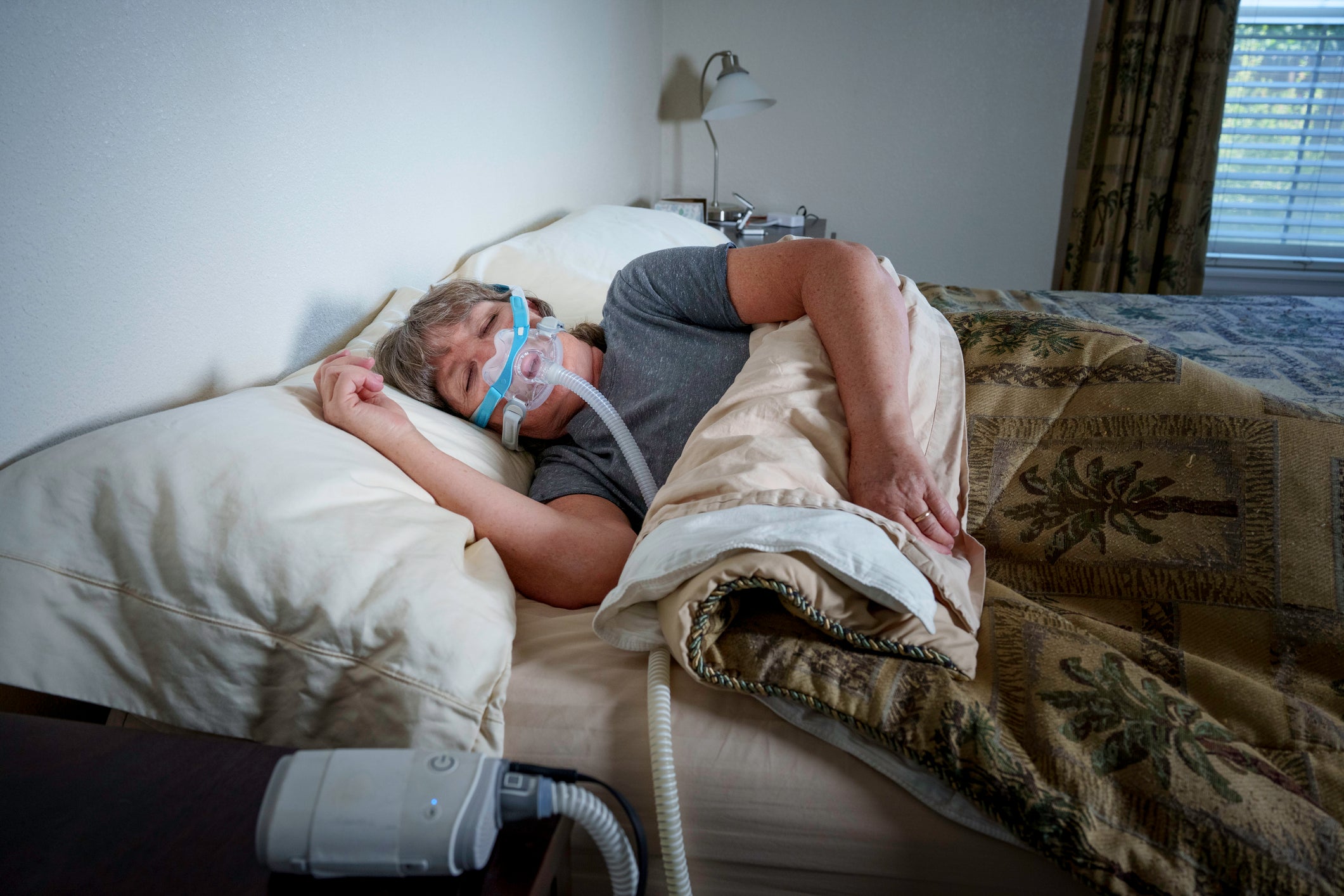
Still, obstructive sleep apnea is undertreated partially due to poor response to treatment. Some 80 percent of adults remain undiagnosed, the academy says.
Ignoring treatment could lead to life-threatening heart attack, stroke, Type 2 diabetes, chronic pain, obesity and acid reflux, Loyola Medicine warns. Men are more affected than women, as well as people over the age of 65, doctors say.
The new pill could fill that gap, the study’s author Dr. Patrick John Strollo, a sleep medicine physician at the University of Pittsburgh Medical Center, said in a statement.
While Eli Lilly’s weight loss shot Zepbound was approved for sleep apnea by the U.S. Food and Drug Administration in 2024 – the first drug for sleep apnea – its use is limited to people with obesity.
AD109 benefits people with and without obesity.
“In many other chronic diseases, such as cardiovascular disease, asthma or Type 2 diabetes, it would be unthinkable for the majority of diagnosed patients to remain untreated or undertreated. Yet that remains the reality in [obstructive sleep apnea],” he said.
“An oral pill that targets the underlying neuromuscular drivers of airway collapse during sleep could help address this gap and broaden the range of effective options for patients who remain untreated today.”
AD109 has received a fast track designation from the FDA.