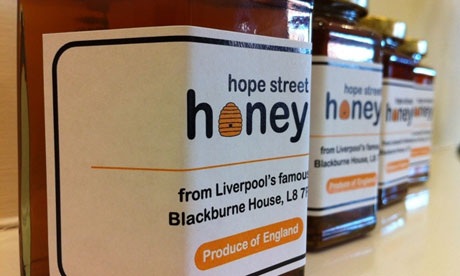
Hope Street Honey, made by Blackburne House, Liverpool
Last September, after a year of hard work on the roof of Liverpool's most well-known social enterprise Blackburne House, the first batch of Hope Street Honey was harvested.
The dark (usually indicates a higher mineral content), clear liquid, is produced with help from the local Women's Institute, and is named after the well-known street that Blackburne House sits on.
The enterprise – which runs education and training programmes, as well as a spa, nursery and several other ventures - is hoping to halt the decline of bees in Merseyside, and put profits from the honey back into its operations.
The two bee homes – each capable of housing 40,000 bees – produced a small batch last year, but it is already attracting a lot of attention for its colour, clarity and flavour.
In October, the produce won first prize in the novice section at the Lancashire Honey Show, as well as a 'Highly Commended' certificate in the Honey Cake Class. Shortly after, it won the second prize in the Medium Honey Class at the Liverpool Honey Show.
The product is used in recipes in the enterprise's cafe and catering business, and has been sold to a natural cosmetics company called Aynte Soaps – run by a former pupil of the Blackburne House school (which preceded the social enterprise). Local food businesses have also expressed an interest in using the sweetner.
Jo McGrath, director of enterprise for Blackburne House, says: "There is a lot of green space in the city people are not familiar with - St James Garden's are near, bees fly out in a three mile radius which takes in Princes Park and Faulkner Square, and there are loads of window boxes around here."
For the time being, you'll have to pop by the Blackburne House cafe to sample some honey treats, but keep an out for this year's batch.
This content is brought to you by Guardian Professional. To join the social enterprise network, click here.