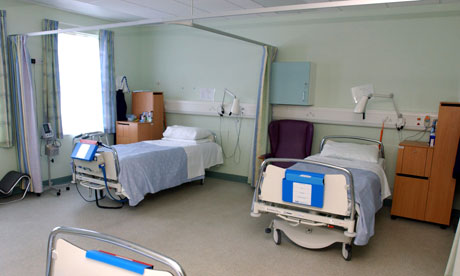
Hospital admissions can be traumatic and distressing, but often the greatest difficulties are experienced around the process of leaving hospital.
The problems have been well documented over many years of research and typically arise when a – usually elderly – patient is ready for discharge but has ongoing care needs.
The collision of the separate systems of health and social care at this juncture can cause delays in organising appropriate care packages at home, and in too many cases results in protracted hospitalisation as patients await a place in a care home or commissioners wrangle over who is responsible for the costs of a placement.
This is the situation which politicians and bureaucrats refer to as 'blocked beds', or worse they label the people occupying them 'bed-blockers'.
The expansion of rehabilitation and step down beds in recent years has targeted many of these difficulties by providing a window of opportunity to get patients back on their feet. This can be a highly successful model that lets people regain their independence and return home, while also achieving better outcomes for the NHS. It reduces resource demands and avoids readmissions.
However, it isn't only in complex care situations that discharge arrangements can be challenging; apparently routine discharges can also be a trial for patients and staff alike. My 81-year-old father was recently in hospital; the second episode in as many months.
The care he received was exemplary; his treatment was carried out quickly and professionally; the staff were all committed and compassionate, even the food was good. But nonetheless, he was desperate to get home as soon as possible. As soon as his temperature was normal, and stayed down, it could be concluded that the infection that had put him in hospital had been defeated by the intravenous antibiotics and he could resume his normal life and routines.
There were a few roller coaster days when his temperature spiked unexpectedly and all hopes of release were set back, but finally all seemed to be under control. He was given the news that he could be discharged just as soon as his medication to take home arrived from the hospital pharmacy. This decision was made following a morning ward round, and it was expected that he would need to wait until 4 or 5 in the afternoon. An entire day of frustration and worry followed.
In the afternoon I went to the hospital with my mother to collect him but the medication had yet to arrive and the ward staff warned us that it could take "another hour or two". Dad's temperature began to edge up again and I watched him crumple at the thought of not going home and having to stay in hospital.
Eventually the staff agreed that it was still safe to discharge him so long as his temperature didn't rise further, and it seemed to stabilise. I proposed that we get him out and back home and I would return later in the evening to collect the medication. All agreed it was a good plan. Two hours later back at the hospital there was still no sign of the medication that was coming from another hospital, and which was reported to have left there but had not arrived at its destination, or had arrived, but gone astray.
The nurses on the ward shared my frustration – clearly this was not an isolated incident – and were constantly on the phone trying to find out what was happening. Finally, the delivery was located and retrieved from the porters and I left the hospital at 9.45pm.
We were lucky. It is fortunate that I live some 20 miles from my parents, am self-employed, and have some knowledge and understanding of the health system, so I was able to run around and try to sort things out. For other people, it is far more difficult. Many of the patients in the same specialist haematology unit were at much greater distances from their homes and unable to pop back and forth or have relatives help out.
The hospital's excellent care and brilliant support to patients is regularly let down by the quality of their discharge, and as one of the staff acknowledged to me, sadly this will be the lasting impression for many patients. The nursing staff urged me to fill in a comments form to highlight the issue and get managers to recognise the impact on patient wellbeing.
Seventeen years ago I was a member of a Department of Health working group on the challenges of hospital discharge, and the manual we produced (the Hospital Discharge Workbook) set out guidance to improve the consistency of practice at all levels. It is frustrating that many of the issues we identified – including the organisation of take home medication, and discharges being made late in the day – remain problematic and continue to impact on resource use and on patient experience.
First class care risks being undermined by inefficient processes and bureaucracy – certainly not developed with the needs of the patient uppermost – which make no sense for the staff trying to do their best for patients.
• Melanie Henwood is an independent social care consultant