Ibrahim Hoteit lost his younger brother, Tharwat, in the huge explosion that ripped through the port of Beirut last August. He went around hospitals collecting body parts, starting with Tharwat’s scalp, and buried his remains in a small coffin.
Nearly a year later, Hoteit, a spokesperson for families of more than 200 people who died in the disaster, is still trying to call to account those he says are responsible for allowing the accident to happen.
Earlier this month, during a protest outside the caretaker interior minister’s house in the Lebanese capital, he said security forces used tear gas during scuffles with the crowd.
“We can’t be deprived of truth and justice in the face of a crime of such magnitude,” he told Reuters.
As Beirut prepares to mark the first anniversary of a blast that flattened large swathes of the city, politicians and senior security officials have yet to be questioned in a formal investigation.
In the latest twist, Tarek Bitar, the judge leading the probe, had a request to question Major General Abbas Ibrahim - head of the powerful General Security agency - turned down by caretaker interior minister Mohamed Fahmy.
Ibrahim said he was subject to the law like all Lebanese, but the investigation should take place “far away from narrow political considerations”.
Fahmy’s decision prompted some relatives of those killed to march near his house this month, carrying empty coffins covered in images of the victims. The demonstration turned violent.
A senior interior ministry source said measures the security forces took were necessary to protect the private home of the minister.
The relatives’ frustration reflects widespread anger among Lebanese about the investigation and, more broadly, over how the country is being run.
Lebanon’s debt has spiraled, inflation is high, more than half the population lives in poverty and rival political factions have repeatedly failed to form a government.
Setbacks
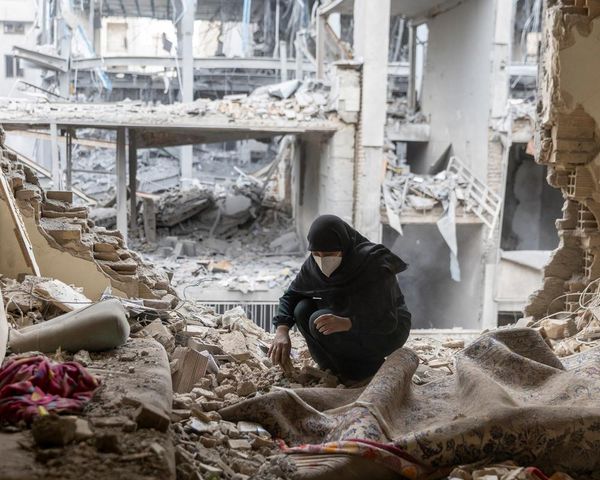
Much of the devastation from the blast is still visible. The port resembles a bomb site, and many buildings have been left in a state of collapse.
Major questions remain unanswered, including why such a large shipment of ammonium nitrate, a highly explosive chemical used in bombs and fertilizer, was left stored in the middle of a crowded city for years after being unloaded in 2013.
The immunity enjoyed by senior officials has raised suspicions among some families that there may never be accountability.
“How can you have justice if everyone from the smallest official to the biggest ... has immunity?” said Nizar Saghieh, head of the Legal Agenda, a research and advocacy organization.
Fahmy’s move to block the judge from questioning Ibrahim was based on the advice of a judicial committee at the interior ministry not to lift his immunity, according to a letter explaining the decision.
The challenges Bitar faces are not unique.
His predecessor, Fadi Sawwan, was removed from the probe in February after a court granted the request of two of the former ministers he charged with negligence for the disaster - Ali Hassan Khalil and Ghazi Zoaiter - to have him removed.
A copy of the decision seen by Reuters cited “legitimate suspicion” over Sawwan’s neutrality, partly because it alleged his house was damaged in the blast.
Khalil and Zoaiter, along with a third former minister and the outgoing prime minister Hassan Diab, declared their innocence when Sawwan charged them, refused to be questioned as suspects and accused Sawwan of overstepping his powers.
A document seen by Reuters that was sent just over two weeks before the blast showed the president and prime minister were warned about the security risk posed by the chemicals stored at the port and that they could destroy the capital.
Bitar wants the government and parliament to allow him to question several top officials, including all those charged by Sawwan, in addition to former Interior Minister Nouhad Mashnouk.
With his request to question Ibrahim denied, the immediate fate of Bitar’s investigation appears to rest on parliamentary immunity being lifted from Mashnouk, Khalil and Zoaiter, all of whom are MPs.
MPs met to discuss Bitar’s request earlier this month, saying they needed more information to before deciding.