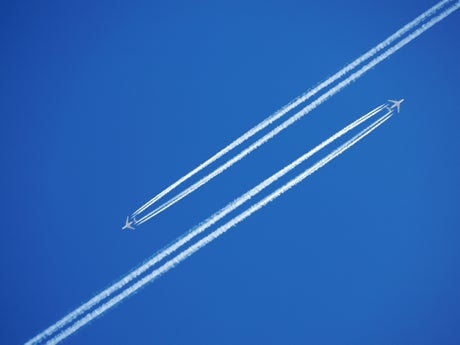
Less than half of people in most countries fly each year, and the majority of flights are taken by a small, “privileged” minority, according to a new study.
Looking at 26 countries with the highest emissions from aviation, the Elite Status: Global Inequalities in Flying report, published by climate charity Possible, found that, in almost every destination, less than half of the population fly each year.
The report highlighted the stark inequalities that exist when it comes to aviation, with a small minority of people often responsible for the vast majority – or at least a substantial percentage – of flights taken annually.
In the US, just 12 per cent of people take two thirds (66 per cent) of all the flights, according to the study, while in France, 2 per cent of people are responsible for half of the total number of flights.
Canada and the Netherlands display similar patterns, with 22 per cent of the population taking three quarters (73 per cent) of flights and 8 per cent of people taking 42 per cent of flights respectively.
Read more:
- Why well-heeled travellers are flocking to Kenya during lockdown
- Travel agent charges 64 per cent cancellation fee for grounded British Airways flight
- Boris Johnson to unveil holiday roadmap on 5 April
- World cruise costing £58,000 sells out in under a day
- When do campsites and caravan parks open?
In China, 5 per cent of households take 40 per cent of all flights; in India, 1 per cent of households are responsible for 45 per cent of flights.
The same is true of developing countries, as well as wealthier nations: Just 3 per cent of households account for more than half (56 per cent) the flights in Indonesia.
Alethea Warrington, campaigner at Possible, said: “If left unchecked, emissions from polluting industries like flying threaten to crash the climate.
“This report shows the same pattern of inequality around the world – a small minority of frequent flyers take an unfair share of the flights.
“While the poorest communities are already suffering the impacts of a warming climate, the benefits of high-carbon lifestyles are enjoyed only by the few.”
Possible is calling for a Frequent Flyer Levy, which makes it more expensive to fly for those who take numerous flights, or who fly greater distances, each year.
Campaigners argue this approach tackles the climate crisis “fairly”, ensuring people with greater responsibility for emissions pay the price.
“A progressive tax on aviation would treat frequent flying as the luxury habit it is,” said Ms Warrington. “A lot of people travel. But only the privileged few fly often.”