Much has been said of whether private schools should continue to have charitable status, with passionate arguments for and against the idea.
Tristram Hunt has been the latest politician to say that private schools should earn the status by working with the other children in their communities. The response to his comments has shown that awareness of what private schools already do in this regard remains low among both those in Westminster and the wider public.
BBC Radio 4’s The Report recently looked at some of the links between private and state schools on its programme. Examples of the myriad ways private schools are currently working with their nearby state schools and academies are not hard to find, however, with mutually beneficial results. Below are three examples of schools drawing on their resources to help other schools.
The Dragon school, Oxford
“The Dragon School has a long-held commitment to children in Oxford,” says the headteacher, John Baugh, “and we are keen to extend and build on existing relationships with partner schools to benefit more children, extend opportunities for learning and help them learn well.
“In undertaking this important commitment we are delighted to be working with our fellow sponsors.”
The Dragon school is the lead sponsor of new primary school academy, Blackbird Academy Trust, and works with education charities Family Links and the Hamilton Trust to support it. The primary schools, Orchard Meadow, Pegasus school and Windale – educating 1,000 children between them – all retain their own identities under the umbrella of the academy.
Mr Baugh said the school was pleased to accept the invitation to become a sponsor of the new primary academy as a natural extension of its partnership work with a number of local primary schools including Pegasus school.
Family Links, through its work with many schools (including the Dragon), has developed expertise in positive behaviour management and the creation of emotional support for good teaching and learning. The Hamilton Trust, which has also worked with many schools in Oxford, supports primary teachers nationally and has a particular specialism in maths.
Since the formation of the academy, the Dragon pupils have taken part in a number of joint activities and visits with pupils from the Blackbird Academy primary schools. These activities include joint academic teaching, music, drama, sport, theatre visits and visits to university colleges.
Vinehall school, East Sussex
Vinehall School has been awarded funding from the government following a successful independent-state-school partnership proposal to develop subject delivery in state schools in the area. The funding will pay for teaching cover in the partnership schools, so subject specialists can meet regularly and collaborate.
Headteacher of Vinehall, Richard Follett, said: “There is no sense of princes and paupers here, just a shared goal to improve the teaching and learning wherever we can. I am sure part of the success of the Vinehall bid resulted from the fact that the work is already happening, with a proven success in hosting international days and maths challenges for local pupils. Yes, we have fantastic grounds and superb facilities, but it is a good teacher with a bank of effective resources which inspires a child to learn.
“The proposal was prepared by my heads of maths and modern languages departments, who jointly designed a programme to bring many state schools in East Sussex together. It is no coincidence that both of these staff joined Vinehall following successful careers in the state sector. Their ideas are transforming our children but their motivation is to keep giving back wherever they can.”
Beachborough, Northamptonshire
Beachborough is set at the heart of Westbury village, surrounded by farmland, and its community extends beyond pupils, parents and teachers. It is recognition of the part the school plays in the wider community that prompts its leaders to be on the lookout for opportunities to share its resources.
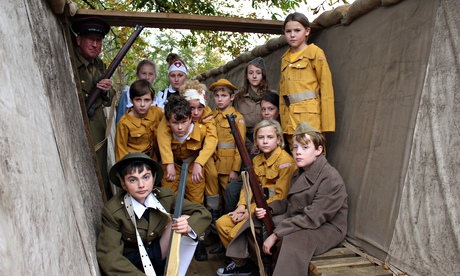
One example was this year, to commemorate 100 years since the start of the first world war, Beachborough built a trench that was used extensively during a week of activities enriching pupils’ knowledge and understanding of “The Great War”. Part of the village’s remembrance service included visiting the trench and listening to a talk from head of history, Michael Sanders, about villagers and their families who were affected by the war.
Pupils from St James and St John’s Primary visited the trench and exchanged letters with Beachborough pupils as if they were writing home from the trenches on the frontline. In return they received letters and Christmas cards from loved ones. Not only did it bring alive how families and soldiers felt during their time of separation, but it also gave the children the chance to meet and share work with pupils from the wider community.
Dan Gross, director of studies at Beachborough, said: “Seeing what a wonderful resource the trench has been for our pupils made it apparent that it should be used by other pupils from surrounding schools. The first world war is an important part of our national history and I was delighted that St James and St John’s CE School accepted our invitation for their pupils to experience life in the trench and exchange letters with our year 6 pupils.”
The trench remains as a memorial to those who gave their lives.