I found myself sitting next to the editor of Today (weekdays, 6am, Radio 4) at lunch and asked if they were having a good election. Yes, he said, at times like this listener numbers go up, which is not what I would have thought. Furthermore, this particular contest is going to be so tight that he thinks it likely his programme will be on the air on Friday morning to “call it”, as the American expression goes. But who does the calling, I wondered. This is a heavy responsibility. Does it go to the DG or do you shoulder it yourself? He assured me that they consult their dustiest, most rational, most seen-it-all-before psephologist and, when he points out the only way it can go, then and only then will they broadcast his verdict.
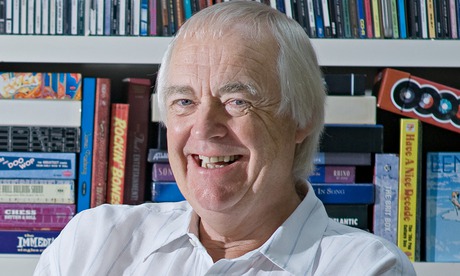
There are too few people able to talk with understanding about classical, pop and light music for you to pass up the opportunity to listen to Tim Rice discussing and playing records. He’s the guest on Private Passions (Sunday, 12noon, Radio 3), talking about when Peter Pears came to witness his school production of Britten’s Noye’s Fludde and also precisely recalling the hour it took Elton John to turn his lyrics for Circle Of Life into a globe-girdling hit. He has equal admiration for both. I’m surprised that Radio 3 hasn’t hired Rice to do a regular show, since he seems to perfectly embody their quest to broaden its appeal without diluting its mission.
Dr Cathy FitzGerald is the principal of that notional institution The Invisible College (Monday, 4pm, Radio 4). Under her direction this university of the air gives us access to archive recordings of great writers talking about their craft. Eudora Welty tells the story of her mother selling her precious hair for a set of Dickens, which had to be delivered to the south by riverboat. Elizabeth Bowen remembers teaching herself to write by imitating Henry James. Susan Sontag explains how she manages to read eight to 10 hours a day. “The day has pockets,” she says in a phrase I’ve since adopted as my motto.
It’s widely accepted that in modern Russia the media is another arm of Putin’s propaganda machine. I’m sure he feels the same about programmes such as The Rape Of Berlin (Saturday, 7.05pm, BBC World Service), Lucy Ash’s riveting investigation of the mass rape that took place when the Soviet army, maddened by violence and deprivation, fell upon the capital city of the hated Germans in 1945. In Russia, they’ve always preferred to think it was a western libel. In the west, we didn’t talk about it until recently because it was bad form to speak ill of the army that did the lion’s share of fighting and dying.
She speaks to Antony Beevor, who has written extensively on the event as history. She speaks to Helke Sander, the feminist film-maker who tried to put a number on the victims. Most tellingly, she travels to Hamburg to have coffee with a woman in her 90s with a strong handshake who was raped at the age of 20. She remembers her own mother “running around telling everyone that her daughter hadn’t been touched”. She knew that wasn’t true. “All women between 15 and 55 had to go to the doctors to get a certificate to ensure they didn’t have STDs. Otherwise they didn’t get food stamps.” Ash goes to the public records office and sees the evidence in the contemporary applications for abortions, which had previously been illegal in any circumstances. It is, as she says, “a litany of misery, often in childish round handwriting.”