The Holy Grail in the world of artificial intelligence is success in something called the Turing test. A computer must, over the course of a five-minute, text-based conversation, hoodwink its human interrogator into imagining it too is human. Once this has been achieved, the fear is that it will not be long before robots walk among us without our knowledge. Is it possible that future has already arrived in Westminster?
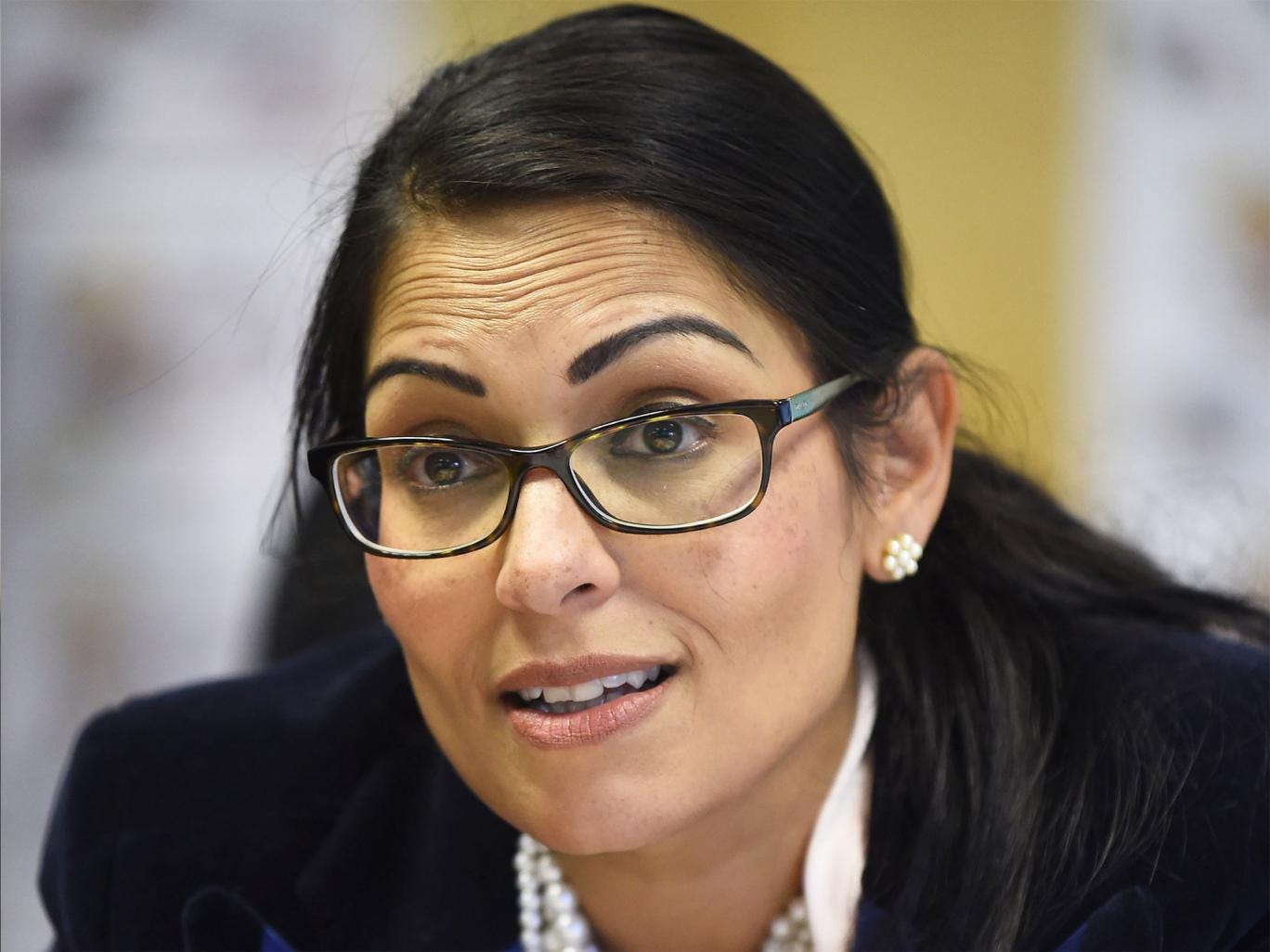
Ask Priti Patel, 43, Conservative Member of Parliament for Witham, a question about almost anything – the time of day, or directions to the nearest post office, or to multiplying two by two – and you are likely to be answered with a single, seemingly programmed answer: “Jeremy Corbyn is a threat to our national security, to the economy and to hard- working families up and down the country.”
The caricature is harsh, but there is truth in it. The fact is, these automaton-like tactics seem to work. They may make the messenger look dull, but they get the message out. The challenge, for the party strategists, is finding someone dedicated enough to play the part. Enter Patel.
Her dedication is of the kind that often brings rewards. Following a failed attempt in Nottingham in 2005, she finally entered Parliament in 2010, via a few young years in Conservative Central Office in the late 90s, and a longer stint in PR (a path so well signposted it is informally known as the Cameron Trail). Not long after the 2015 election she was given the job of Minister of State for Employment at the Department of Work and Pensions. Whether a book she co-authored in 2012 labelling British workers as “among the worst idlers in the world” was a direct appeal to the sensitivities of her now-boss Iain Duncan Smith is something on which she has always refused to comment.
Whatever the truth, one consequence of her rapid rise has been that, since newspaper editors usually like more than three names on a list, Patel has been regularly touted as a possible next leader of the Conservative Party.
All of which makes her most recent gambit, at least at first glance, a little surprising. Never knowingly off message, Patel has told friends she intends to play “a leading role” in the campaign to take Britain out of the EU, a position it is believed she will publicly confirm this weekend.
In this, she is at least being true to her roots. Born in Islington and educated in Watford and, later, at Keele, she has not escaped the shadow of her 66-year-old father, Sushil Patel, a Ugandan Indian who came to Britain to get out of the way of Idi Amin. In 2013, Mr Patel stunned onlookers by performing what is widely considered to be fastest double U-turn in political history, when he declared his candidature for Ukip in elections to Hertfordshire county council, withdrew and then stood again, all in the space of 90 minutes. “He is still my dad and I still love him. Nothing will change that, not even Ukip,” his daughter said at the time.
What she failed to add is that evidently she also agrees with him. But as she first entered politics via running press operations for James Goldsmith’s Referendum Party in 1997, it could hardly be called unexpected.
None of this is to suggest Patel is afraid to state her own opinion. When the execution of Troy Davis in 2011 forced BBC Question Time on to the subject of the death penalty, she was memorably intransigent in support of it in a discussion with Ian Hislop, editor of Private Eye. But all that was “a long time ago” and “no longer relevant”, she repeatedly told Sky News last year, presaging her latest volte-face on the issue.
Now, for those offenders fortunate enough still to be alive, Patel is very much pro-rehabilitation. “When people’s lives go off track – whether as a result of addiction, debt, crime, or some other issue – as a compassionate society we should look to offer a way out,” she wrote in The Times three weeks ago. “This is as much true for ex-offenders as any other disadvantaged group.” No group is quite so disadvantaged, of course, as the prematurely dead.
That these more recent opinions echo those of Michael Gove, now bringing his unique brand of reformist zeal to the penal system, is intriguing. Patel has evidently decided the Tory future lies with the Brexit gang. At the time of writing it was unclear which way Mr Gove would lean, although the latest rumours give a strong suggestion. Perhaps Patel knows more.
In thought, word, deed, style and manner Patel could scarcely be more of a Thatcherite. She has constantly championed small business, not least in her role as chair of the all-party parliamentary small shops group, through which she has campaigned against plain packaging for cigarettes, which would be, she said, “the final nail in the coffin” for hundreds of newsagents. Nor will it go down well with the tobacco industry – for whom she worked as a consultant for almost a decade via the PR firm Weber Shandwick.
One newspaper correspondent recounts that, having agreed to be interviewed, Patel read all of her answers to his questions out of a book, but others who have spoken to her directly, and not through the prism of the mainstream media, say she is “great fun”. It is suggested she would make for better company were she to stop volunteering to help get the official message out, which she now appears to have done.
Patel will not be unaware that there is a growing rebellion against the automaton politician happening all over the world, and it is more potent than any ideology. Bernie Sanders, Marine le Pen, Jeremy Corbyn and Donald Trump might not have much in common, but when they speak, certainly no one can feel the rising nausea of being triangulated against, that what they’re hearing has been focus-grouped free of all vitality. It’s worth remembering that none of these people has yet made it into government, and they may never do so, but they have overcome the staid political forces of the likes of Andy Burnham, Yvette Cooper and quite probably Jeb Bush, with worrying ease.
Government by algorithm made flesh may not be done for yet. But if Priti 2.0 really is about to be released, it will need a fundamental upgrade.
Priti Patel: A life in brief
Born: 29 March, 1972 in Islington, London.
Family: Parents were Ugandan refugees. Married to marketing director Alex Sawyer. They have one son.
Education: Watford secondary school; economics degree from Keele University; MSc in British government and politics from University of Essex.
Career: Press officer for Referendum Party and William Hague. PR with Weber Shandwick and drinks firm Diageo. Elected Witham MP in 2010. Named DWP minister 2015.