You could feel Boris Johnson’s pain. There was a time when he could make a quick £5,000 for knocking out barely considered articles for the Daily Telegraph. But now he’s prime minister he’s rather obliged to bash them out for free. The only good news for him is that his pieces are kept behind a paywall, so the vast majority of the country can easily manage to avoid them and don’t get to find out just how incoherent they are.
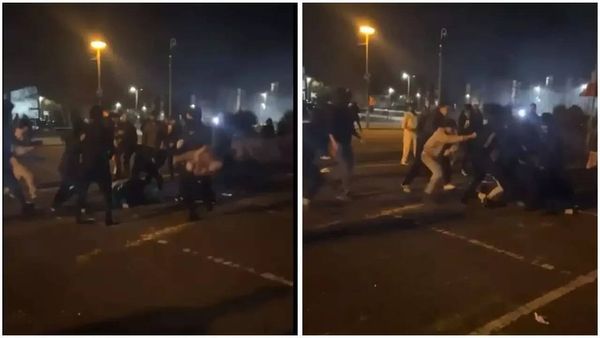
While rightwing extremists were making Nazi salutes and causing aggro with the police, and a man was caught pissing next to a memorial to terrorism victim PC Keith Palmer, Boris was more interested in fighting last week’s battle over statues. Count on me, he promised. He wasn’t going to allow anyone to take down a statue of Winston Churchill. Not least because almost no one had called on him to do so.
Nor was he going to allow anyone to Photoshop British history. Quite apart from a staggering inability to understand the difference between eradicating the difficult and complicated nature of the country’s past and actively memorialising and celebrating it, this was quite some cheek. Because few politicians have done more to Photoshop their own past than Boris. The lies, the deceit and the lack of morality that have been the bedrock of both his personal and professional life are all expected to be forgotten on a daily basis. After all, if he can find it so easy to forgive himself why shouldn’t everyone else?
So it was left to Priti Patel to comment on last weekend’s violent protests in London in a ministerial statement to the Commons. And to begin with she didn’t do too badly. The home secretary is clearly a lot more comfortable in condemning violence from leftwing and Black Lives Matter activists, but she somehow managed to get through her opening remarks without saying that the rightwing racists were due a little leeway to let off steam after being provoked by the demonstrations of the previous weekend, which had seen some violence against police and statues being torn down and defaced. The desire to make the link was clearly there but somehow she managed to restrain herself. Credit where credit is due.
Labour’s Nick Thomas-Symonds, the shadow home secretary, initially appeared to endorse Patel’s comments. He deplored the actions of the demonstrators, praised the police and more or less backed her demands for 10-year jail sentences for anyone defacing public monuments. Only in the UK could you expect to get banged up longer for public disorder offences than rape. But then just as it looked as if he was going to try to outcompete the Tories in the “lock ’em up” stakes, Thomas-Symonds started to twist the knife.
The BLM demonstrations had been of a different category to Saturday’s racist protests. While violence on both sides could not be condoned, there had been a moral purpose to BLM. Longstanding injustices and inequalities that had been consistently ignored.
So how was it that in the prime minister’s 1,000-word defence of the statue of Winston Churchill, he had only managed to squeeze in a couple of sentences as an afterthought about his plans to establish a new Commission on Race and Ethnic Disparities, while saying it was about time black people stopped playing the victim card? Besides, hadn’t there already been enough reports into racial inequality and wouldn’t the government be a lot better off implementing some of their recommendations instead?
Patel was genuinely outraged. At times like this, her innate hopelessness is her saving grace as she doesn’t have to go through the bother of even feigning stupidity. Black lives mattered so much that it would be entirely wrong for the prime minister to implement the recommendations of previous reports without wasting time on setting up an entirely pointless new commission that was almost certain to come to exactly the same conclusions as before.
If you read the Macpherson, Lammy and Williams reports carefully, you would know that their overarching subtext was that what black and minority ethnic people wanted more than anything was for nothing to change until the government had checked whether the recommendations could be recommended. Equality was far too important a subject for change to be introduced at anything but glacial pace.
A few Tories tried to bring the debate back to what they believed to be the key topics. The desecration of statues and the racist abuse that they had received for daring to criticise the violence against the police at the BLM demonstrations. Patel was suitably grateful for the breather.
But there was no respite from opposition MPs. Yes, they could all agree violence was bad but could we move back to the real issues of inequality? Priti just looked Priti Vacant. She seemed genuinely surprised to learn that there were so many Windrush cases still unresolved and no one had told her there were recommendations about the effect of the coronavirus on BAME communities that had yet to be published. There again, she hadn’t asked. After all, she was only the home secretary.