Primavera: Young Australian Artists is the Museum of Contemporary Art’s annual exhibition of work from artists under 35. This year’s show is curated by artist Mikala Dwyer and brings together the work of 13 artists from around Australia.
It perhaps would have made more sense for Dwyer to curate the 20th anniversary show in 2012 since she was one of the four original artists showing their work back in 1992, but let’s not get hung up on details. Primavera is a show that has pretty much always been more about vibe and feel than strict conceptual coherence.
Before we discuss the works in this year’s Primavera, it’s useful to put the show in a wider context. Over the past decade or so, the question “what is contemporary art?” has been occupying many artists, critics and academics. For most people the answer is that contemporary art is the art of now, and while that’s strictly correct, thinking about what constitutes contemporary art proves to be a much more difficult proposition.
In the 22 years that Primavera has been around we’ve seen the rise of the global art market, in concert with a focus in the Australian art world on emerging talent. Back in 1992 the sunset of postmodernism in visual art in Australia led to a rediscovery of the aesthetic values of junk – the so-called grunge generation that Dywer was herself a part of – then followed by a succession of trends in contemporary art from the best-forgotten cyber arts phase through to the sudden “discovery” of video art in the early noughties, through to the collaborative art group period and to more recent interest in expanded and post-internet painting. These are the broad brush strokes of Australian art over the past two decades and Primavera has hosted them all at one time or another.
The only definition of contemporary art that really makes sense to me is the idea that it’s a genre – and like all genres it has common themes and common forms of expression. In that context Primavera 2014 is another iteration of familiar ideas in familiar forms. That’s not a criticism per se, because audiences generally like genres, from Marvel comic movies to TV crime dramas, from young adult sci-fi novels to IDM (intelligent dance music), we know more or less what we’re going to get. And that’s how contemporary culture works – the packaging of expectations with any effort to break convention easily encompassed by the market. It’s kind of depressing if you believe that contemporary art is actually a critical practice, but just fine if you’re out to add to your collection.
Setting the exhibition in a bigger context like this is certainly the curator’s intention. Dwyer, seeing the world as a ruin of late capitalism beset by a “storm of images”, claims in the catalogue that the work in Primavera 2014 “asks us to consider how resilience is shared. Whether we summon back our agency through spells, activism or resistance, the intention is set and apparent throughout the exhibition”.
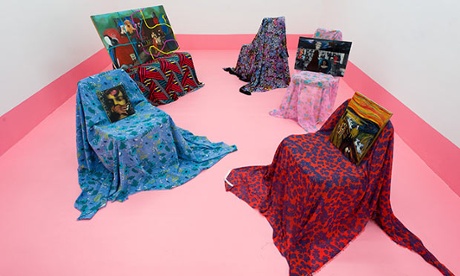
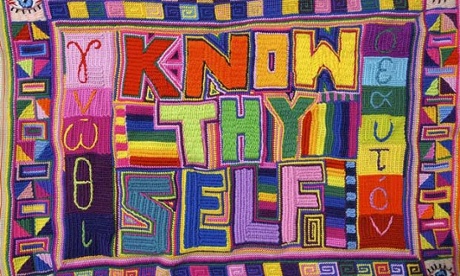
If you ever thought that the alleged critical nature of contemporary art was just a kind of magical thinking, then Primavera has plenty of examples. Paul Yore’s colourful wall-sized felt and needlepoint works such as Welcome to Hell (2014) and This Moment is Critical (2014) are wish fulfilment fantasies of victory over the everyday world, while the Telepathy Project’s 20 Days of Dream Telepathy (2013) is 20 chairs draped with fabric arrayed in the gallery. How one is meant to interpret this work as having anything to do with the title is open to discussion, but Emily Hunt’s sequence of watercolours and glazed sculptures are far more orthodox and accessible pieces about magic and transformation.
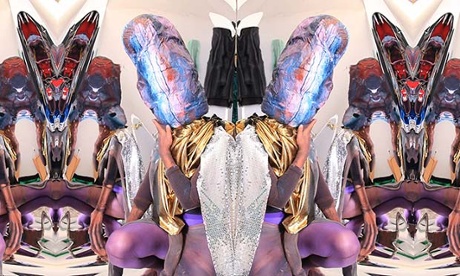
Dwyer apparently chose the works in the show without a unifying theme in mind, but a continuity is certainly there, and if you know her recent sculptures in the Biennale of Sydney, pieces by Nick Dorey and Sean Peoples not only wouldn’t have looked out of place in the Australian art world of 22 years ago, but they nicely compliment Dwyer’s own interest in sculptural transformation. Of the more unexpected highlights in the show are Ben Denham’s drawing machine works, Marian Tubbs’s inscrutable meditations on post-internet aesthetics and Lucienne Rickard’s stunning graphite drawings which manage to elegantly combine form and idea.
The 2014 Primavera exhibition is plagued by the kinds of problems that seem to beset these regular shows at major public galleries. There’s even less physical space for the show than last year, the whole thing jammed into a third of a gallery floor with 13 artists each represented by multiple works. And putting nine videos in one giant loop is a guarantee that no one will sit down and watch it all the way through. The effect is rather like turning the MCA into an artist-run gallery.
The bigger issue for Primavera is that the art world of 1992 is long gone. Where contemporary art might have had some claim to a critical effect, its accommodation by the market and the repetition of its forms and ideas has meant that the genre has entered a long mannerist phase. Maybe Primavera needs to be rethought for the 21st century: fewer artists, older artists and the inclusion of radical non-art forms of creative expression ... who knows?
At any rate, we’ll all be back here again next year. See you then.
• Primavera 2014: Young Australian Artists is showing at the Museum of Contemporary Art until 30 November