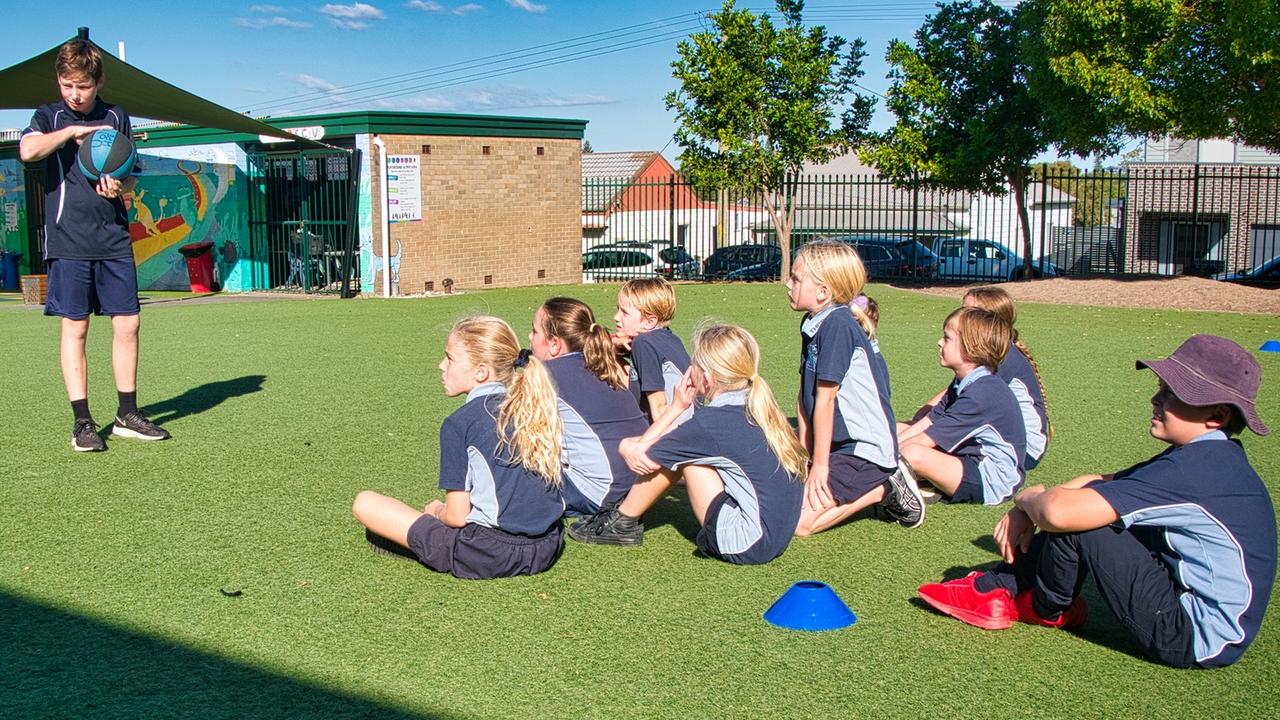
Primary school children given the chance to teach their younger peers are showing remarkable improvements in their confidence, class work and mental health.
But the benefits of instilling leadership skills in female students in particular could have lasting impacts on efforts to alleviate the gender gap for the next generation.
The Learning to Lead (L2L) program is based on the simple premise kids look up to other children, and found students as young as 10 can learn and apply effective leadership skills.
"With the current context of the world where we can see horrific examples of leadership, particularly at a political level, we need to teach kids what it actually means to be a good leader and put those skills into practice," lead researcher David Lubans told AAP.
"Whether it is boys or girls, the skills of what it means to be a good leader, to have conversations about it and apply it in the context of teaching others ... those skills give them confidence and will be taken into other areas of their life."

The study of almost 2000 students across 20 NSW primary schools was led by the Professor Lubans' team at the University of Newcastle in collaboration with the Hunter Medical Research Institute.
Student leaders were trained by their teachers on various leadership styles and communication skills and then led physical activity sessions for younger peers.
Teachers found the program significantly improved the student's leadership effectiveness, wellbeing and focus in class.
The wellbeing benefits were particularly notable as it bucked the typical decline in mental health often seen as children approach adolescence.
For younger students between eight and 10 years old, teachers observed they engaged in more physical activity and felt more capable in their physical skills.

Girls in particular showed increased confidence in their self-efficacy, Singleton Public School teacher Cass Botes said.
"The leaders grew dramatically in their own skills on communication, collaboration, problem solving and decision making," she said.
"Girls often showed stronger communication and collaboration, while boys were more confident in public roles to begin.
"Boys improved in empathy and listening, while girls grew in confidence and assertiveness."
Ms Botes also noticed the culture in the classroom improved as students felt connected and valued.
"Even though it was a 'sporty' program, our 'non-sporty' kids gained a great sense of belonging ... it improved behaviour across the board as students learned to be role models," she said.
"They also learned about their peers' and skills they had that they might not normally get to demonstrate, such as leadership, self-regulation and managing tasks."