Amid growing anxiety about the future of the global economy, it is vital to avert a situation in which the unity of advanced nations will be further shaken.
It is necessary to prevent a widening of the schism caused among these nations by U.S. protectionism, and restore the cooperative framework indispensable for their stable growth.
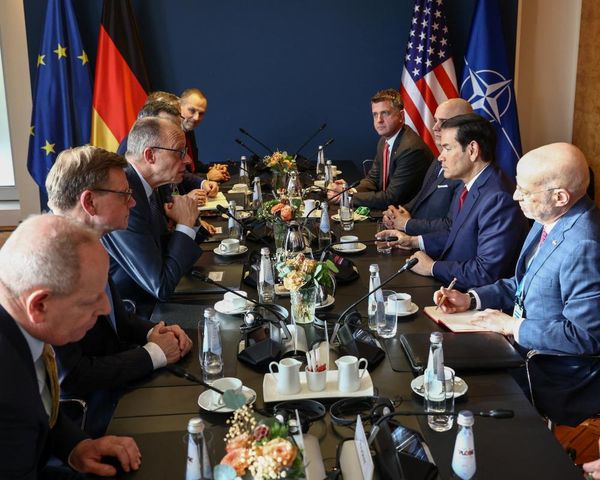
An unusual situation has developed at the latest meeting in Canada of finance ministers and central bank governors from the Group of Seven major countries, in which the United States was the focus of criticism from the other G-7 nations for its unilateral moves to promote protectionist polices.
The summary prepared by Canada, the chair of the meeting, singled out the United States for criticism, expressing concerns that "the tariffs imposed by the United States ... undermine open trade and confidence in the global economy."
The growing criticism against the United States stems from that country's unilateral imposition of high additional tariffs on steel and aluminum imports from the European Union, Canada and other countries, after taking similar actions against Japan and China.
The EU and Canada immediately announced they would retaliate against the United States by imposing high tariffs on imports from that nation.
The United States has also started considering a plan to impose higher tariffs on such imports as automobiles, whose production constitutes a key industry of Japan and European countries. The situation is beginning to bear the aspect of a global trade war.
Protectionism poses a threat to the free trade system, a setup seen as the basis for global growth. The blow from protectionism can even spread to domestic consumers and corporations, and there are no winners in a trade war.
Fulfill G-7 obligations
The United States' conduct can be described as self-centered folly that can no longer be overlooked. There was good reason for the U.S. policy to be furiously opposed at the G-7 meeting.
At a press conference, U.S. Treasury Secretary Steven Mnuchin emphasized, "I don't think, in any way, the U.S. is abandoning its leadership on the global economy." However, the United States obviously cannot gain the understanding of the international community.
Japan and European countries need to more sternly urge the United States to rescind its protectionist policies.
There are concerns that divisions among advanced nations over trade could grow even more intense, resulting in a situation in which G-7 policy management would be hindered.
Many risks lie in the future of the global economy. Risks include currency depreciation in emerging economies due to rising interest rates in the United States, and political uncertainty in Europe due to the rise of populist political parties as well as increasing tensions in the Middle East. They could trigger a violent disturbance in the market.
Under ordinary circumstances, the latest G-7 meeting should have served as a venue for in-depth discussions about how to handle these risks. It is regrettable that the trade problem took up time in the meeting.
Besides economic issues, many other important issues, including the North Korean problem, must be repeatedly discussed at a summit meeting of major nations that will open in Canada's Charlevoix region on Friday.
While showing a resolute attitude toward U.S. trade policy, the six other G-7 nations should produce good results from discussions by cooperating with the United States in other fields, thereby fulfilling their obligation as advanced nations.
(From The Yomiuri Shimbun, June 5, 2018)
Read more from The Japan News at https://japannews.yomiuri.co.jp/