The Cabinet of new Prime Minister Yoshihide Suga has barely put its feet under the desk, but it is already cranking up the pressure on regional banks to realign to boost their chances for survival.
Japan's falling population and low interest rates have been hurting regional banks' profits, so the government aims to promote realignment to strengthen the banks' management, which in turn will help jump-start local economies. However, some regional bank officials have expressed mixed feelings over consolidation within their sector.
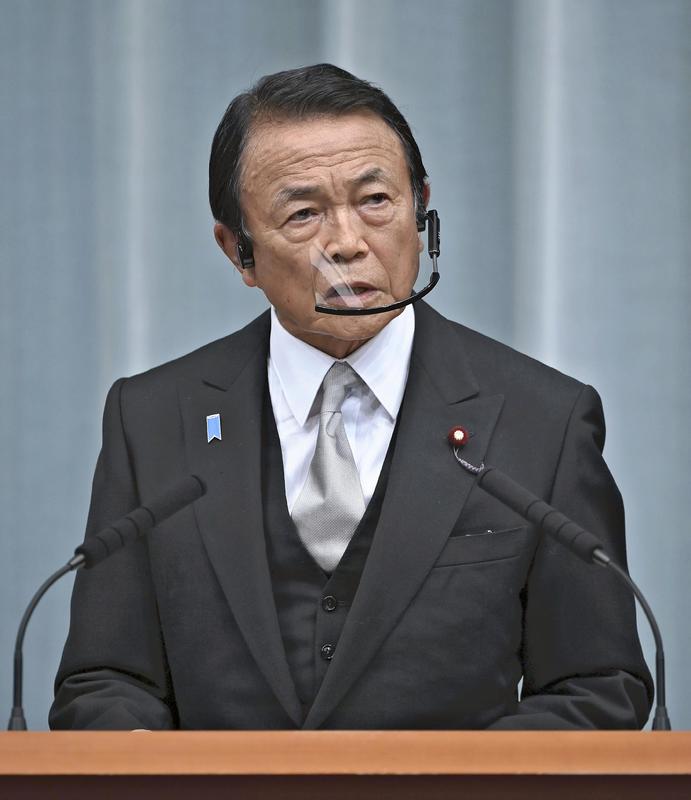
At a press conference Wednesday evening, Finance Minister Taro Aso revealed Suga had instructed him to prepare an environment that includes realignment of regional banks to shore up their management foundations. "Taking into account factors such as the declining population, regional banks that stick to their existing business models will struggle even more," Aso said.
The predicament facing many regional banks is growing more acute, but realignment has been snail-paced. On Oct. 1, Nagasaki Prefecture-based Eighteenth Bank and Shinwa Bank will merge, and Niigata Prefecture-based Daishi Bank and Hokuetsu Bank will do the same in January. However, banks in many regions continue to dawdle when it comes to forging partnerships with rivals.
A special provision of the Antimonopoly Law that comes into force from November will make mergers and other tie-ups easier to facilitate even if banks hold a larger share of a region's loans. The Suga Cabinet could accelerate creation of a framework that would prod regional banks toward realignment.
Some sources anticipate this would involve a review of the deposit insurance system. Under this system, banks, credit unions and other entities pay insurance premiums that enable them to withdraw money they had deposited in certain financial institutions, even if those institutions collapse. These premiums are currently calculated based on a certain proportion of the bank's deposit balance. However, it has been speculated that the government is considering a proposal that would lower the rate of these premiums on a scale adjusted in line with an institution's financial health.
Strengthening regional banks' financial situation through management integration would alleviate the strain these banks feel. Some observers expect Suga's Cabinet will step up consideration of this issue.
--SBI on the charge
Suga appears to also be pinning expectations on SBI Holdings, which has actively bought stakes in several regional banks and placed them under the major online brokerage's umbrella.
Suga and SBI Holdings President Yoshitaka Kitao are known to be close friends. Much to the surprise of his close aides, Suga attended a July 2019 ceremony commemorating the 20th anniversary of SBI Group's founding, despite this event being during campaigning for the House of Councillors election.
SBI, which is planning to unite regional banks in a loose association, has invested in four banks including Shimizu Bank in Shizuoka Prefecture and Shimane Bank. "Up to 10 banks will participate" in the partnership, Kitao said during an address on Sept. 2. "We're close to reaching an agreement with three or four."
Suga telephone Kitao on Sept. 3 and reportedly asked him to continue efforts to build the alliance of regional banks. SBI could possibly ramp up its investment spree in the months ahead.
--Banks dragging feet
Regional banks hold mixed views on realignment.
An official at a bank in the Tohoku region admitted many banks were feeling the pinch. "I basically share the prime minister's view. Regional banks can't survive unless they at least consider realignment," the official said.
On Wednesday, Eighteenth Bank President Takujiro Mori said, "The earnings environment for regional banks is deteriorating year by year. We'll try to make sure people realize that our merger was a good move."
However, banking systems, lending standards, employee salaries and other factors vary between regional banks. Reconciling these differences is not always simple.
"A merger that creates a bigger bank and cuts costs is simply kicking the can down the road," said an executive at a Kansai region bank who is reluctant to join forces with other banks. "Forming tie-ups with companies in nonbanking fields and creating new services are the paths to survival."
Read more from The Japan News at https://japannews.yomiuri.co.jp/