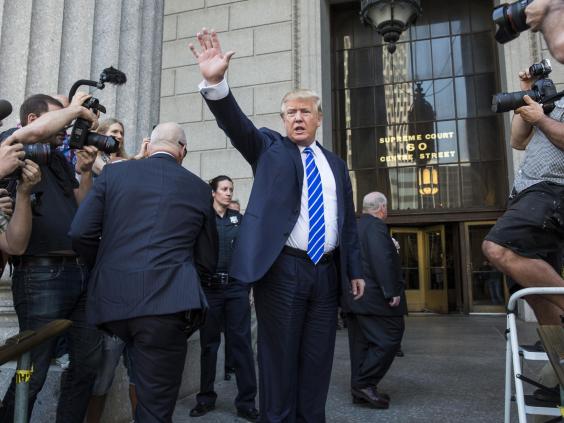
The favourite theme of one of the presidential candidates has, for a number of weeks, been his allegation that the voting system is rigged.
Indeed, Donald Trump has made the claim so many times, that a recent report by Politico suggested that a full 41 per cent of voters believe the election could be “stolen” from them as a result of voter fraud - something experts on the US presidential election say is all but impossible to achieve.
Now, a study by Rice University in Houston has found that despite the political rhetoric, people have an inate sense of whether a voting system is secure or not.
In a study of 90 voters in a mock election, researchers assessed participants' perception of the security of three voting systems, each with different levels of security: a standard paper ballot (the least secure); a paper ballot with enhanced security mechanisms (one of the most secure); and a paper ballot that included fake security features to give the impression of enhanced security without actually doing anything to make the system safer.
The college said that after voting, each participant completed a survey that included questions about the security of the voting system they used so that the researchers could determine if one system of voting was perceived to be more secure than another.
Voters found the system with enhanced security mechanisms to be the most secure and were not deceived by the system with fake security elements.
“When US voters complete their ballot, they are providing confidential information in the form of their candidate or proposition selections, which may - or may not - align with the majority of voters’ beliefs and/or how other people want them to vote,” said Claudia Ziegler Acemyan, a postdoctoral research fellow in psychology.
“Accordingly, voters must trust the system to keep their votes anonymous and not record any type of identifying information that could link them to their ballots.”
She added: “If voters suspect any type of security flaws, then they might not see the point in participating in an election. This results in disenfranchisement, potentially impacted election results and possibly an overall lack of confidence in the resulting government and policies.”