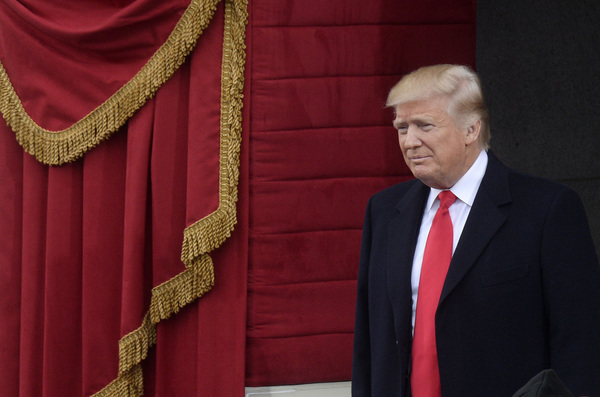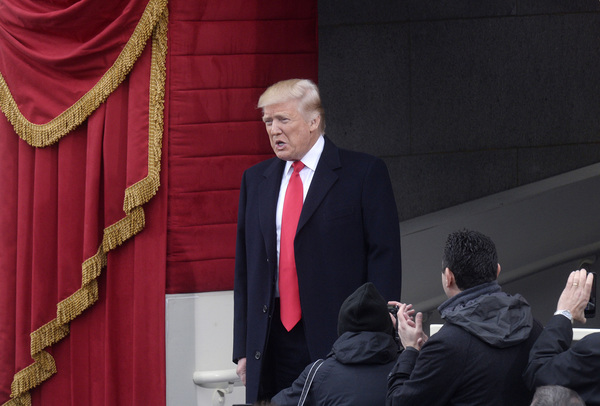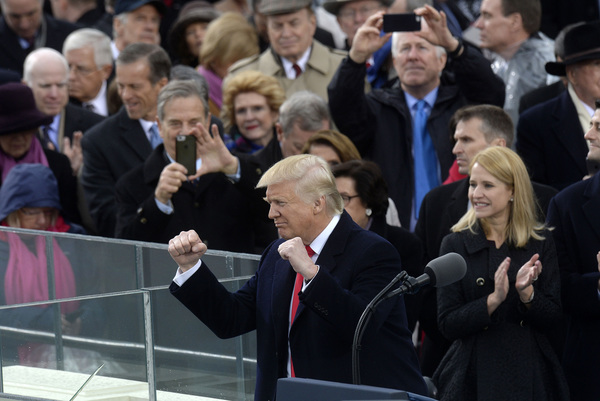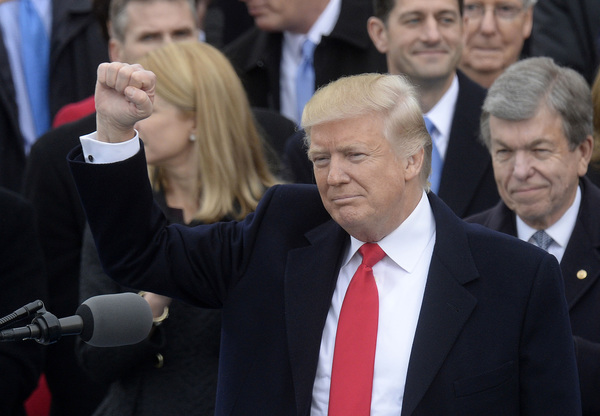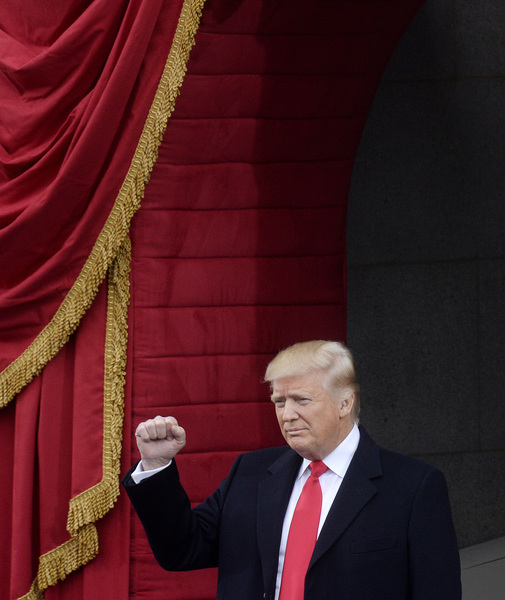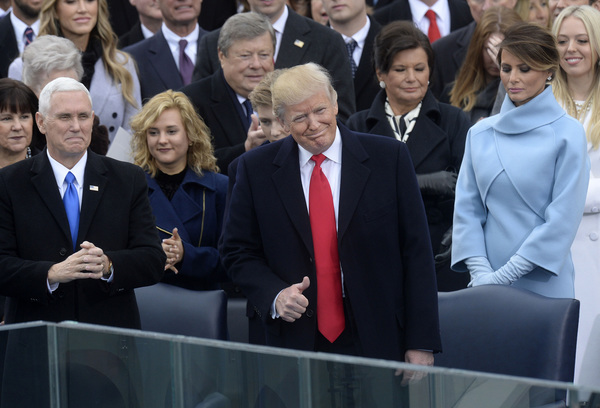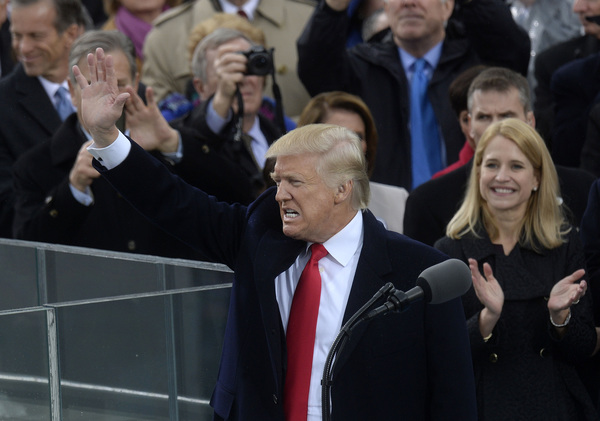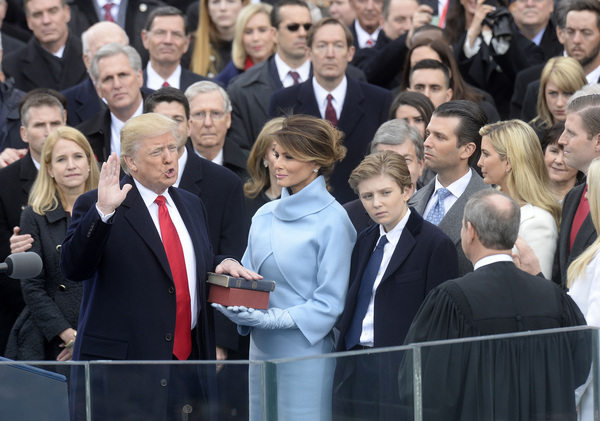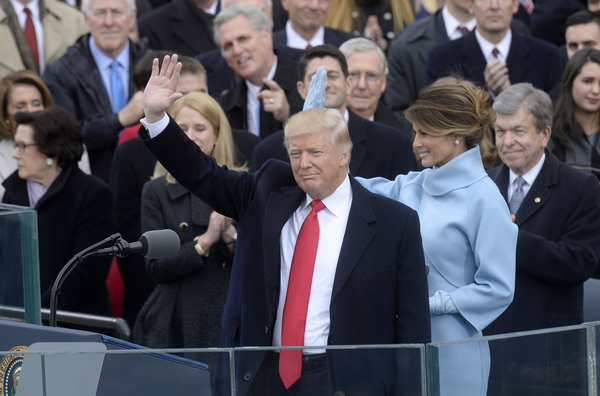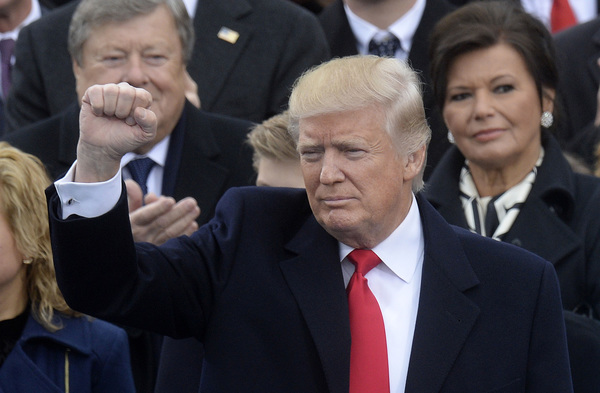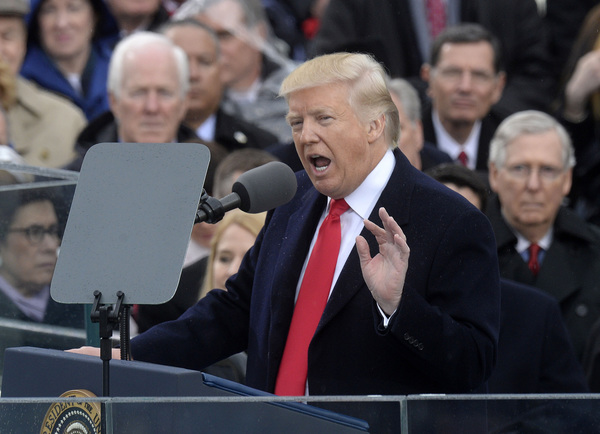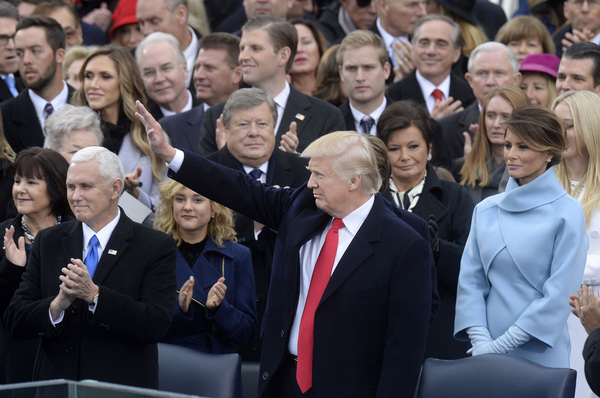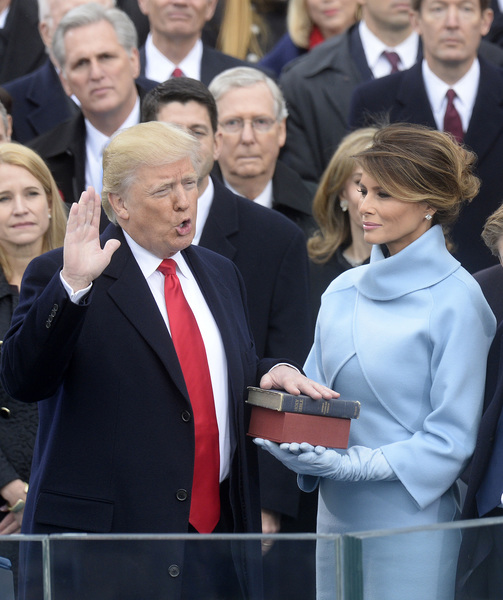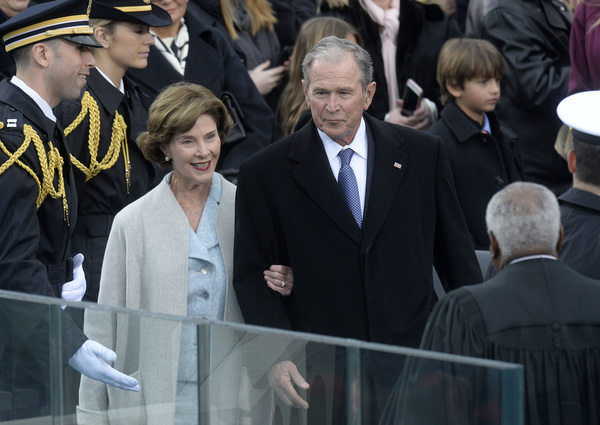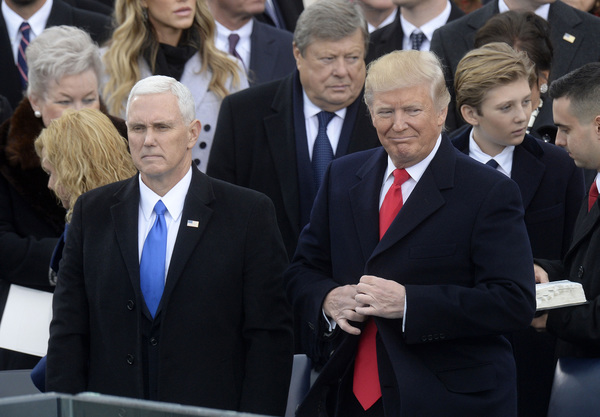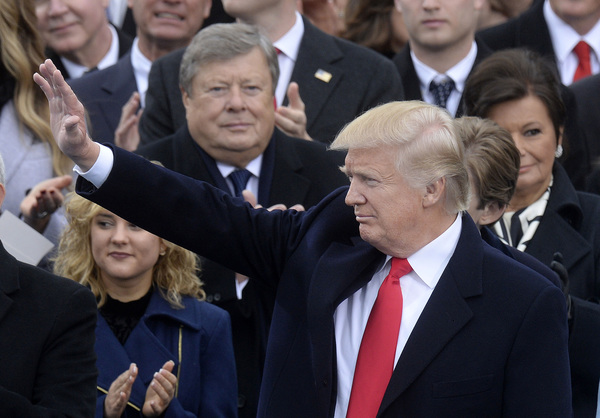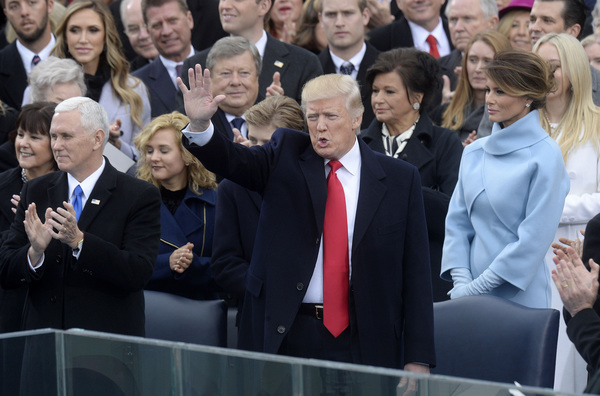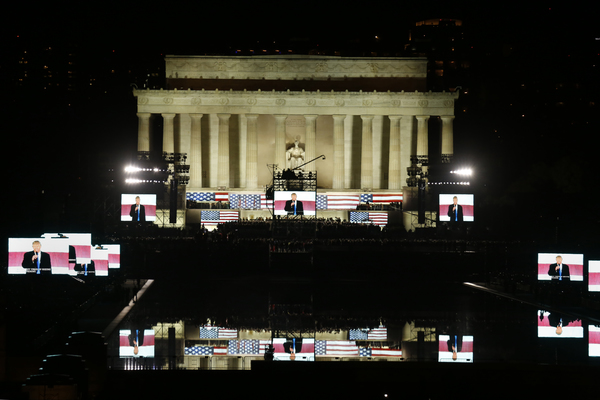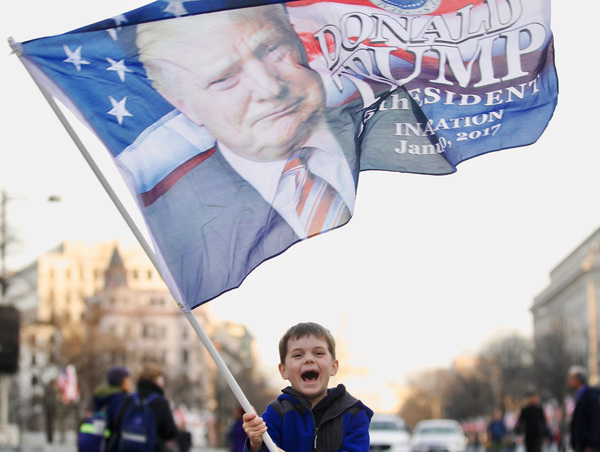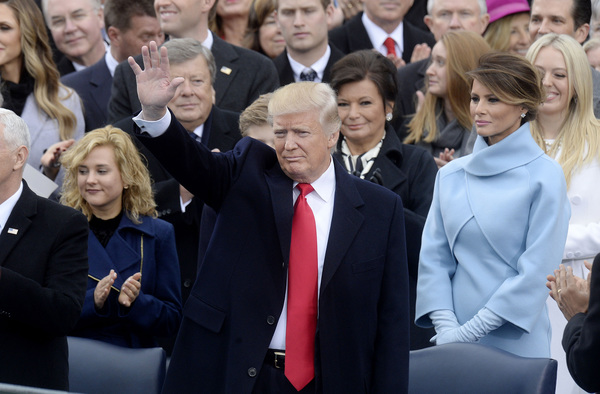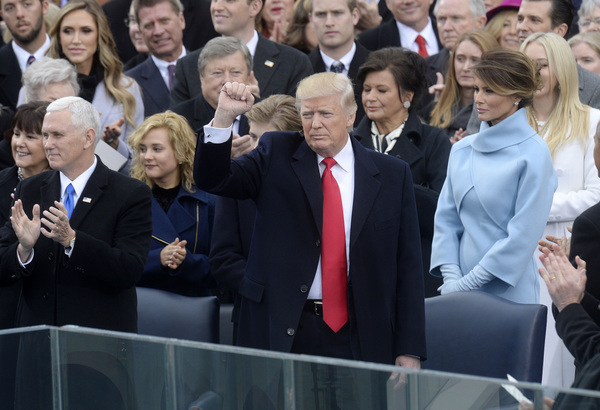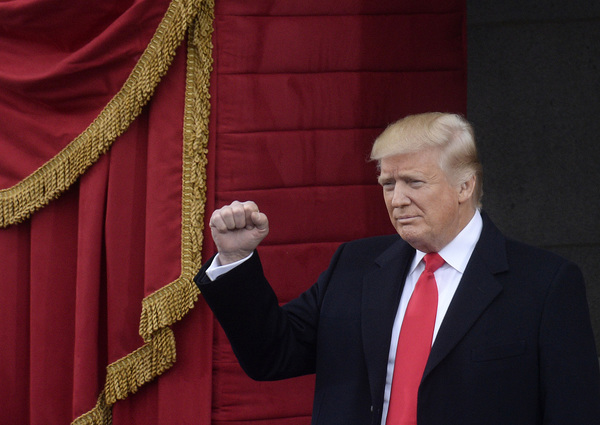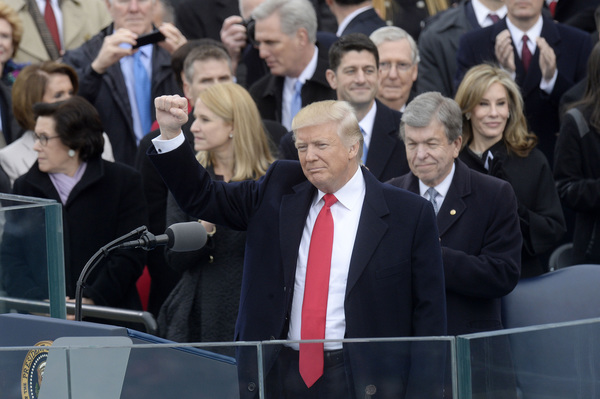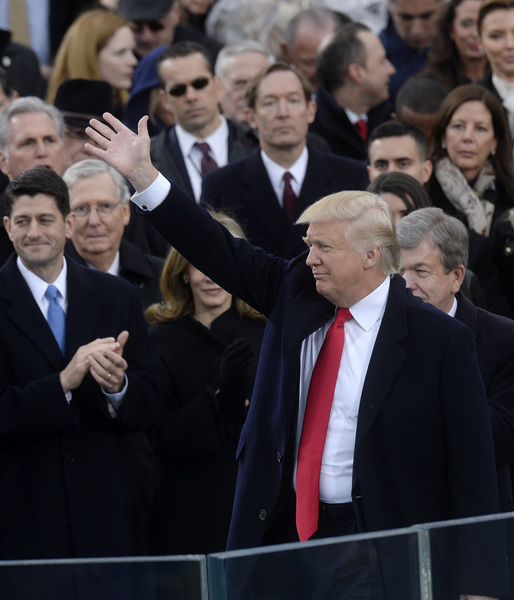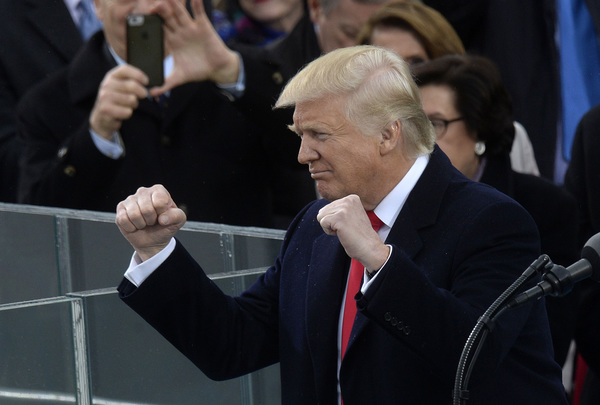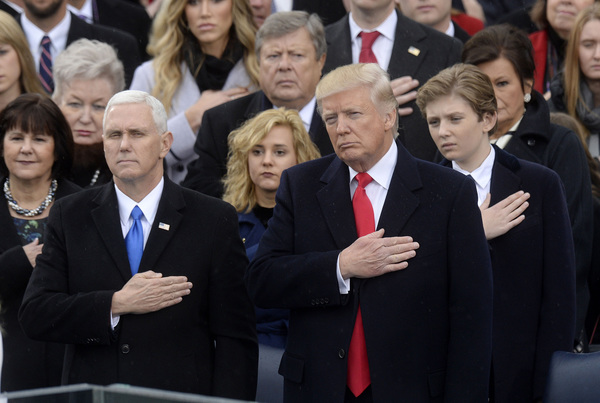
WASHINGTON _ President Donald Trump, very much still in campaign mode, vowed in his inaugural address Friday to use his new powers to turn the country inward and "rebuild" America, telling his countrymen and the world he will govern with a simple principle: "It's going to be only America first."
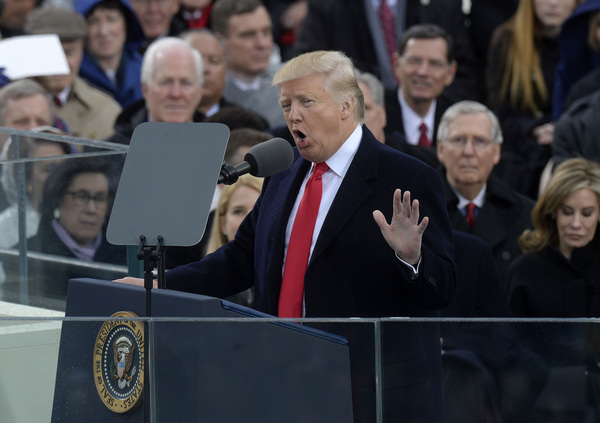
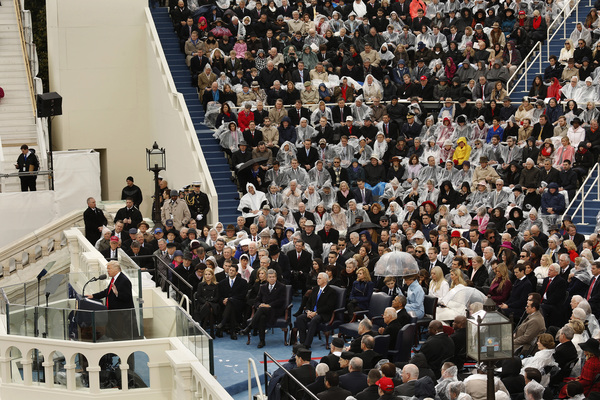
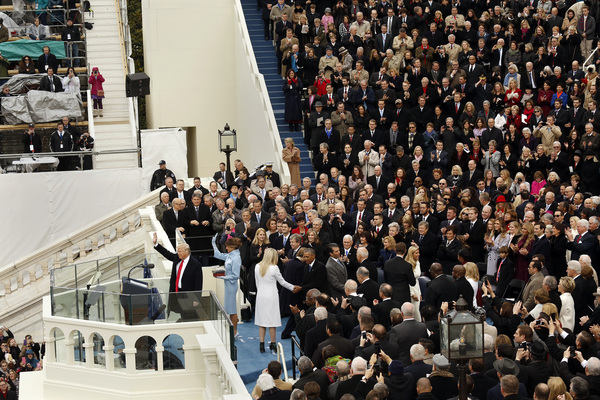
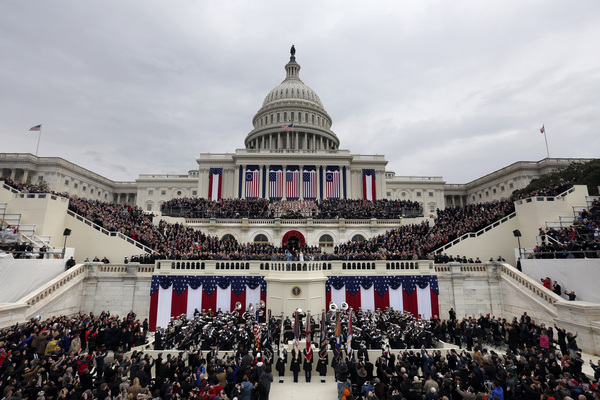
In a striking scene, the bombastic businessman and former reality television star, spoke from the very spot where American political giants like Ronald Reagan and Barack Obama delivered their first remarks as commander in chief.
"The day the people became the rulers of this nation again," Trump said. "The forgotten men and women of our country will be forgotten no longer."
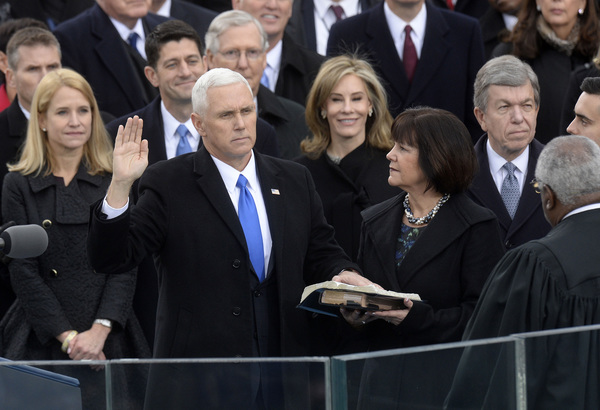
Trump promised his "total allegiance to the United States of America," and said his ascension to power has "special meaning" because it marks the "transferring (of) power from Washington, D.C., and giving it back to you, the people."
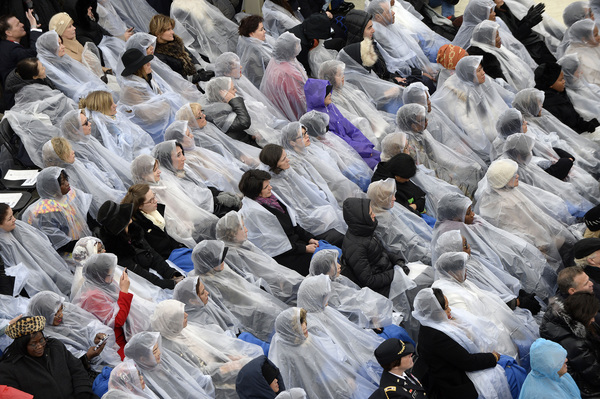
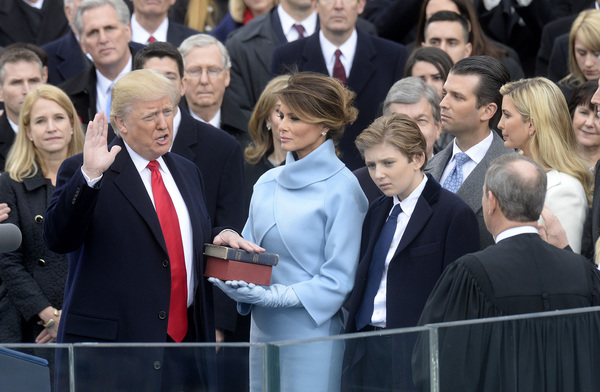
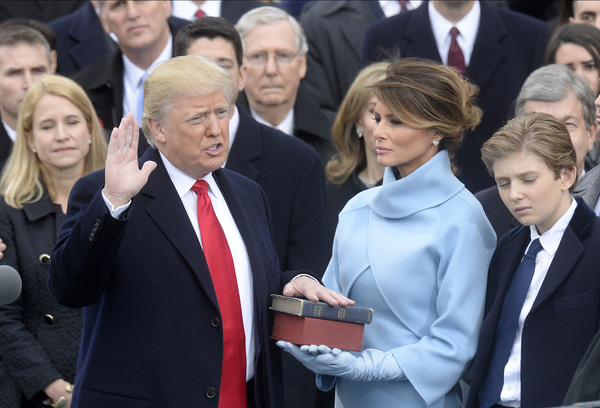
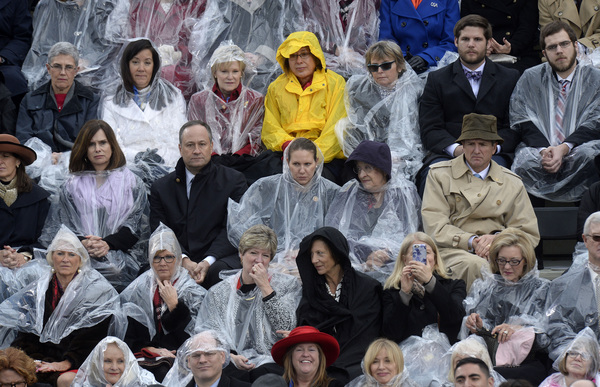
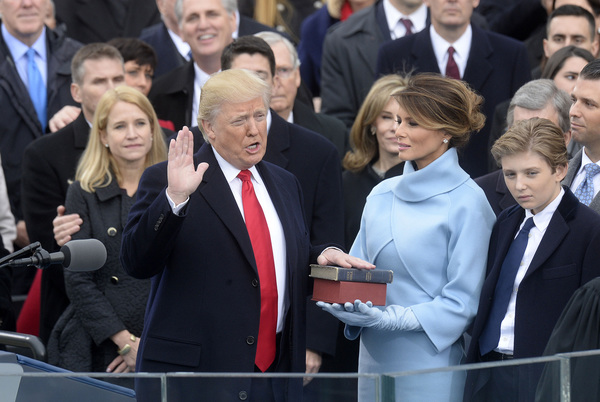
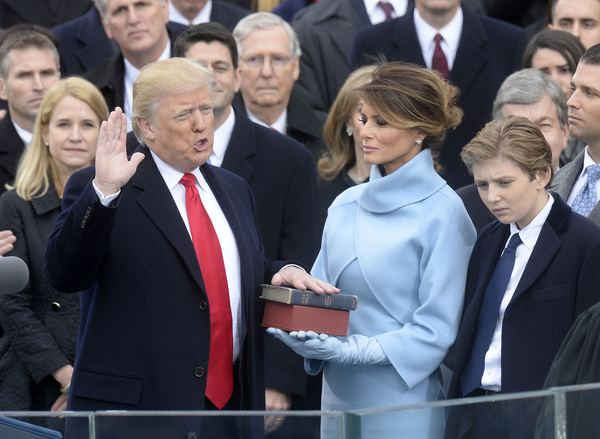
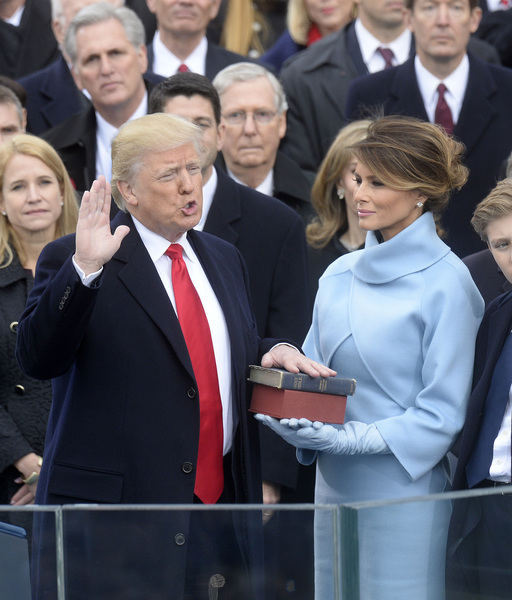
"For too long, a small group in our nation's capital has reaped the rewards of government while the people have borne the costs," the president said under a light drizzle that began just as he stepped to the podium after taking the Oath of Office from Chief Justice John Roberts. "Washington has flourished but people did not share in its wealth.
"The jobs left and the factories closed. The establishment protected itself, but not the citizens of our country," Trump said. "Their triumphs have not been your triumphs."
"Struggling" families across the country have had "little to celebrate," but the new _ and unlikely _ chief executive followed that dismal assessment with a bold promise: "That all changes, starting right here and right now."
"This moment is your moment," he said in a message to the American people, including what he calls the "forgotten" segments of the populace. "It belongs to you."
There were calls from Republicans and Democrats for Trump to deliver a message of unity, and parts of his speech were geared toward just that, saying "We are one nation," and "We share one home and one destiny," he said.
He described the words he spoke just minutes earlier that vested the powers of the presidency in him as an "oath of allegiance to all Americans."
Trump, echoing his campaign's major theme, signaled he intends to turn the country inward. He trumpeted his plans to tighten its immigration policies, prevent manufacturing jobs from being outsourced, and promised to "rebuild" the country's infrastructure.
He delivered a "new decree" that he wanted to be heard in "every city" and "every hall of power" across the world, which he called "a new vision that will govern" the United States: "From this day forward, it's going to be only America first.
Trump promised that tax policy, immigration policy and foreign affairs decisions will be crafted under his command to "benefit Americans" first and guard against (the) ravages of outside forces."
"America will start winning again," he promised. "Winning like never before. ... We will bring back our dreams." Also echoing his campaign message, he said the country will "buy American and hire American."
The new commander in chief seemed to signal he wants America to play a leadership role in global affairs, but he made clear his intention to focus on domestic matters.
"We will seek friendship and goodwill with the nations of the world, but with the understanding that it is the right of all nations to put their interests first," Trump said, adding previous U.S. presidents have defended other countries' borders and "enriched foreign industries" without "even a thought about the workers that have been left behind _ that is the past."
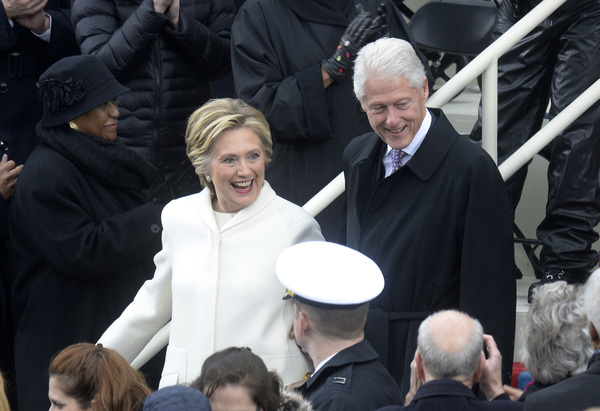
As lawmakers filed out to the West Front before the speech, members of both parties said they hoped to hear a message of national unity after Trump's campaign targeted Hispanics, Muslims and was accused of being condescending toward African-Americans.
"I hope to hear a speech like the first speech he gave the night after the victory, that he's president for all Americans," said GOP Sen. Jeff Flake of Arizona, who often was critical of candidate Trump.
Still, some were concerned Trump would revert to form shortly after assuming office.
"I'm sure he's going to give a speech about bringing the country together," said Sen. Chris Murphy, D-Conn. "But I worry about what he's going to tweet tomorrow morning."
Trump officially ran as a Republican, but many of his bold policy pronouncement and promises were uniquely populist, leaving many members of his own party wondering if his agenda will align with their traditional platform.
The incoming president appears more in line with Democrats on some issues, including his call for a massive _ and expensive _ infrastructure plan. He also wants to keep entitlement program as is, but GOP lawmakers want to overhaul things like Medicare and Medicaid.
Whether or not his address convinced GOP members or heartened concerned Democrats remains to be seen.
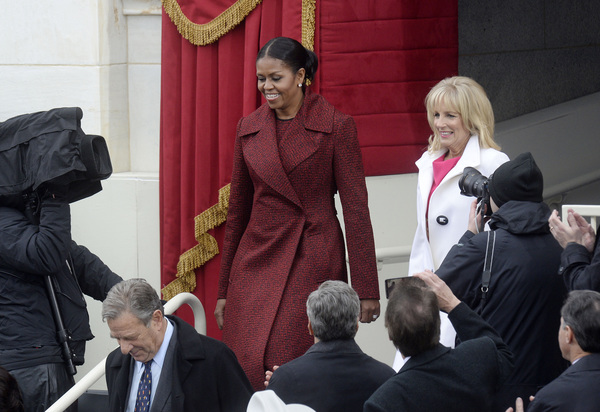
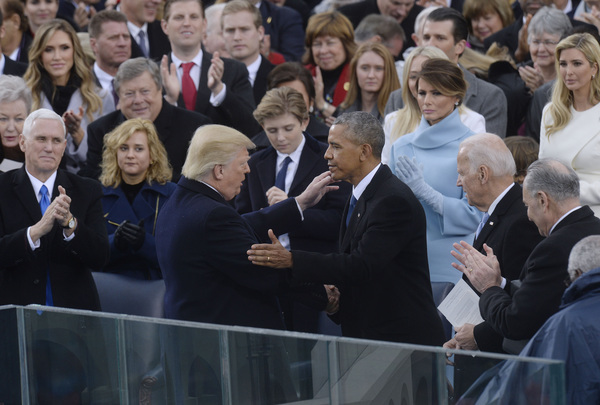
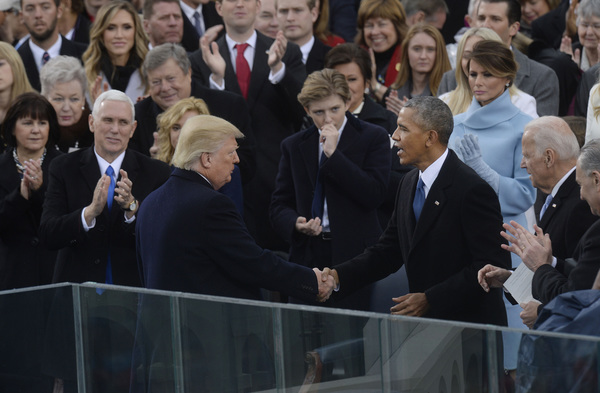
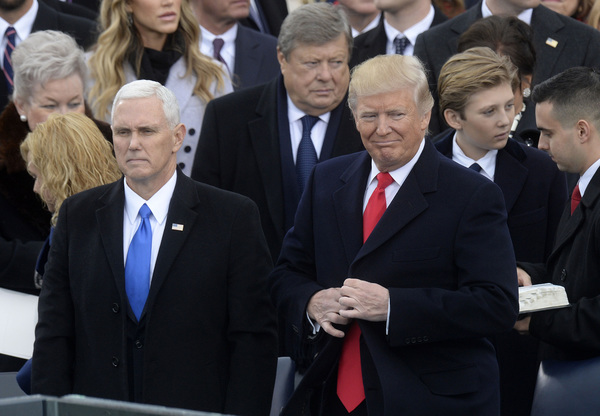
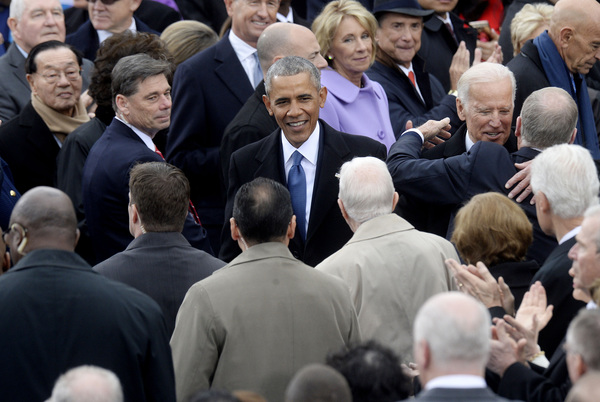
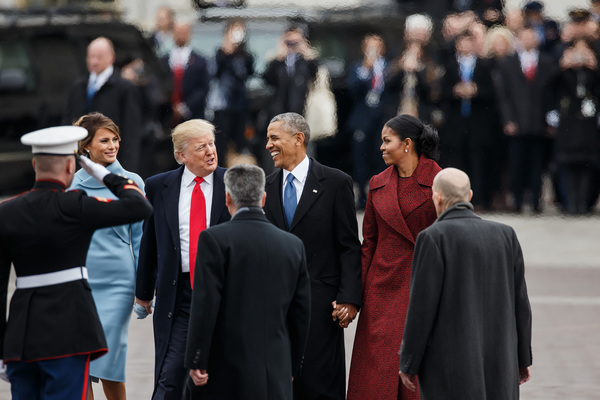
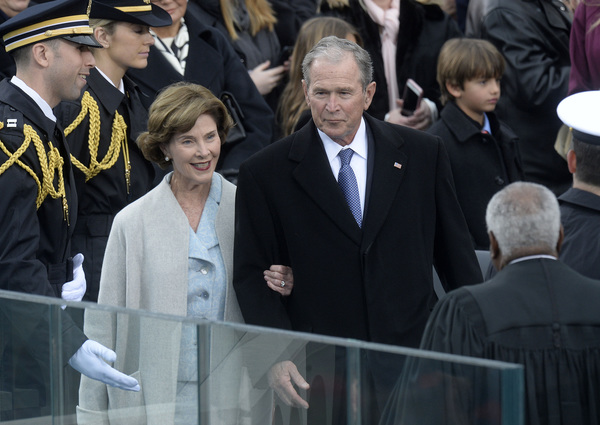
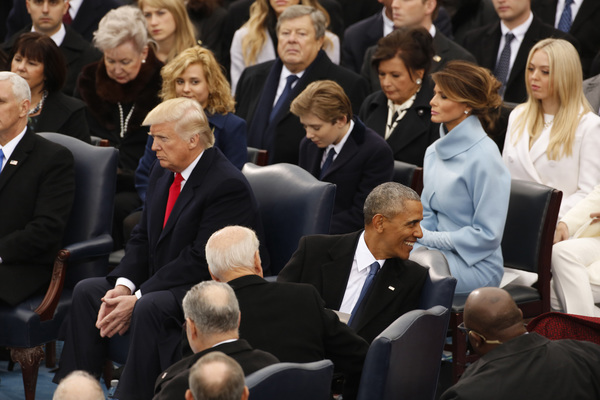
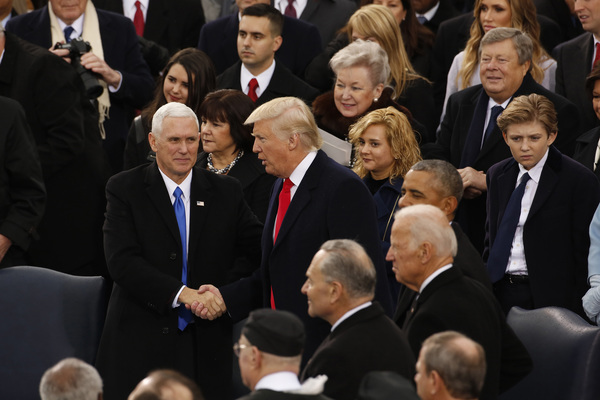
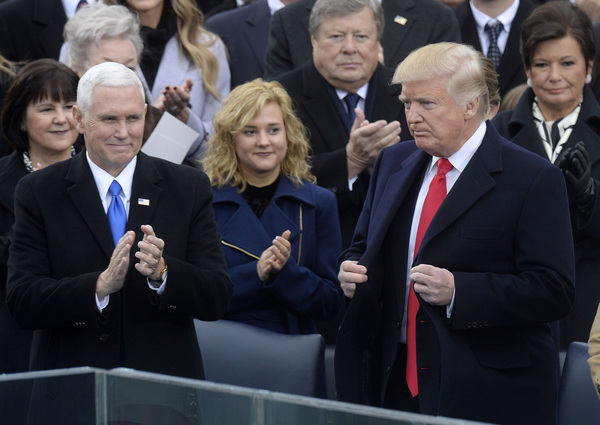
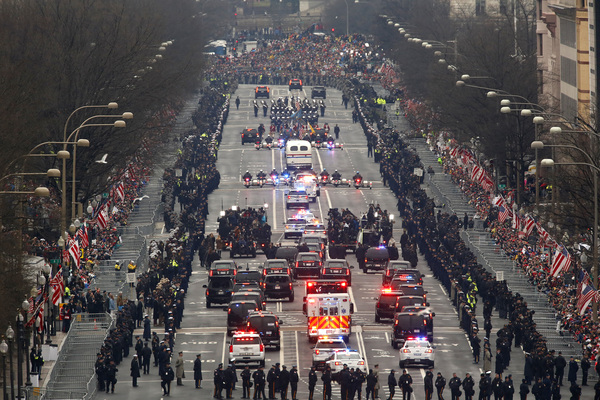
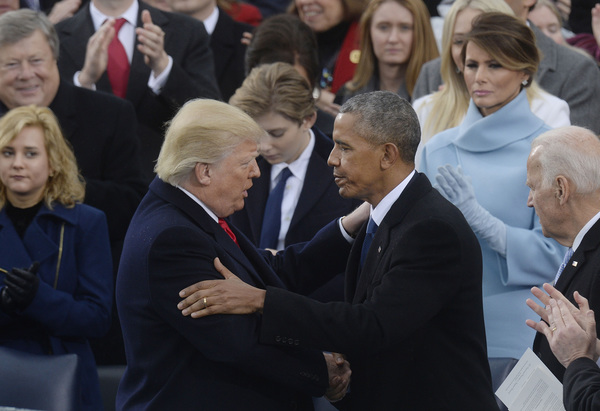
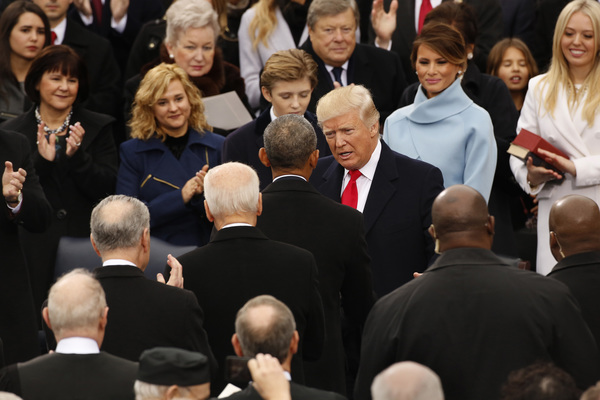
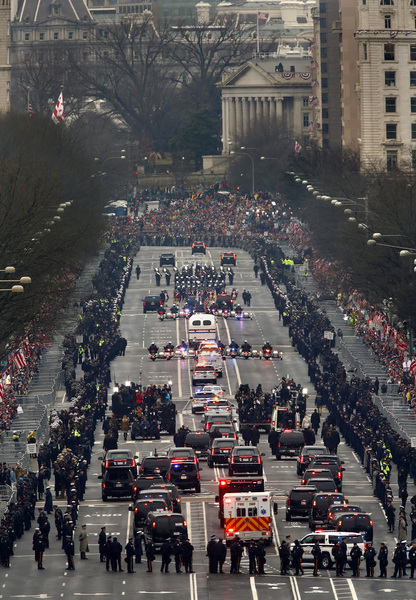
Trump and Obama arrived at the Capitol around 11 a.m. in the heavily armored presidential limousine known as "The Beast." Trump shook hands with congressional leaders, including House Minority Leader Nancy Pelosi, D-Calif.; Obama gave her a peck on the cheek.
The world was eagerly awaiting the address, wondering if Trump would strike a unifying and statesmanlike tone after a campaign in which he used an unprecedentedly brash style and a transition period that featured Twitter feuds with corporations, political rivals and civil rights icon Rep. John Lewis, D-Ga.
The Republican president rode to the White House a scorched-earth campaign with name-calling of his opponents and a strikingly dismal assessment of the country's health. Trump's populist campaign was fueled by disgust for what he often has called America's "Third World" infrastructure, "burning" and "crime-infested" inner cities, and its ill-advised foreign interventionism.
Lawmakers and experts agreed that anything was possible when the new president took to the familiar blue podium with the iconic seal. Many around Washington expected his inaugural address would sound much different than those delivered in the past.
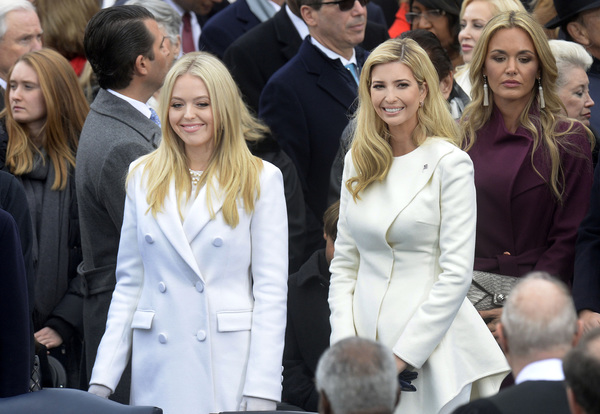
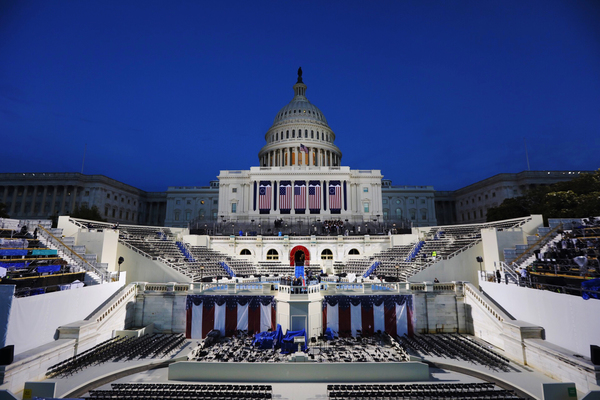
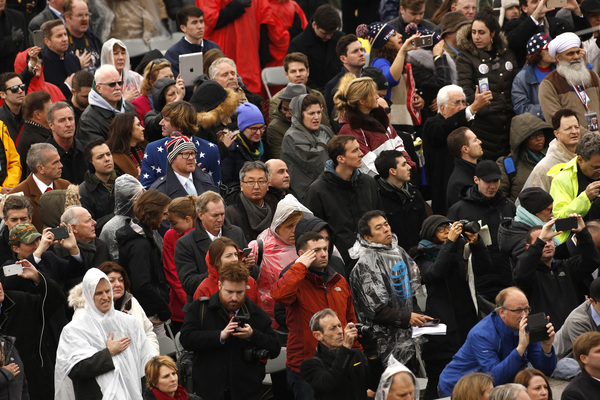
The feel inside the Capitol on Friday morning was one of, as Trump might describe it, low energy. Outside on the West Front, early arrivers sat in a drizzle amid chilly temperatures. The security presence inside the building was less than that of other major events just hours before the sitting and incoming commanders in chief were set to arrive.
The new president brings into office an admitted disdain for political norms, no previous government experience, no clear political or foreign policy ideologies, and a penchant for brashly lashing out at anyone who dares to criticize him.
He also takes office amid dwindling approval ratings. A Fox News poll released hours before he was sworn in put the figure at just 37 percent. Two other polls released earlier in the week put his approval rating at 40 percent.
At the same point in President Barack Obama's transition period eight years ago, one of those polls, conducted by CNN/ORC International, had his approval rating at 84 percent.
Both the polls released earlier this week, conducted by CNN/ORC International and The Washington Post/ABC News, put his disapproval numbers above 50 percent. The Post/ABC survey put it at 54 percent, while the CNN/ORC survey found 52 percent of those polled have an unfavorable view of how Trump is handling his transition to the Oval Office.
At this time in 2009, the two surveys put Obama's negative ratings at 14 percent (CNN/ORC) and 18 percent (Post/ABC).