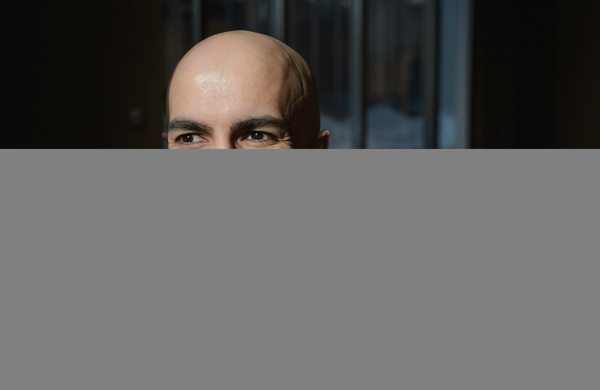
Minneapolis Fed President Neel Kashkari this morning said he voted against raising interest rates last week for reasons he has cited before, low inflation and a still-slack job market, but added a new concern _ a signal in the bond markets that the risk of recession is rising.
Kashkari posted an explanation of his thinking on the website of the Minneapolis Fed and Medium, a blogging website, as he has done after nearly every meeting during his year as a voting member of the Fed's rate-setting Open Market Committee, or FOMC.
"We all want the economic expansion to continue," Kashkari wrote this morning. "However, continuing to raise rates in the absence of increasing inflation could needlessly hold down wage growth while potentially increasing the chance of a recession."
He was consistently the most dovish member of the committee this year, at times voting alone against a rate hike. The committee raised rates three times, by a quarter point each time, to 1.5 percent in the latest move last Wednesday. In that vote, Kashkari was joined in dissent by Chicago Fed President Charles Evans.
Through the year, Kashkari has expressed worry that the U.S. job market is not as strong as the unemployment rate suggests. He has looked for stronger wage growth and a higher participation rate in the labor force.
Kashkari has also consistently noted the defiantly low rate of inflation, which remains below the Fed committee's target rate of 2 percent and has actually gotten lower this year.
"When inflation climbs above the Fed's target, the FOMC raises interest rates, which slows economic activity, wage growth and inflation," Kashkari wrote. "We cut rates to do the opposite. At least that how it's supposed to work."
He said it is perplexing that unemployment has moved steadily down to 4.1 percent while wage growth and inflation have been "muted." "In my view, the two most likely explanations are that the job market is not as tight as the 4.1 percent unemployment rate suggests and that people's expectations for future inflation have fallen, which can become self-fulfilling," Kashkari wrote.
While the idea that inflation should be higher is perplexing to many people, Kashkari pointed out that there is a danger to inflation that is too low. One is that people who expect inflation to be low do not press their employers for higher wages. Another is that a central bank is better equipped to fight a recession when inflation is high than low.
And now, Kashkari says the bond market is flashing a signal of a higher risk of recession. The so-called yield curve spread, which is the difference between the yields of 10-year and 2-year U.S. Treasuries, has dropped from 1.45 percent two years ago before the Fed started raising interest rates to .51 percent today. When the 2-year rate yields more than the 10-year, an inversion of the curve, the risk of recession is considered high. An inverted curve has preceded every U.S. recession for the last five decades.
"While the yield curve has not yet inverted, the bond market is telling us that the odds of a recession are increasing and that inflation and interest rates will likely be low in the future," Kashkari said. "These signals should caution the FOMC against further rate increases until it becomes clear that inflation is actually picking up."
Other economists and investors in recent months have talked about the flattening of the yield curve. After last Wednesday's meeting, Fed Chairwoman Janet Yellen said, "There is a strong correlation historically between yield curve inversions and recessions. But let me emphasize that correlation is not causation, and I think that there are good reasons to think that the relationship between the slope of the yield curve and the business cycle may have changed."
Presidents of the regional Fed banks rotate voting service on the committee. While Kashkari will remain an observer to the committee, he will not be a voting member again until 2020.