Preserving skiing's origins in China's remote west
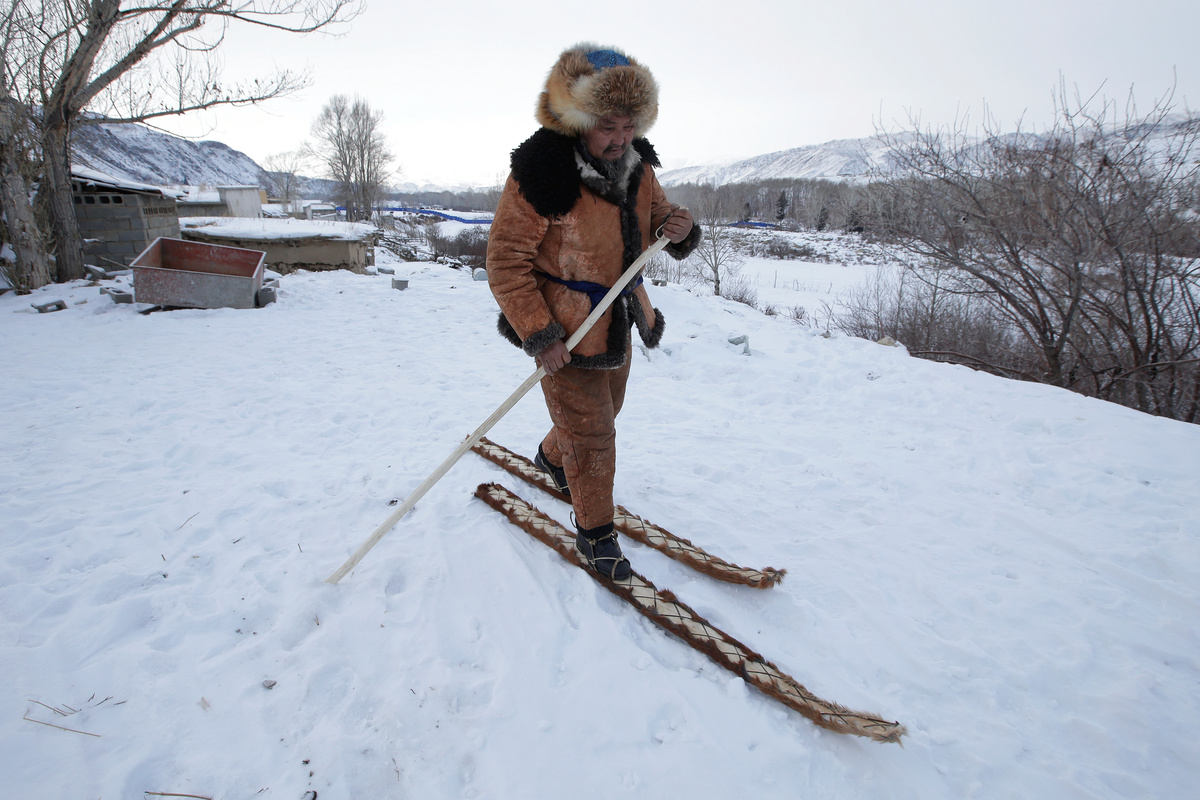
Local craftsman Slanbek, 63, tests traditional horse-hide skis outside his house on the outskirts of Altay, Xinjiang Uighur Autonomous Region, China, January 25, 2018. REUTERS/Jason Lee
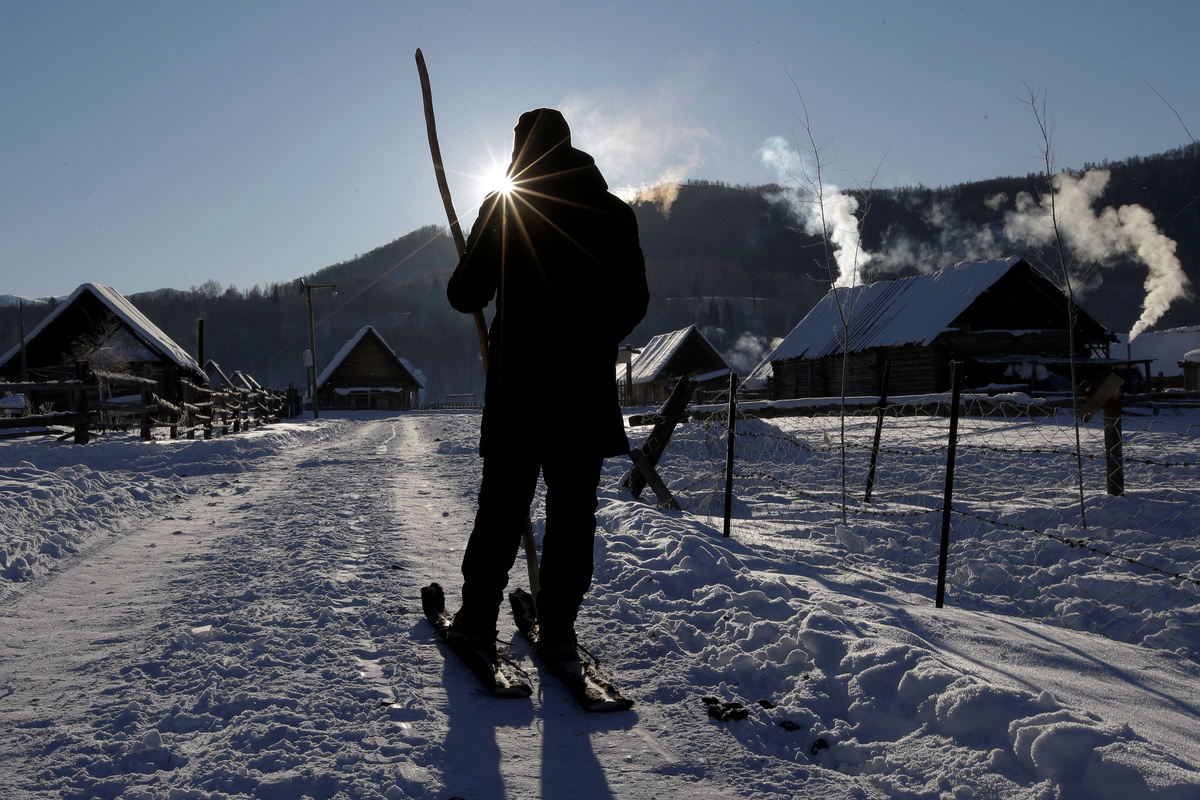
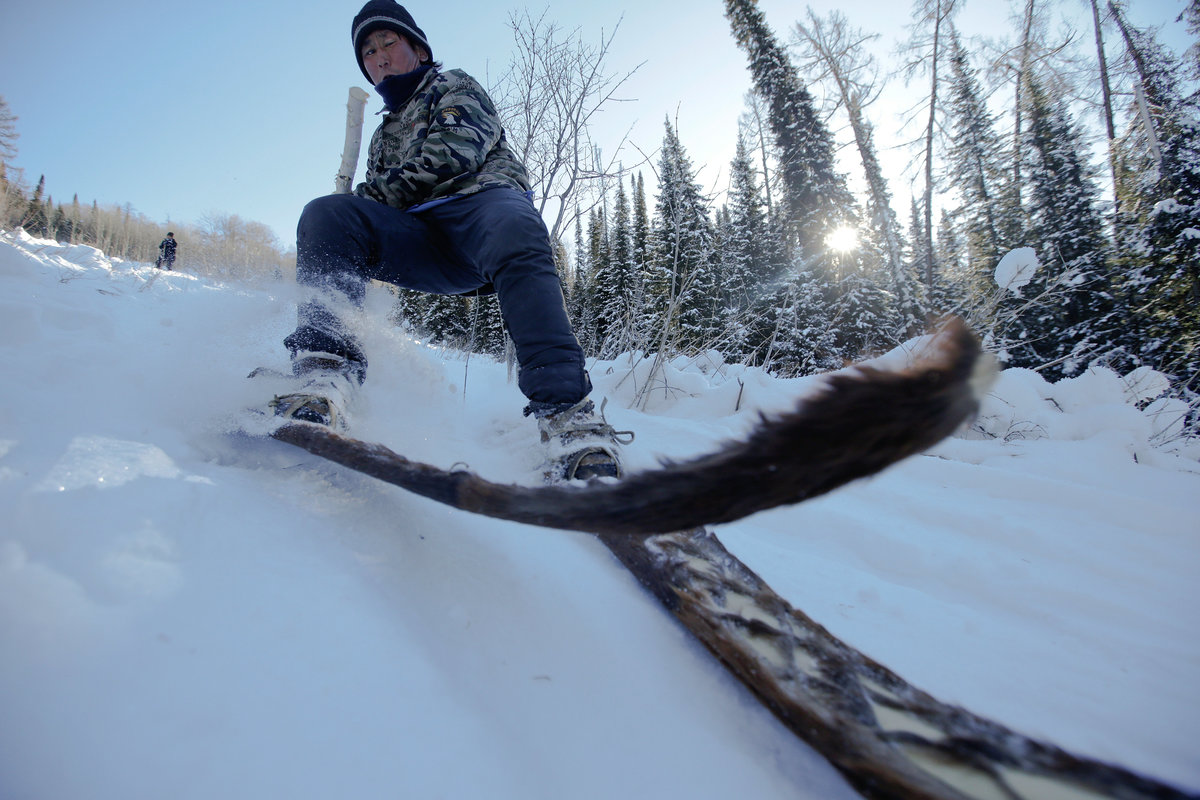
KHOM, China (Reuters) - On the western edge of China, Sulita straps on his skis and heads out into a winter morning. The temperature is -30 degrees Celsius (-22 Fahrenheit).
For much of the year, skiing is the only way to get around Khom, a village of wooden cabins heated by earthen stoves, five hours' drive from the nearest major town in the northern Altay region of Xinjiang.
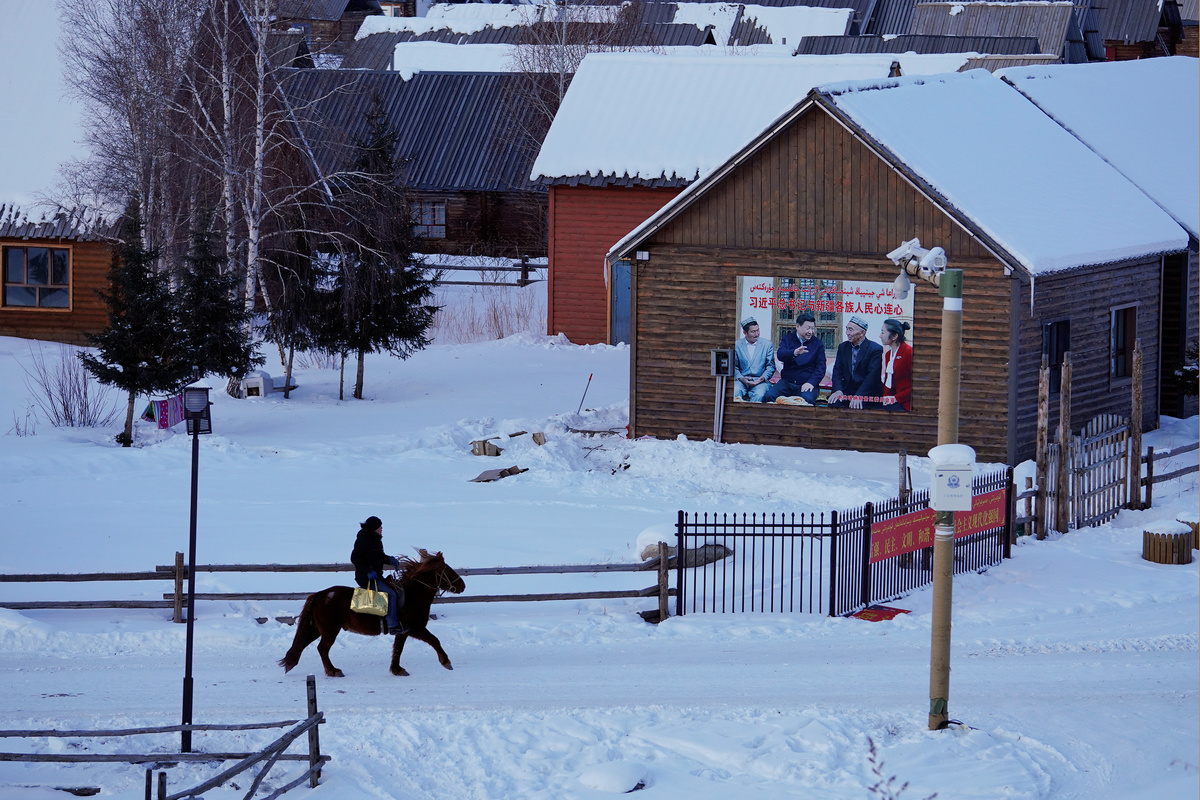
A man rides a horse past a poster showing Chinese President Xi Jinping (2nd L) chatting with Xinjiang minority people in Khom village of Altay, Xinjiang Uighur Autonomous Region, China, January 27, 2018. REUTERS/Jason Lee
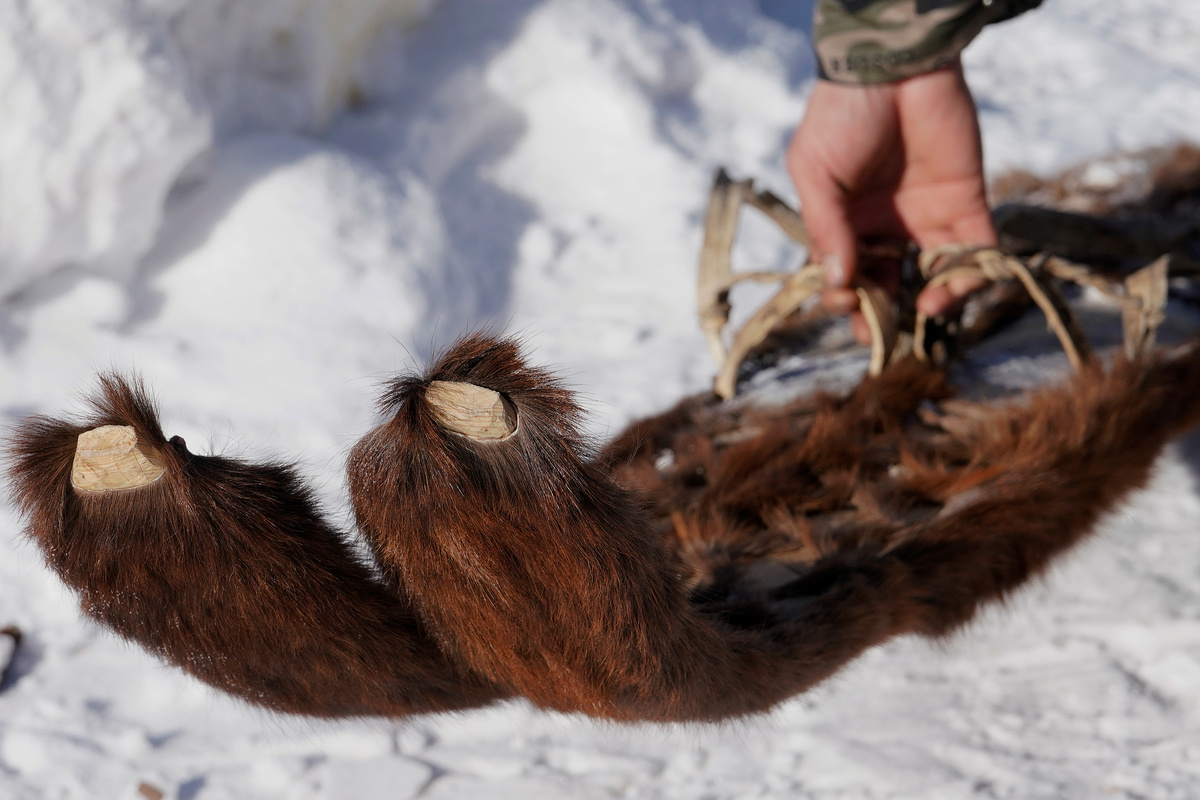
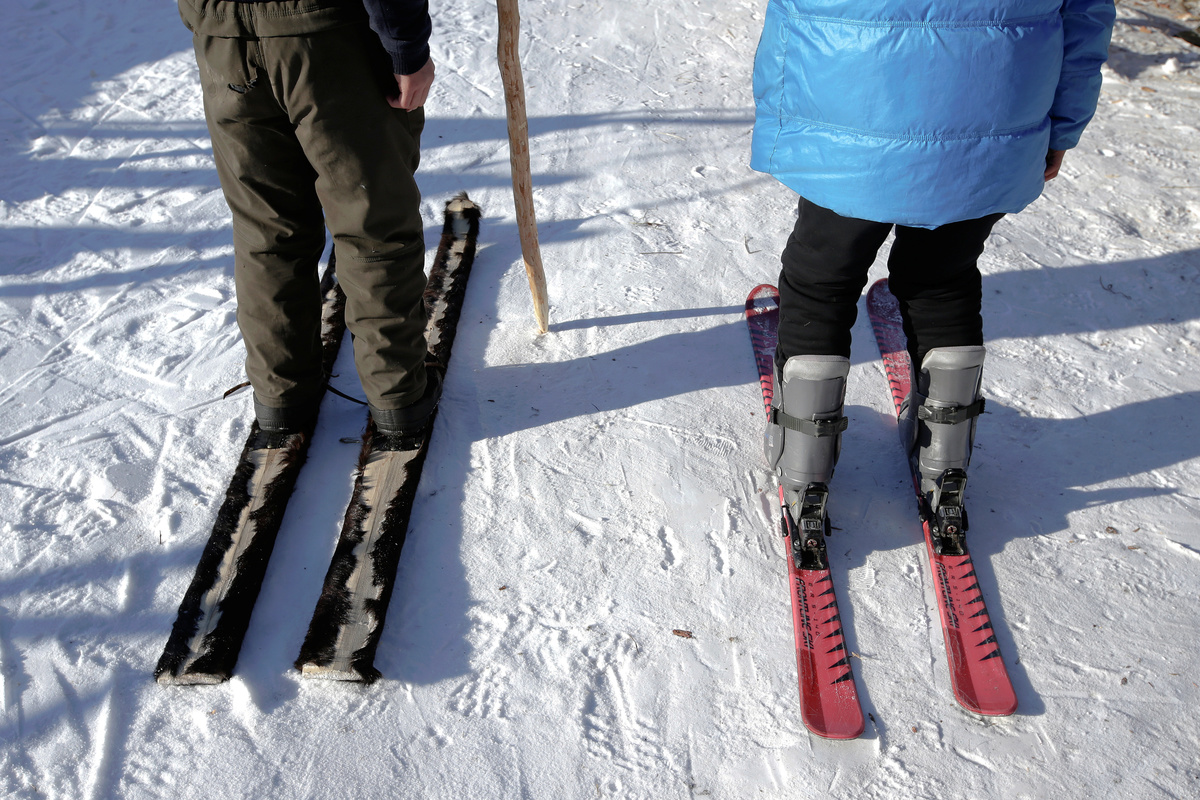
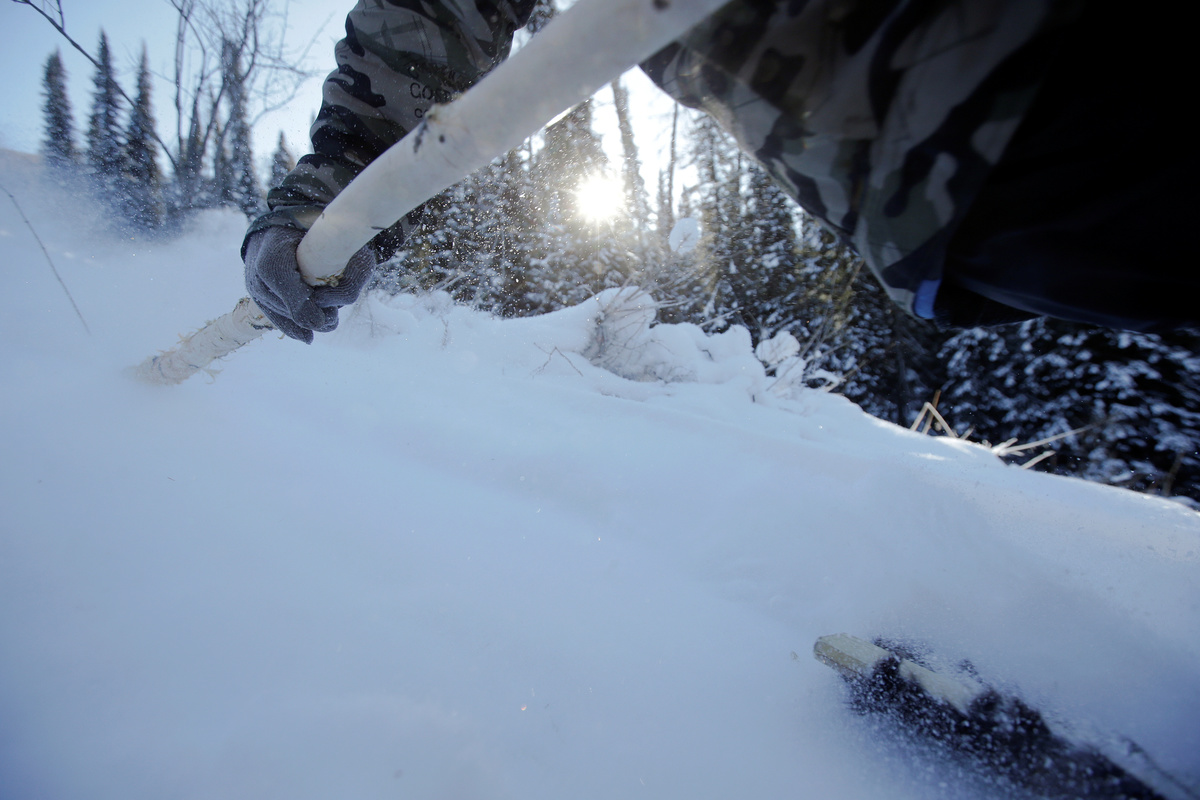
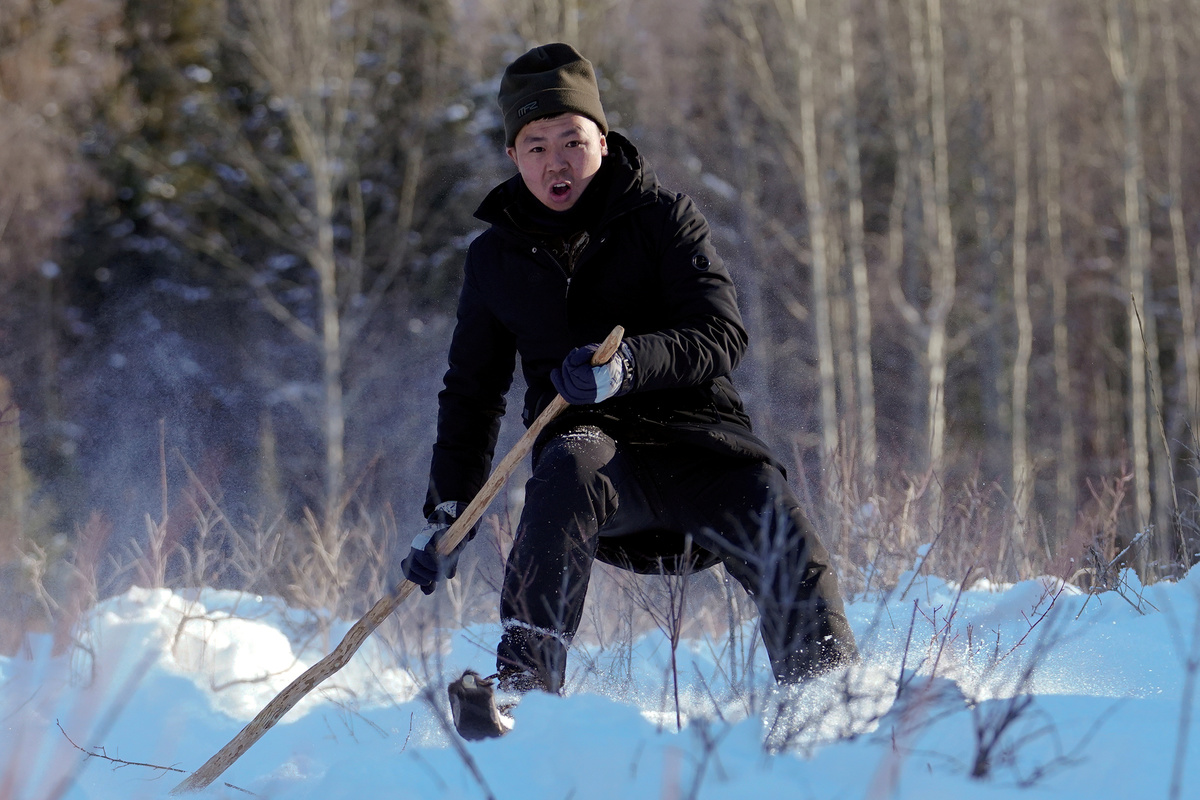
The design of skis such as the ones used by Sulita, who like many people in this region uses just one name, have barely changed for centuries. The bottom of the skis are covered with horse-hide and shoes are tied on with leather rope.
The direction of the horse fur allows the skis to slide forward, while preventing them from slipping backward when travelling uphill.
"I've been up the highest mountains with these," Sulita said. "When I was young, we used the horse-hide skis a lot, for hunting or if we lost a cow or sheep." (Click http://reut.rs/2EKCjWn for a picture package on traditional skiing in western China.)
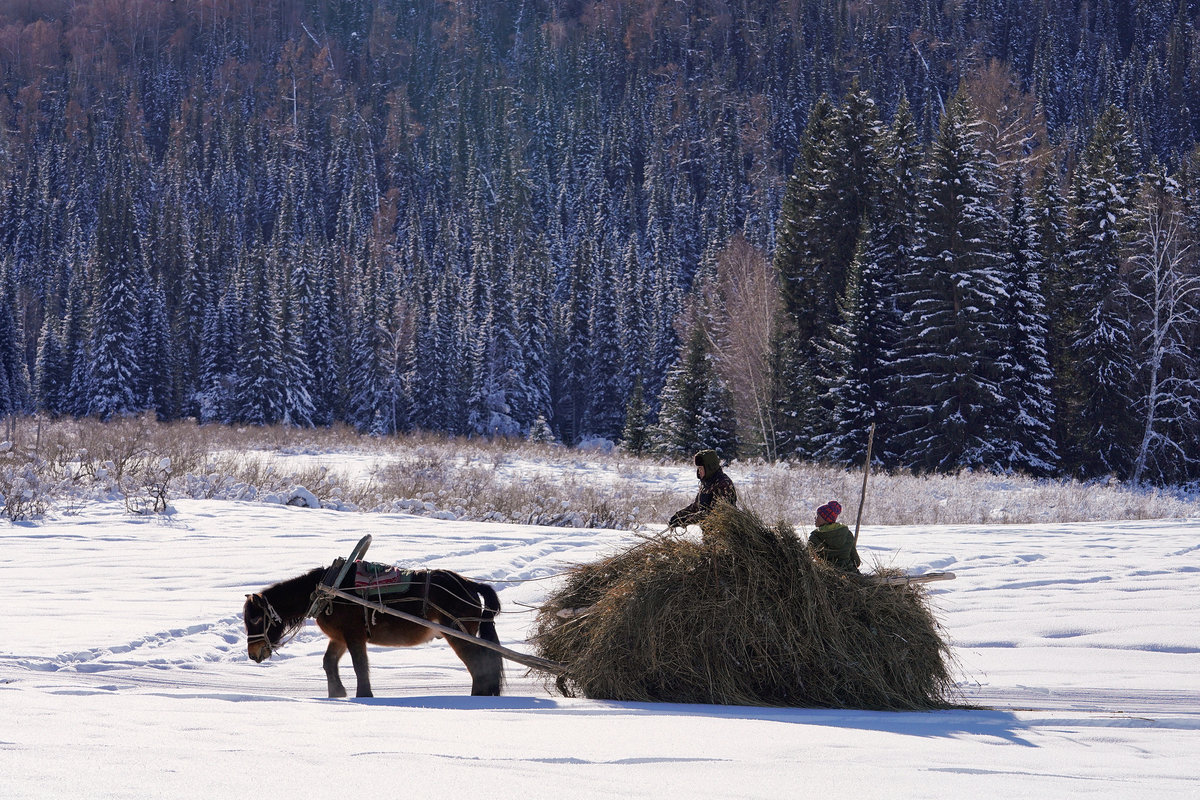
Villagers ride a horse carrying hay in Altai Mountains in Khom village of Altay, Xinjiang Uighur Autonomous Region, China, January 27, 2018. REUTERS/Jason Lee
Xinjiang is a volatile region where hundreds of people have been killed in recent years in violence between Uighurs, a mostly Muslim people, and ethnic majority Han Chinese, which Beijing blames on Islamist militants. Most of the violence has been in the far south of the region, rather than its far north.
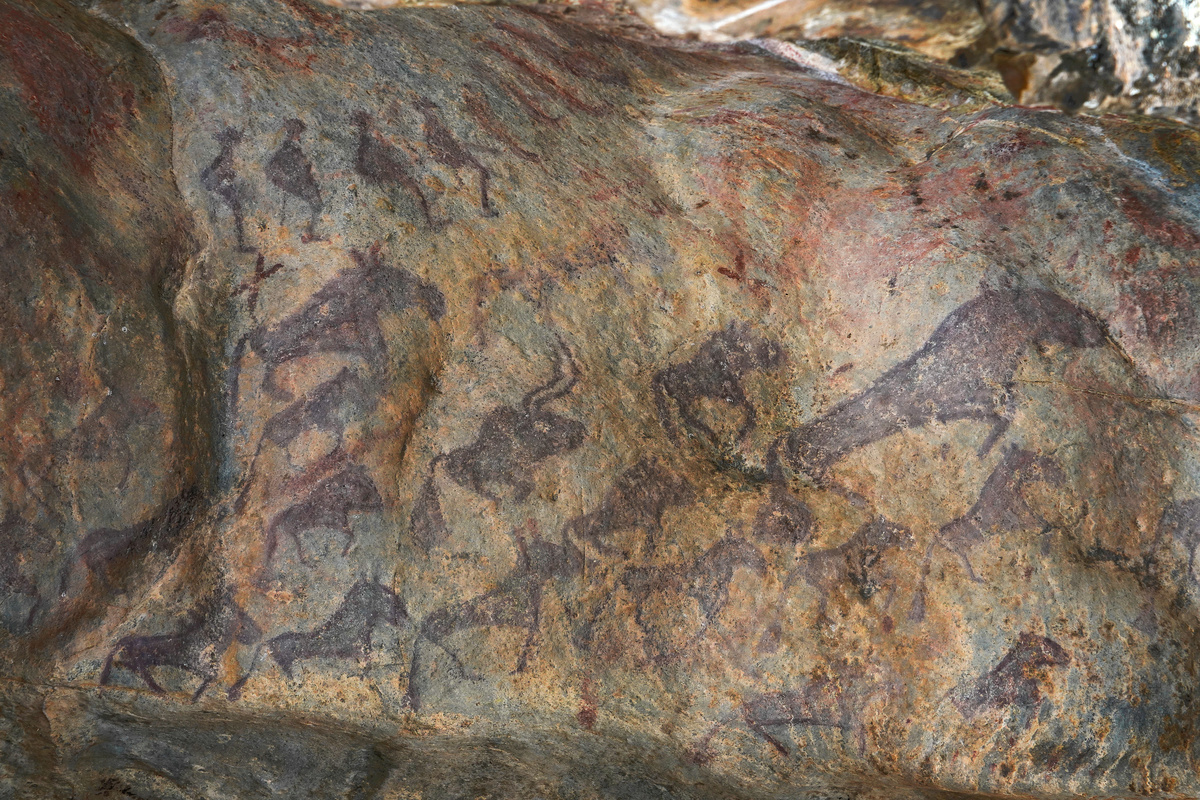
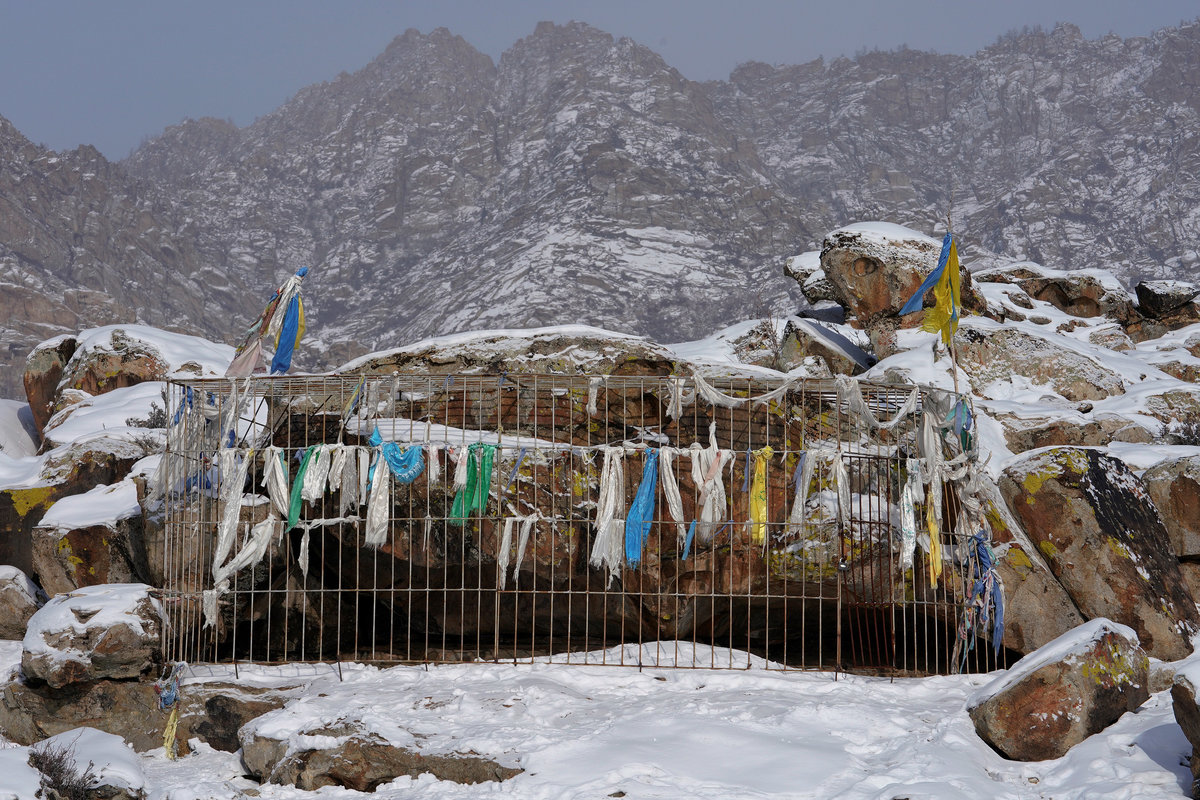
Cave paintings discovered in Altay - today home to a mixture of ethnic Tuvans and Kazakhs - show rows of figures standing on what look like skis, with herds of animals running below them.
Archaeologists have dated the paintings as 10,000 to 30,000 years old, according to Chinese ski historian Shan Zhaojian.
A policeman is seen through a car window at a security check point into Khom village of Altay, Xinjiang Uighur Autonomous Region, China, January 28, 2018. REUTERS/Jason Lee
That would date them as much older than archaeological findings of skiing in Russia, cited by the International Ski Federation, the sport's governing body, as coming from 6,300 to 5,000 BC.
"It's the earliest in the world that's for sure," said Shan. "I've got a total of 10 pieces of evidence that can prove this."
China is keen to cash in on this historical connection.
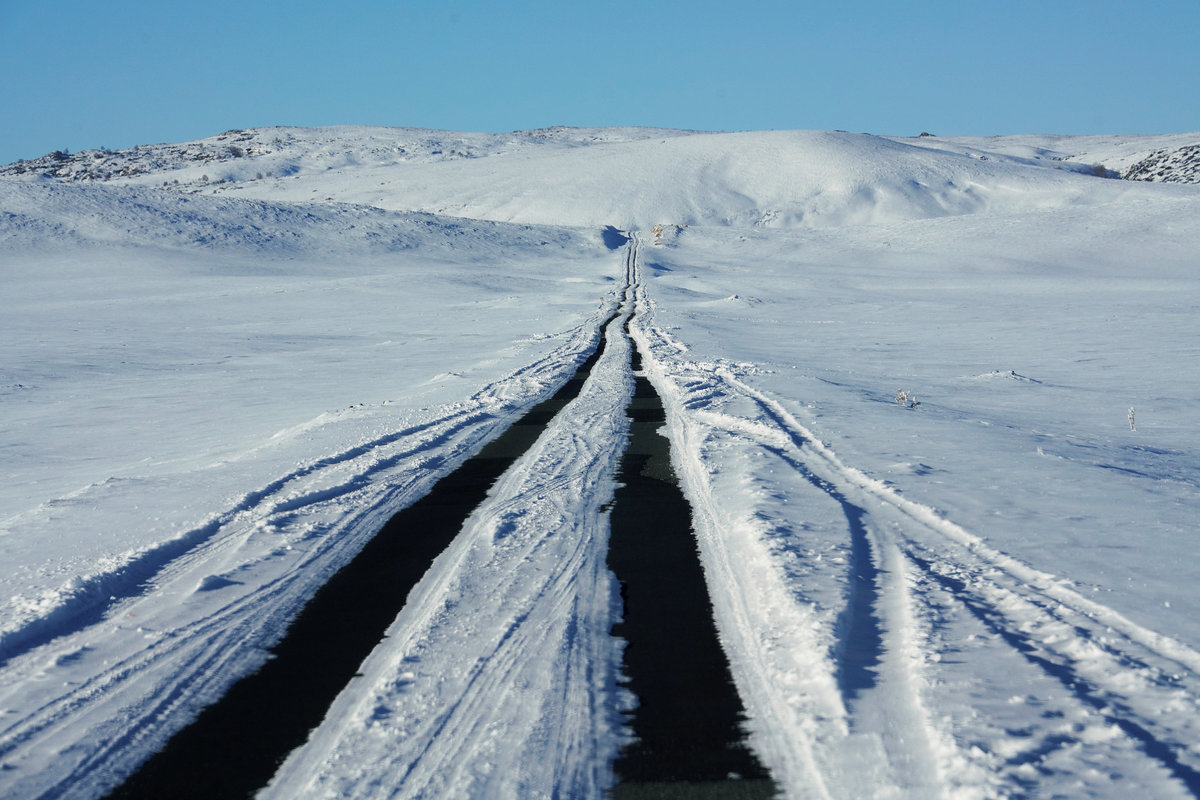
A road to Khom village of Altay is seen in Altai Mountains, Xinjiang Uighur Autonomous Region, China, January 28, 2018. REUTERS/Jason Lee
The country is set to host the 2022 Winter Olympics in Beijing and wants 300 million Chinese involved in winter sports before then.
With Shan's help, the Xinjiang autonomous region government has organised races using traditional skis and recognises skiing as a cultural heritage.
Still, the practice is slowly dying out.
An ancient painting in a cave show rows of figures standing on what look like skis (top L), with herds of animals running below them, on the outskirts of Altay, Xinjiang Uighur Autonomous Region, China, January 25, 2018. REUTERS/Jason Lee
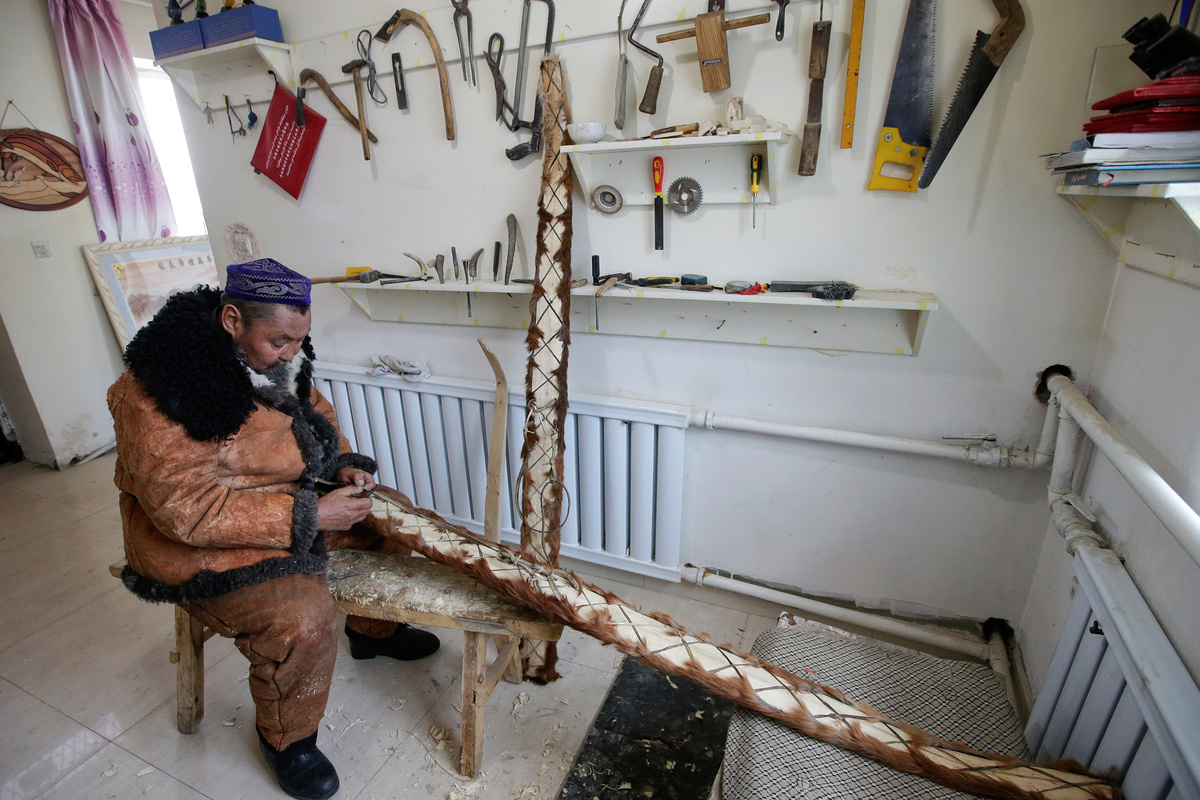
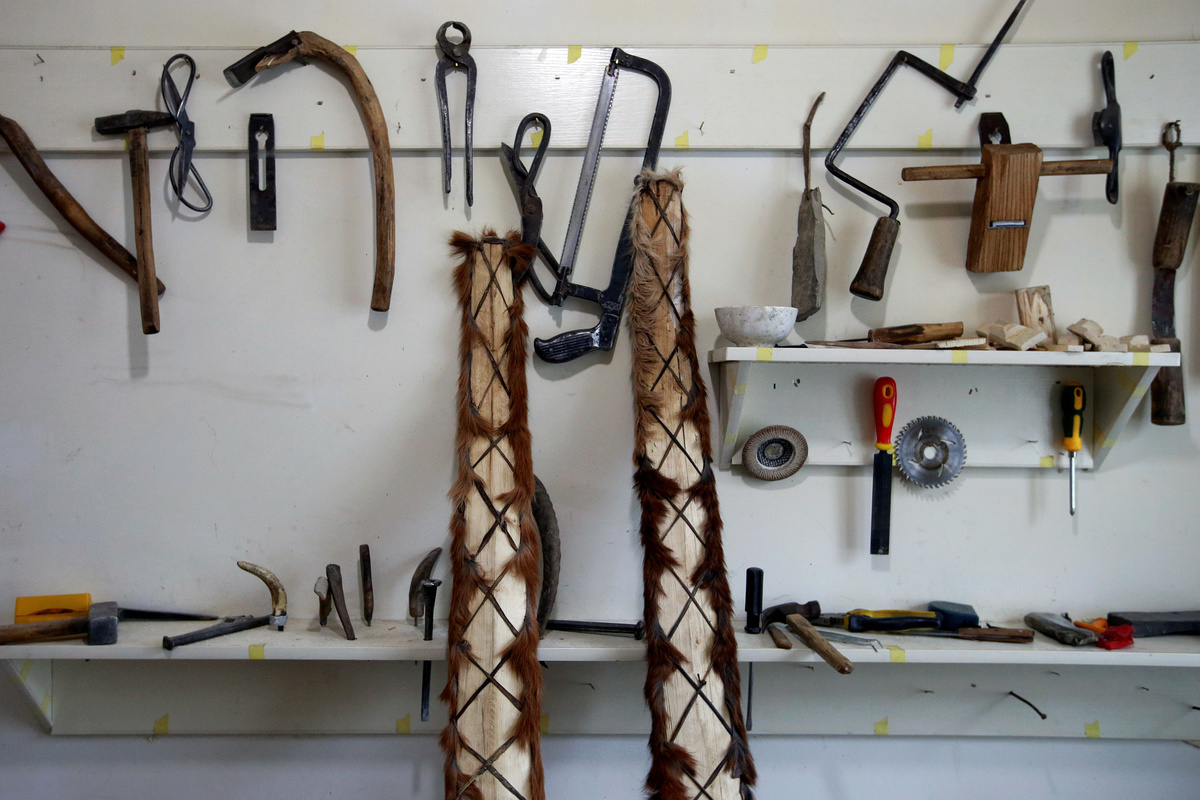
Forty minutes outside Altay city, the regional capital, Slanbek still makes skis, but today they are just for show.
"You can't hunt anymore, you can't cut down trees so there's not much use for them," he said, referring to official bans on both practices.
Instead, much of Altay has embraced modern skiing. At the General's Mountain resort, Mongolian folk-metal and Adele blast out over loudspeakers as children as young as five zip down the slopes.
Local villager Sulita wearing traditional horse-hide skis makes his way home in Khom village of Altay, Xinjiang Uighur Autonomous Region, China, January 27, 2018. REUTERS/Jason Lee
Its abundant snow and mountains make this region one of the best places for skiing in the country, and instructors hope some of the children training here might become Olympians.
Whether the use of horse-hide skis survives will depend on the younger generation in the remote villages around Khom.
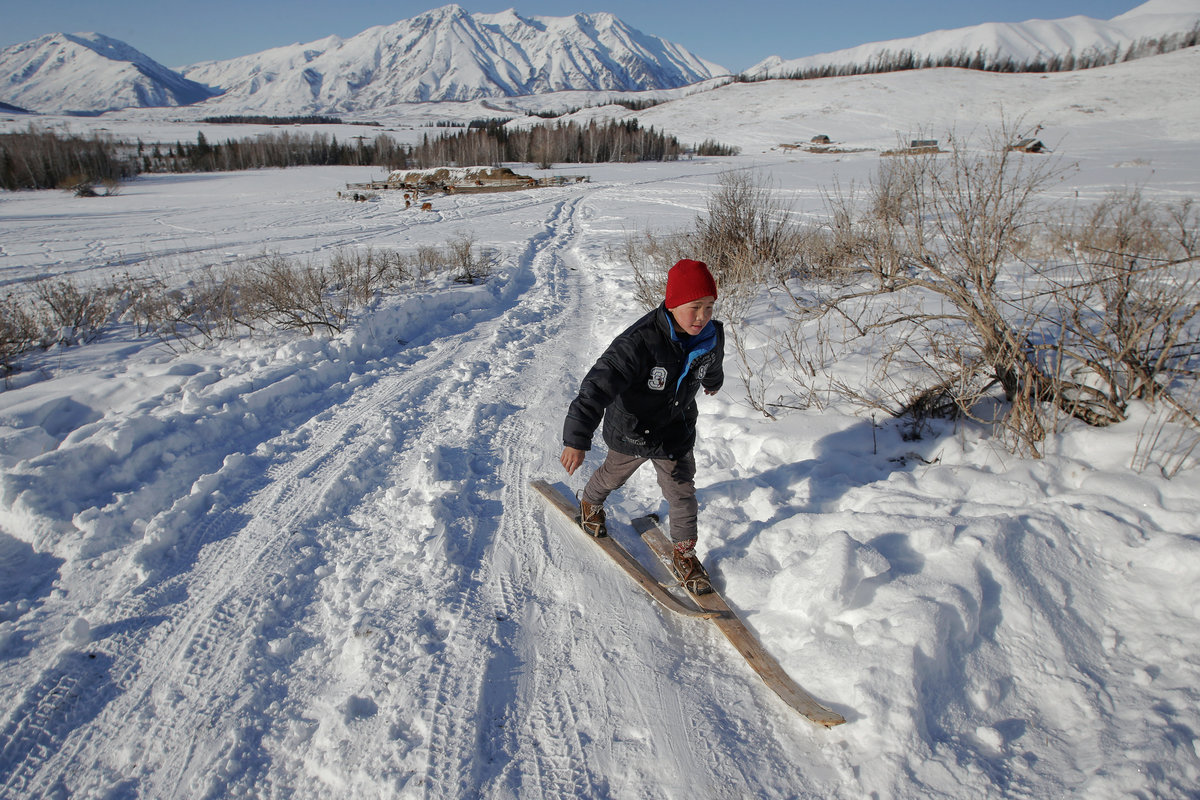
As the sun peeks over the mountains into valleys around Khom, Namujel, 13, races his horse-hide skis against his neighbour and friend Mieergenku, 12, who is using modern skis.
Local villager Yonghong makes buttered tea inside her log cabin in Khom village of Altay, Xinjiang Uighur Autonomous Region, China, January 27, 2018. REUTERS/Jason Lee
There's no competition, Mieergenku zooms past, the clear winner.
But for Namujel it doesn't matter.
"We can't just give up on the horse-hair skis, we have to pass them on to the next generation", he said.
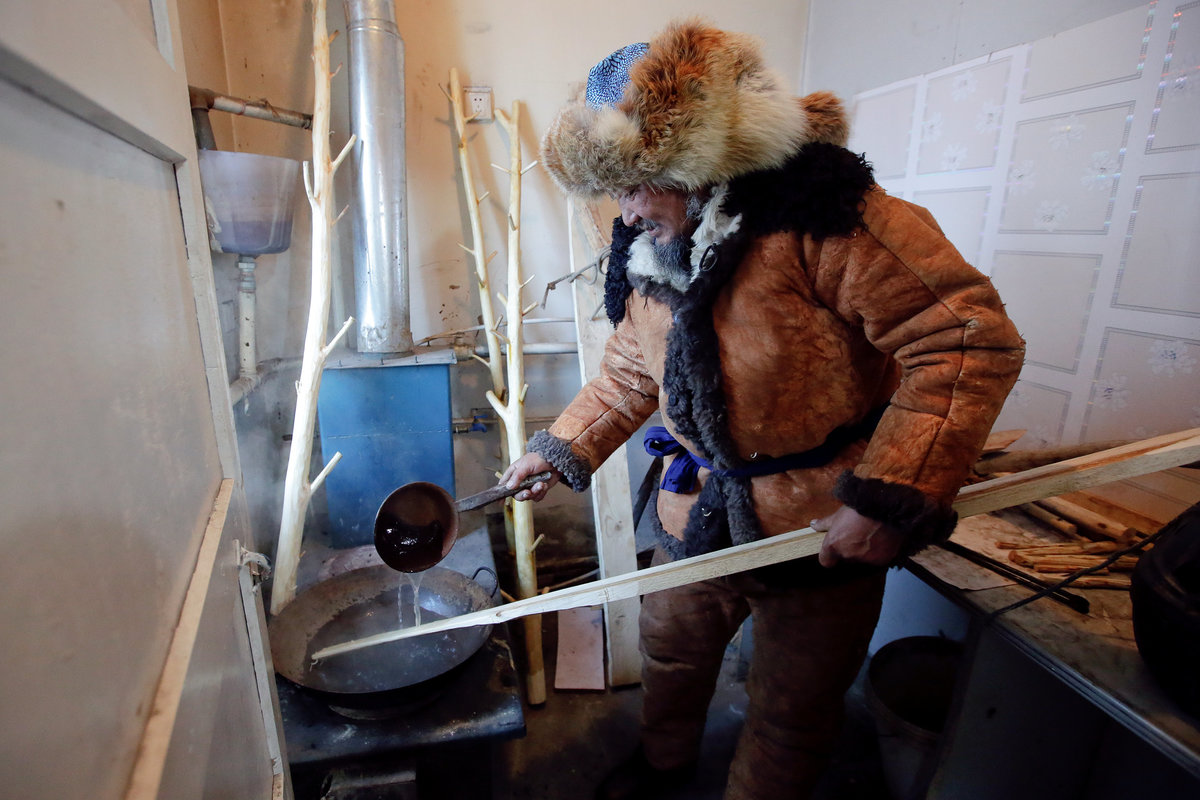
Local craftsman Slanbek, 63, pours boiling water to soften wood as he makes traditional horse-hide skis on the outskirts of Altay, Xinjiang Uighur Autonomous Region, China, January 25, 2018. REUTERS/Jason Lee
(Editing by Ben Blanchard, Karishma Singh and Neil Fullick)
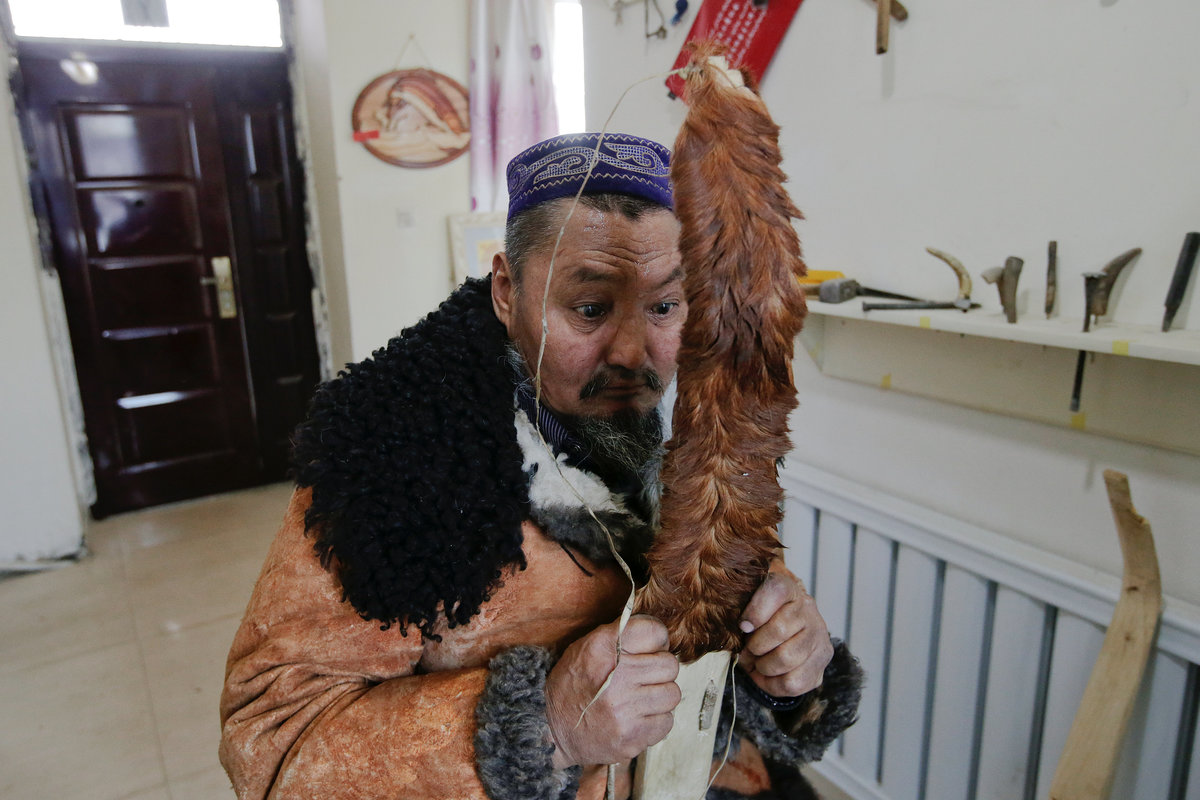
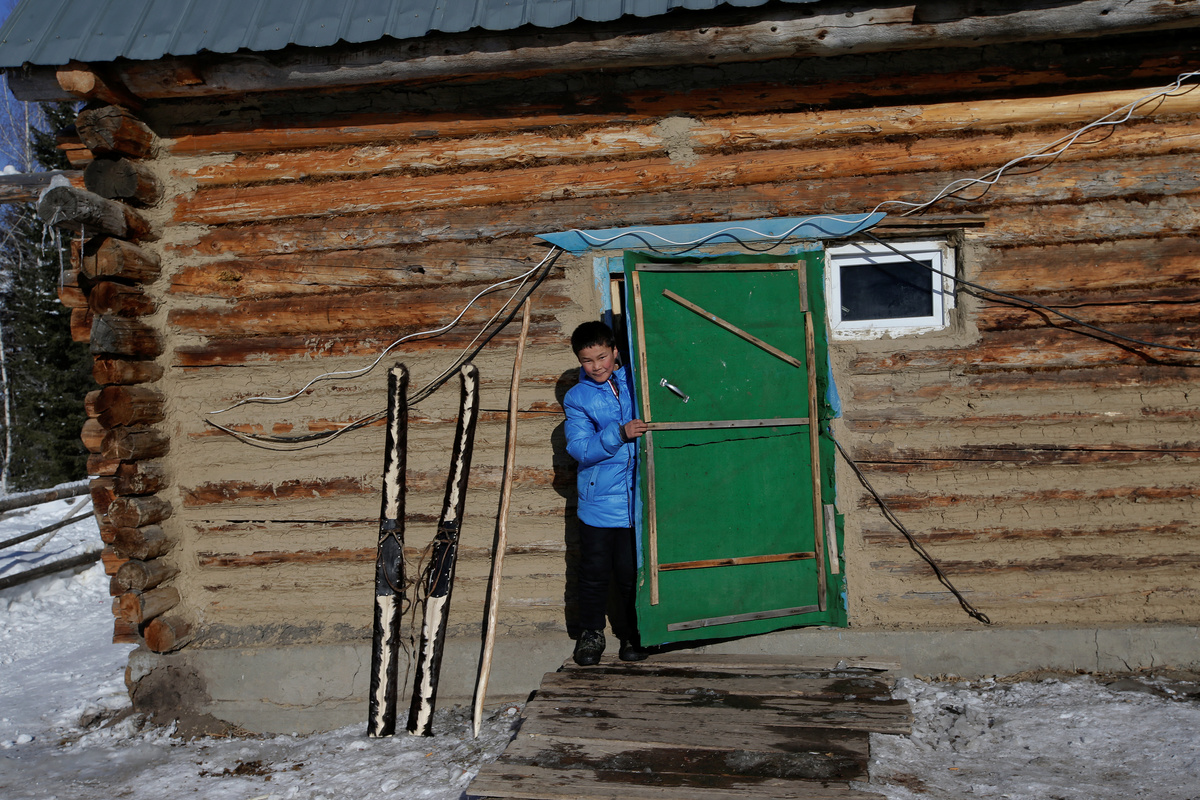
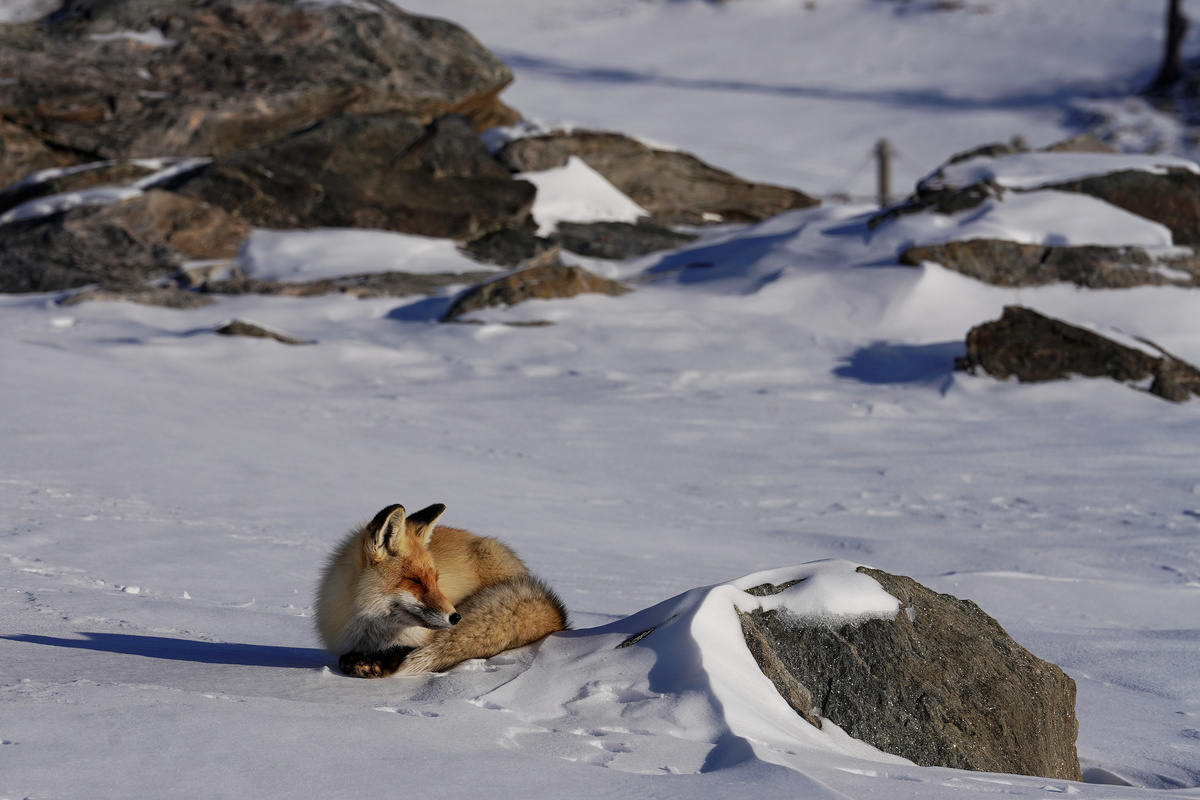
Local craftsman Slanbek, 63, stretches horse hair as he makes traditional horse-hide skis on the outskirts of Altay, Xinjiang Uighur Autonomous Region, China, January 25, 2018. REUTERS/Jason Lee Local craftsman Slanbek, 63, makes traditional horse-hide skis on the outskirts of Altay, Xinjiang Uighur Autonomous Region, China, January 25, 2018. REUTERS/Jason Lee Traditional horse-hide skis made by local craftsman Slanbek are seen next to his tools on the outskirts of Altay, Xinjiang Uighur Autonomous Region, China, January 25, 2018. REUTERS/Jason Lee Local villager Alimase holds traditional horse-hide skis in Khom village of Altay, Xinjiang Uighur Autonomous Region, China, January 27, 2018. REUTERS/Jason Lee Mieergenku, 12, stands in a door of a log cabin next to traditional handmade horse-hide skis at Khom village of Altay, Xinjiang Uighur Autonomous Region, China, January 27, 2018. REUTERS/Jason Lee Bayaerta (L), 15, wearing traditional horse-hide skis stands next to Mieergenku wearing modern skis in Khom village of Altay, Xinjiang Uighur Autonomous Region, China, January 27, 2018. REUTERS/Jason Lee Namujeli, 13, skis home in Altai Mountains in Khom village of Altay, Xinjiang Uighur Autonomous Region, China, January 27, 2018. REUTERS/Jason Lee A fox lies in snow in Khom village of Altay, Xinjiang Uighur Autonomous Region, China, January 28, 2018. REUTERS/Jason Lee Local villager Alimase skis with traditional horse-hide skis in Altai Mountains in Khom village of Altay, Xinjiang Uighur Autonomous Region, China, January 27, 2018. REUTERS/Jason LeeLocal villager Alimase skis with traditional horse-hide skis in Altai Mountains in Khom village of Altay, Xinjiang Uighur Autonomous Region, China, January 27, 2018. REUTERS/Jason LeeLocal villager Sulita skis with traditional horse-hide skis in Altai Mountains in Khom village of Altay, Xinjiang Uighur Autonomous Region, China, January 27, 2018. REUTERS/Jason Lee A cave containing ancient paintings that show rows of figures standing on what look like skis, with herds of animals running below them, is seen on the outskirts of Altay, Xinjiang Uighur Autonomous Region, China, January 25, 2018. REUTERS/Jason Lee
Sign up to read this article
Read news from 100’s of titles, curated specifically for you.