The four English entrants are in the knockout phase of the Champions League, once more imposing a parochial tone on a supposedly cosmopolitan tournament. Indeed, they and a quartet from La Liga will occupy half of the 16 slots. There is near absurdity about the domination of teams from this country in particular.
In these parts an air of tension descends when Chelsea have to beat Cluj at home to guarantee progress in the competition. For a multitude of clubs around the continent, that is a situation to covet. It would be only natural for them to wish some salutary disappointment on English sides. Some tough luck in next Friday's draw would be a start.
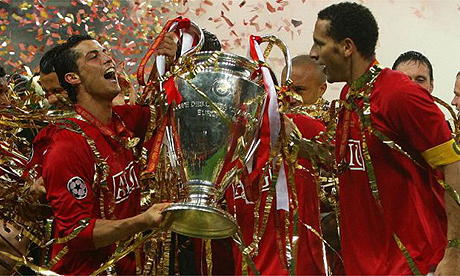
Last season English teams were eliminated only by one another, a process completed when Manchester United took the trophy in Moscow with a penalty shoot-out victory over Chelsea. The Premier League has been represented in each of the past four finals. It occasionally looks as if the tournament's diversity survives purely in the multinational nature of the squads assembled on these shores.
The numerical domination of the English clubs bordered on the comical when Liverpool, in 2005, were able to persuade Uefa of their right to take part as holders. There had, in consequence, to be a quintet from the Premier League, although Everton were eliminated by Villarreal in the qualifying rounds.
That same season Manchester United also left early. They came bottom of their group, winning only one game, against Benfica, and taking a single point from the matches with Lille. That all occurred in fairly recent times but the events feel remote because they are so out of kilter with current expectations.
No one has cause to reflect any longer on the inadequacies of the English teams who re-entered European competition at the end of the five-year ban imposed following the Heysel disaster of 1985. The European Cup final did not feature another side from this country until United beat Bayern Munich in 1999. There are scant signs that a new period of self-reproach is in the offing.
The English clubs, burdened with debts of one sort or another, probably see a failing economy as their most implacable adversary. Nonetheless the next stage of the Champions League could make managers somewhat pensive. Wednesday's defeat by Porto showed that it would be complacent of Arsenal to assume that, whatever their troubles in the combative Premier League, they will always do well against more refined opponents.
They cannot meet another side from this country but will now be pitted against one of the group winners, not including Porto. Panathinaikos might appeal to Arsène Wenger, even if they did finish above both Internazionale and Werder Bremen. The sternest outcome would surely be an encounter with La Liga's leaders Barcelona. Chelsea, group runners-up like Arsenal, will be making identical calculations.
Arsenal's form has been uneven in the Champions League. They did get to the 2006 final, where they lost to Barcelona, but have not progressed beyond the last eight subsequently. Elimination by Liverpool in the quarter-finals last year was no disgrace but they had fallen to PSV Eindhoven in the previous campaign. To an extent Arsenal are seeking to re-establish their credentials.
The situation for Chelsea is a little different. If Wenger sees potential in the ranks, Luiz Felipe Scolari may fear that his Stamford Bridge squad can only decline sharply, in view of the plethora of familiar names. Regardless of Didier Drogba's successful comeback against Cluj on Tuesday, the Chelsea manager will surely be plotting to bring in an additional striker in January.
Those who differed from Arsenal and Chelsea by topping their groups should receive their reward. Manchester United or Liverpool, with apparent ill-luck, could be drawn against Jose Mourinho's Inter but there is no hard evidence that this would be such a terrible prospect. The Italian club took eight points in Group D, the lowest total of any club to advance in the competition this season. In the second half of the programme they drew with Anorthosis Famagusta before going down to both Panathinaikos and Bremen.
No matter what happens next, the four English clubs can draw on a store of experience. United's lapse in 2005-06 was the sole occasion in the past five seasons when the usual Premier League quartet did not advance together to the knockout phase. If that was a process largely free of tension, each of them is capable of sticking around to create drama at the very end of the tournament.








.png?w=600)