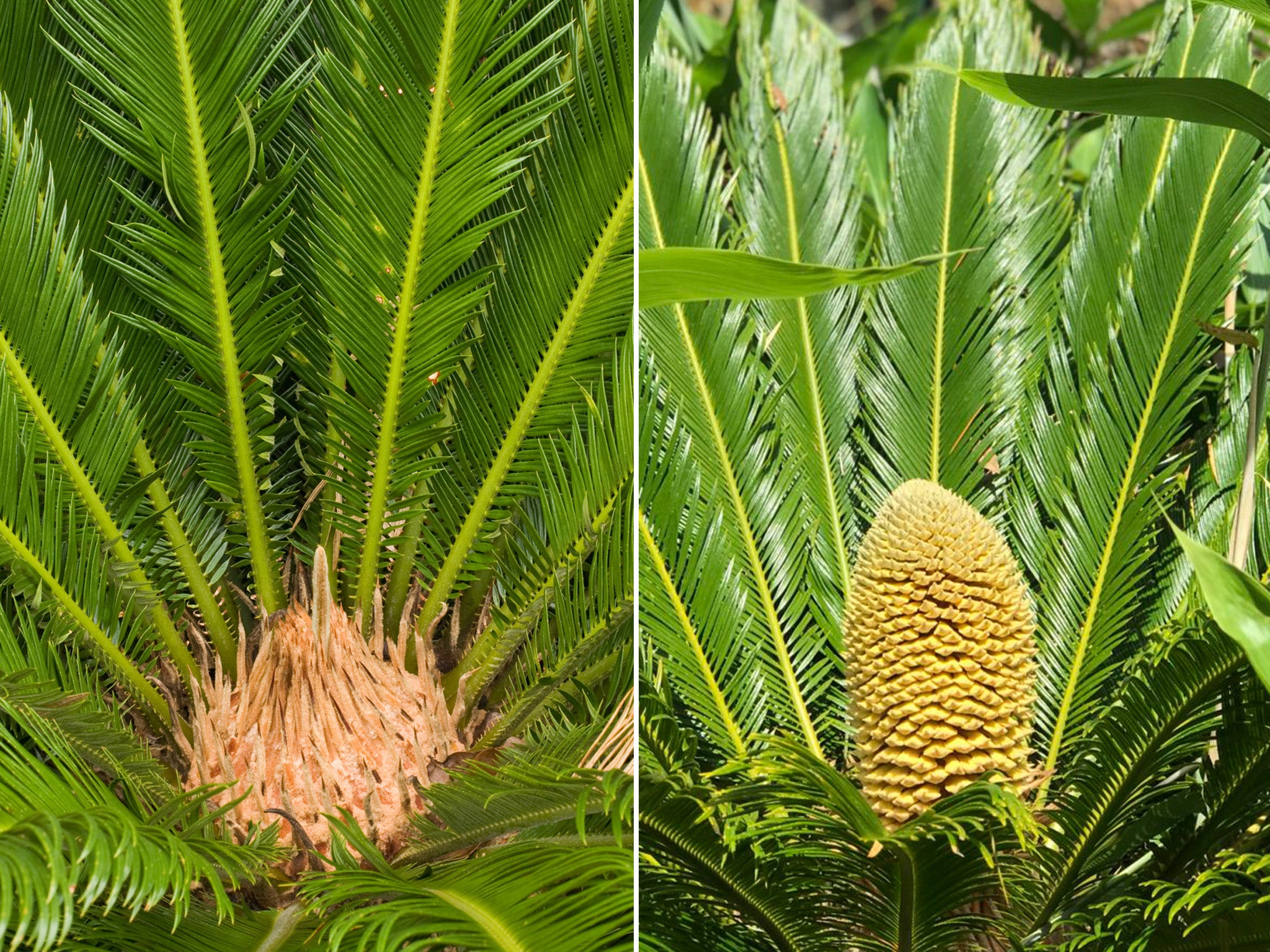
A prehistoric palm living on the Isle of Wight has produced male and female cones for the first time in 60 million years, botanists say.
The exotic palm – which dominated the planet 280 million years ago – is believed to be thriving on the cliffs of Ventnor Botanic Gardens because of climate change.
The garden is on average five degrees warmer than the rest of the mainland, making it the second warmest part of the UK after the Isles of Scilly.
“This presents us with an exciting opportunity to transfer pollen and generate seeds for the first time in the UK for 60 million years,” said Liz Walker from Ventnor Botanic Garden.
“This can be seen as further evidence from the plant kingdom of climate change in action. Certainly this sort of plant could formerly not be considered hardy in the UK; the recent heatwave has contributed to the individual cone growth,” said Ms Walker.
The cycad (Cycas revoluta), also known as Japanese sago palm, lived during the Jurassic period along steep limestone cliffs in what is now the UK.
At the time the Earth had significantly higher levels of carbon dioxide in the atmosphere. Botanists say the rise in emissions may have triggered its growth in the past few years.
These plants dominated the planet before the evolution of flowering plants and are now usually found as ornamental plants inside British homes.
“Fifteen, 20 years ago we started growing cycads – it started as an experiment, something you wouldn’t normally do,” Chris Kidd, curator at Ventnor Botanic Garden, told CNN.
“Fifteen years on, they’re not only surviving winters, growing and producing leaves. Five years ago we had a male cycad that produced a cone, and this year we have a male and female both producing cones,” he said.
Ancient fossilised cycads have been found along the cliffs where the new plants are now growing.
Botanists working at the garden will transfer the pollen by hand in around a week as the plants are too far apart for this to happen naturally.