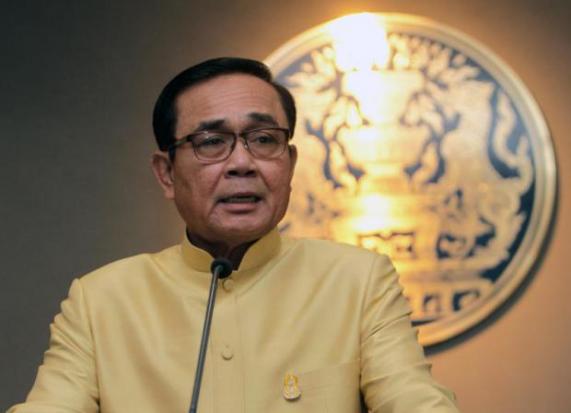
Prime Minister Prayut Chan-o-cha is becoming less coy about what the future holds for him after the next election as the "distance" between him and the pro-regime Palang Pracharath Party (PPRP) draws closer.
Two questions were put to him this week by reporters to get a clearer insight into his thoughts.
Gen Prayut was asked where he saw himself after May, by which time the election results will be known.
He answered that no party had yet approached him or offered to make him its prime ministerial candidate for the next government.
He went on to say that if he decided to stay on in politics, he would need to clinch the nomination of a party that was "dedicated, truly selfless, and determined" to lead the country to a better future.
Gen Prayut stopped short of spelling out the party he had in mind but his next answer seemed to offer a clue.
He was asked whether he viewed the PPRP as his best option at this point in time and responded by insisting that he had not been contacted by the party.
The premier said that, if he were to choose any party, it would be one that vowed to push forward with the policies his government has implemented.
The PPRP, chastised by opponents as being an arm of the regime, looks likely to carry on those key policies, including the flagship Eastern Economic Corridor project, if it forms the next government, analysts say.
The party is operated primarily by leading ministers in the government who have launched many of the government projects. The PPRP is led by Industry Minister Uttama Savanayana, with Science and Technology Minister Suvit Maesincee serving as its deputy leader.
Commerce Minister Sontirat Sontijirawong is the secretary-general and PM's Office Minister Kobsak Pootrakool is its spokesman.
No other political parties have said they plan to carry the torch. Some, including Pheu Thai and Future Forward, have declared plans to dismantle the regime-initiated policies. Future Forward has been even bolder in its pledge to rewrite a constitution it considers little more than the fruit of a dictatorship.
Analysts agree there is not exactly an abundance of parties willing to offer Gen Prayut a spot on their lists of candidates for prime minister.
Suriya set for starring role
Thais go to the long-awaited polls on March 24, and with the election candidacy registration scheduled to take place from Feb 4-8, by Feb 9 it should be clear who will be contesting them.
During the application period, parties are required to submit lists of prime ministerial and party-list candidates. While the PM hopefuls will surely be the focus, the party-list candidates should not be taken for granted either.
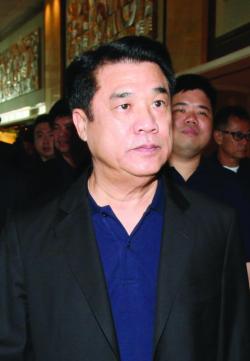
Suriya: Eyeing debt relief in Northeast
Those placed high as candidates on each party list will be the usual bigwigs who are believed to have been allocated cabinet seats, provided that their party helps form a coalition government. In other words, the top party-list candidates are potential decision-makers.
The pro-regime Palang Pracharath Party (PPRP), which hopes to win as many as 50 seats from the party-list system and about 60 seats from constituencies, has yet to officially unveil their party-list candidates. But the four party heavyweights, who are ministers in the Prayut administration, can be ruled out.
These cabinet ministers led by Industry Minister Uttama Savanayana, also leader of the PPRP, are preparing to resign to fully engage in an election campaign in which they are not eligible to stand due to a rule stating all candidates must have quit political positions 90 days prior to candidate application.
With none of them eligible to run for House seats, it is widely believed that veteran politician Suriya Juangroongruangkit will grab the top spot on the PPRP's party list.
His mate from the so-called Sam Mitr (Three Allies) political group and the now-defunct Thai Rak Thai Party (TRT), Somsak Thepsuthin, is thought to occupy third place on the list, after Nataphol Teepsuwan, who defected from the Democrat Party.
The fourth and fifth spots are likely to be secured by Buddhiponse Punnakanta, who currently serves as a government spokesman, and Wirat Rattanaseth, a former deputy agriculture minister who switched from the Pheu Thai Party.
Being first on the list would confirm Mr Suriya being considered the ace up the PPRP's sleeve to help it win votes in the general election, especially in the constituency-rich Northeast.
The former transport minister is widely known to be the driving force behind the mass defections by high-profile politicians from the Pheu Thai Party to the PPRP.
After officially joining the party, Mr Suriya was appointed chairman of the strategic committee for the Northeast, a political stronghold of Pheu Thai, which the PPRP is most eager to tap into.
During his recent tour of the northeastern region to help potential candidates canvas for votes, Mr Suriya highlighted the government's welfare card scheme and floated various proposals to lift voters out of poverty.
A new plan is now afoot to push for a three-year suspension of debts for locals who borrowed from the village fund project which was initiated by the TRT, of which Mr Suriya was a former member. The TRT and its successor People's Power Party (PPP) were both dissolved for electoral fraud, but Pheu Thai picked up where the PPP left off.
Mr Suriya is also toying with the idea of writing off debts for the borrowers in the long run.
In addition, he has come up with a controversial scheme to turn Sor Por Kor land documents into transferable title deeds so the owners can seek commercial gain from their property.
While these proposals are yet to be examined by the PPRP for their feasibility, some of them may hit the right chord with voters and help Mr Suriya realise his mission of grabbing 60 seats in the Northeast.
Tempted by Chadchart
Despite speculation that Chadchart Sittipunt will be the No.2 prime ministerial candidate on Pheu Thai's ticket, a source within the party believes it is highly likely that he will eventually be nominated as the party's top choice when parliament votes for a prime minister after the March 24 general election.
It is not necessary for a No.1 candidate to become prime minister as the No.2 and No.3 candidates also have a chance depending on the recognition they gain from party members and the public, the source said.
Khunying Sudarat Keyuraphan, head of the party's election strategy committee, previously said Pheu Thai would nominate three prime ministerial candidates -- the full quota allowed by law. She refused to say who would be on the list.
But it has been speculated Khunying Sudarat will occupy the first place, with leading party member Chadchart Sittipunt second and party leader Viroj Pao-in third.
Providing three candidates would accentuate the party's strength and build voter confidence, she said.
Each political party can submit a list of up to three prime ministerial candidates from Feb 4-8. Their lists will then be made public.
However, the "first, second and third places" on Pheu Thai's list of prime ministerial candidates presented to the public will essentially be meaningless when parliament votes to pick a prime minister after the poll, the source said.
At that time, a meeting of Pheu Thai and its regional branches will pick the candidate most popular among party members for nomination in parliament, and it is highly likely that Mr Chadchart will be the top choice, the source said.
A recent survey by the party showed Pheu Thai would win more seats if Mr Chadchart, who is popular with a sizeable segment of social media users, was listed as a prime ministerial candidate.
Both Mr Chadchart and Khunying Sudarat recently dismissed rumours of a rift between them following media reports they were competing for the party's top nomination.
Mr Chadchart said it's not important who is nominated as first choice, as the only thing that truly matters is Pheu Thai winning the election together.
As Mr Chadchart emerged as a potential candidate, some people were said to be organising a bid to block him.
The National Anti-Corruption Commission (NACC) has denied reports that a probe against Mr Chadchart was being rushed as speculation intensified that the former transport minister will be nominated.
Mr Chadchart is among 34 former cabinet ministers who served in the ousted Yingluck Shinawatra administration, which was accused of failing to perform its duties properly.
One case involves an NACC probe into the multi-million-baht compensation scheme which her government paid to victims of the political conflict that started in 2005.
The NACC accused the former ministers of approving the compensation without any legal foundation to support it.