Here’s a great dinner party game: Instant Duke of Edinburgh. First, everyone writes a little scene where two characters meet in a London street and argue. One is uneducated, only using words, including swearwords, of Anglo-Saxon origin; the other parades their formal, educated, Latinate English. Now swap the speeches around and read them out – in social reverse. The educated person speaks mockney, while the uneducated one is cut-glass RP. Every time – try it – you end up with a joyous scene in which a petty control-freak is confronted by… the Duke of Edinburgh.
Prince Philip sails effortlessly over that uniquely English social barrier, that linguistic Becher’s Brook rooted in 1066. Whenever he opens his mouth, and especially when he opens it without thinking, the English people know that there, but for a fluke of birth that offends no one, go they. The age he recalls – the late 1950s or very early 1960s – was not simply one of 9% GDP defence budgets, V Bombers and unthinking racism.
It was also, lest we forget, a time when unemployment was zero; when all parties agreed that nationalisation was often the best way to do things and that swingeing rates of taxation for the highest earners, above all for the highest “unearned incomes”, were self-evidently fair; when grammar school boys were in the ascendant everywhere and grammar school teachers were the social equals, if not superiors, of mere accountants.
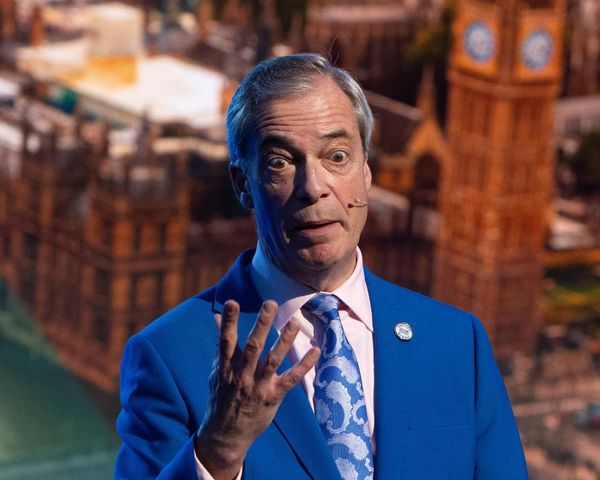
To be English and long secretly for Prince Philip’s heyday is, at least partly, to be wistful for a fairer, more meritocratic land where jobs were for life and social mobility was real. In 2005, I wrote a satire in which a straight-talking public school man from 1961 comes back to Speak for England and ends up romping to populist victory before taking us out of the EU. There was only one possible model. And of course, he got all the best lines. Johnson and Farage have built whole careers on sneakily mimicking what in Prince Philip is nature.
They have seen that if you keep it Anglo-Saxon, posh is not just fine, it’s positively good. The English no more begrudge a thick lord his stately home than the Americans begrudge a fake-tanned property mogul his billions. The one thing that no Anglo-Saxon can stand is to be ruled by someone who “talks fancy” by using Latinate words too often.
Obama spoke so slowly because he, a clever and cultured man, had constantly to be on his guard against sounding it. Prince Charles has doomed himself by so clearly wanting to be thought clever and cultured: the clever, cultured people don’t buy it and the people don’t want a clever, cultured ruler. The Duke of Edinburgh may speak in tones straight from Noël Coward (as in Knurl Card), but when he says “just take the fucking picture” he is one of us, not them. He is, in fact, the very id of England.
And if you are the national id, there are no gaffes, because “gaffes” are exactly what people want from you. The more outrageously Trump behaved, the more popular he became. His offer was not policy, but spectacle: that of a blatantly vain, superficial and venal man, a midwest Ubu Roi, living a dumbed-down version of the American Dream of Freedom by saying and doing just whatever the hell he likes. Putin speaks to Russia’s very different id just as slickly: so long as he enacts the Strong Man with International Respect, he can do no wrong. These men have terrifyingly real powers; by harmlessly channelling England’s id, the Duke of Edinburgh has been incalculably valuable to the royal family – but also a priceless asset to us.
For every civilisation needs a blow-out valve. The ancients knew that the saturnalia reminded everyone, just once a year, what really happens – hello, Steve Bannon? – when government shuts down and the lights go out. We in our wisdom have all but forbidden such things. The Age of the Id – the era of Breitbart – came upon us as we were otherwise busy keeping our noses clean in a world of constant, low-level mendacity. Quality through Excellence! Continuous Improvement! Success through Flexibility! Avoid Micro-aggressions!
Whether we work for the State or for Free Enterprise, we are surrounded by exhortations that we know to be hogwash, but which we dare not openly mock. Our ids, forbidden their essentially harmless little rebellions by this incessant mental stop and search, brew up for a grand orgy: America chose Trump.
So a safety valve such as the Duke of Edinburgh, a figurehead national id with no real power, is exactly what we need. If you don’t have one, you risk ending up actually being ruled by an id with his finger on the nuclear button. Let’s be glad we’ve had our splendidly outrageous, utterly harmless Prince of Misrule.
In the age of the id, when real politicians such as Trump, Putin and (in wretched miniature) Farage and Johnson so dangerously tap into their citizens’ darkling minds, the Duke of Edinburgh has triumphantly reaffirmed the wisdom of the British constitution.
So now we need a new Prince Philip, fast: a titular Top Man with no power whatever, handsome, heroic, square-jawed, gaffe-prone able to speak to the darkest deeps of his people, to make them laugh with delighted relief as he puts his foot in it once again and (joy!) gets away with it, yet who can do no real damage to anyone. The way is clear. The House of Windsor must preserve itself, and us, as it has done before, by chucking the hereditary principle in favour of the right man. Step forward, King Harry!
James Hawes’s latest book is The Shortest History of Germany