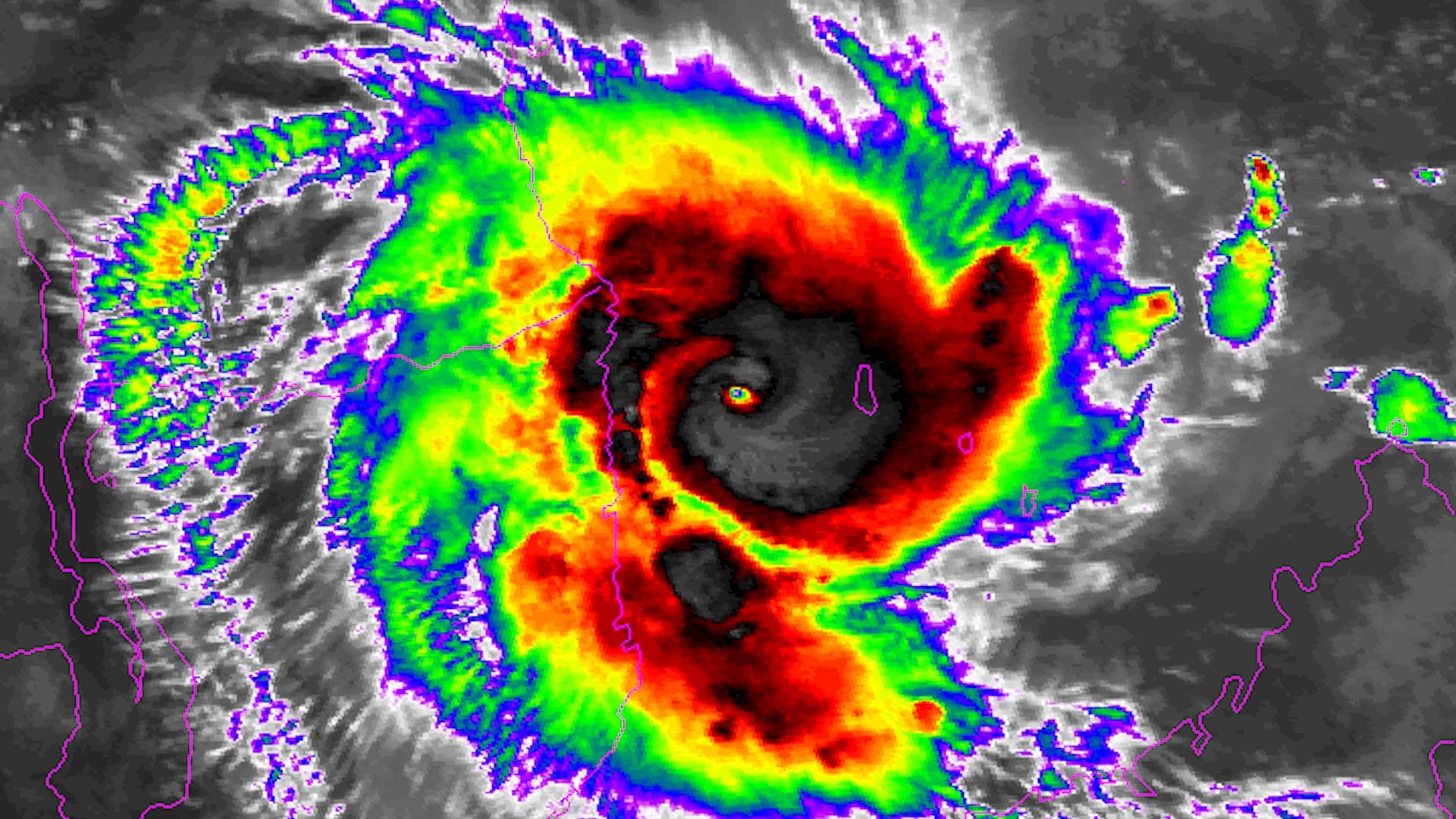
Powerful Cyclone Kenneth struck Mozambique on Thursday as one of the strongest storms ever to hit the nation, which is still recovering from the widespread devastation caused by Cyclone Idai in March.
Details: The storm — which quickly intensified during the course of the last 24 hours but weakened slightly as it neared landfall about 600 miles north of Beira, where Idai struck — made landfall as a Category 4 storm, with sustained winds at about 140 miles per hour, according to satellite estimates. This may qualify as the strongest-ever cyclone to hit Mozambique, and is the strongest-ever to hit the northern part of the country. It's also one of the strongest storms ever to hit the African mainland.
The cyclone likely caused a 10-to-16-foot storm surge where it came ashore north of the city of Pemba, which has a population of about 200,000. The storm is forecast to dump several feet of rain inland across northeastern Mozambique and southern Tanzania.
No tropical cyclone of hurricane strength has made landfall over the northern #Mozambique province of Cabo Delgado in the modern record (50 years). Intense Cyclone #Kenneth expected to make landfall here later today. pic.twitter.com/3UkQhDXBAv
— Met Office Storms (@metofficestorms) April 25, 2019
Background: More than 1,000 people died as a result of Cyclone Idai, according to Reuters. The storm also impacted Zimbabwe and Malawi. Rebuilding may cost more than $2 billion, according to an estimate from the World Bank.
- Cyclone Kenneth means that 2 of Mozambique's top 5 tropical cyclones on record have struck within just 6 weeks of each other.
Cyclone Kenneth underwent a period of rapid intensification between Wednesday and Thursday, leaping from a Category 1 to Category 4 storm in 24 hours. This was possible since the storm sat over warm waters with light winds in the upper atmosphere.
- Studies have shown that rapid intensification of tropical cyclones is becoming more frequent due to global climate change.
Go deeper: Idai may be "one of the deadliest" weather disasters in Southern Hemisphere


.jpg?w=600)