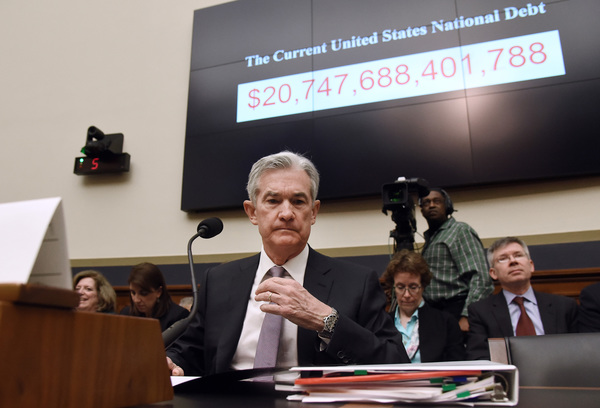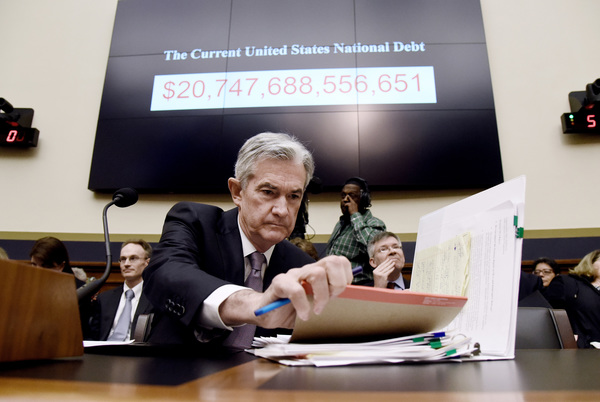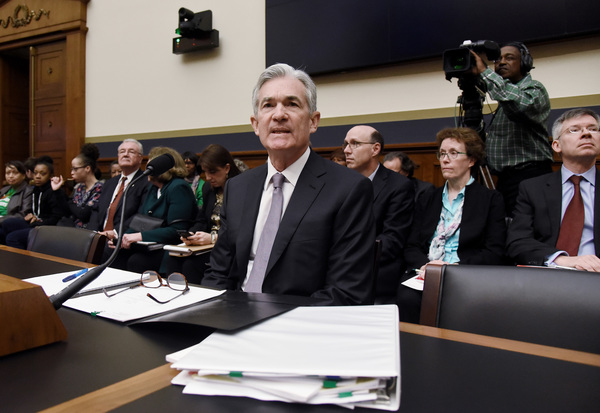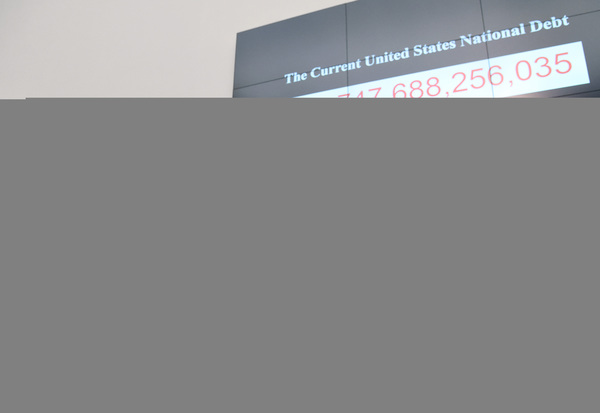
WASHINGTON _ New Federal Reserve Chairman Jerome H. Powell is expected to say Tuesday that the central bank will try to balance economic growth with the potential for "an overheated economy" now that "fiscal policy is becoming more stimulative" with tax cuts and increased federal spending.
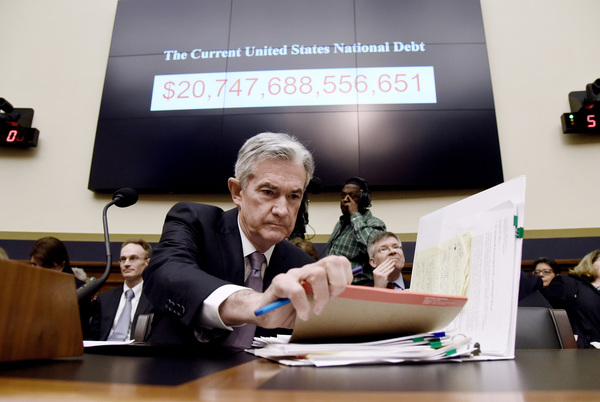
In his first extensive public comments since taking over as Fed chief at the start of the month, Powell told a congressional committee that "the economic outlook remains strong" despite recent financial market volatility.
"At this point, we do not see these developments as weighing heavily on the outlook for economic activity, the labor market or inflation," Powell said at a hearing by the House Financial Services Committee.

Powell's remarks struck an upbeat but cautious tone in his opening remarks. He did not indicate whether the Fed would accelerate its pace of interest rate hikes, saying that the central bank's policymaking Federal Open Market Committee still viewed "further gradual increases" in the benchmark federal funds rate as the way to "best promote attainment" of the dual objectives of stable prices and maximum employment.
Fed officials indicated in December they expected three small rate increases this year. "As always, the path of monetary policy will depend on the economic outlook as informed by incoming data," Powell said.
Under normal circumstances, the first testimony and extended public comments by a new Fed chief would be highly anticipated. But given the recent market gyrations _ triggered by concerns that a strengthening economy would lead the Fed to hike its key interest rate faster _ Wall Street was paying extra close attention to Powell's appearance on Capitol Hill Tuesday.
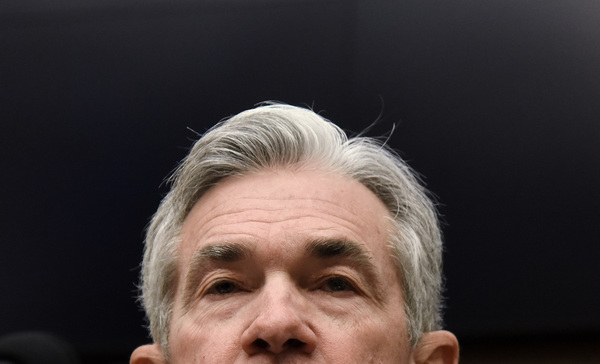
Powell took over for former Fed Chairwoman Janet L. Yellen on Feb. 3, and on his first workday in office the Dow Jones industrial average experienced its largest one-day drop, plunging 1,175 points. Three days later, it tumbled more than 1,000 points again.
Investors were concerned that the large tax cuts and a big boost in federal government spending would push inflation higher, in turn triggering an increase in interest rates that would slow growth and make stocks a less attractive investment.
The Dow and broader Standard & Poor's 500 index at one point this month were down 10 percent from their recent highs _ what's considered a market correction _ but have recovered most of those losses.

Powell did not indicate any alarm over financial markets and noted that inflation continues to run below the Fed's 2 percent annual target.
"In gauging the appropriate path for monetary policy over the next few years, the FOMC will continue to strike a balance between avoiding an overheated economy and bringing ... inflation to 2 percent on a sustained basis," he said.
"While many factors shape the economic outlook, some of the headwinds the U.S. economy faced in previous years have turned into tailwinds: In particular, fiscal policy has become more stimulative and foreign demand for U.S. exports is on a firmer trajectory," Powell said.
President Trump opted not to renominate Yellen, a Democrat, for a second four-year term. He instead turned to Powell, a Republican who has served on the Fed's board since 2012 and has supported Yellen's gradual increase in the central bank's benchmark interest rate as well as tougher financial regulations.
On Monday, Fed Vice Chairman Randall Quarles said "the economy appears to be in a good spot right now." While he raised concerns in a Washington speech about the increased deficit spending caused by the tax cuts and recent two-year budget deal, he said the fiscal stimulus provided by those moves "is likely to impart considerable momentum to growth over the next couple of years."
Quarles, another Republican appointed by Trump, said that "along many dimensions, it has been quite some time since the economic environment has looked as favorable as it does now."