Early in the 2000s, when Japan-U.S. relations were said to be at their most intimate, then U.S. Secretary of State Colin Powell's presence was extremely significant.
Unlike the closeness of then President George W. Bush and then Prime Minister Junichiro Koizumi, or the pro-Japan stance of then Deputy Secretary of State Richard Armitage, Powell seemed to be keeping a bit of distance and calmly calculating the importance of the bilateral relationship.
During a time when neoconservatism's hardline stances on foreign policy and national security were growing more influential, Powell tried to maintain balance in the Bush administration by emphasizing international collaboration. Even in Japan-U.S. relations, he didn't make unilateral demands. Rather, it felt as if he was encouraging Japan to consider its own response.
Even though he was touted as a presidential candidate, Powell prioritized his family and declined to run. During the 2008 presidential race, the Republican Powell praised the Democratic candidate Barack Obama for his international collaboration stance. During last year's presidential election as well, Powell abided by what he believed was right, criticizing the Republican candidate, then President Donald Trump.
For such a man, it must have been painfully regrettable that he did not have the power to make his beliefs mainstream in the Bush administration.
The Bush administration's foreign and security policy team was dubbed the Vulcans after a statute of the Roman god of fire in Birmingham, Alabama, the hometown of Condoleezza Rice, who succeeded Powell as secretary of state. Powell was close to the team and discussed policies with hardliners including then Vice President Dick Cheney, but he never took leadership in it.
Just before the start of the Iraq War, Powell spoke before the U.N. Security Council justifying the use of force based on faulty information. It was ironic that he was all the more persuasive because of the trust the international community held in him.
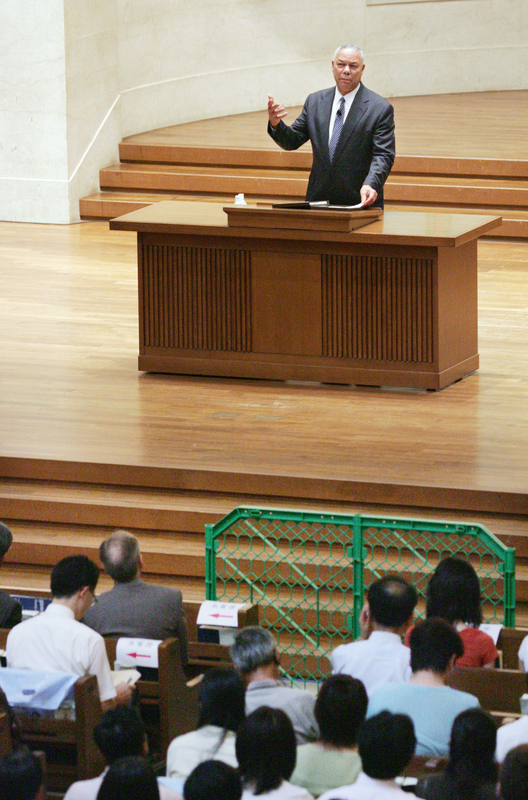
In 2005, after his retirement from government, Powell visited Japan and gave a speech at a university. He advised the students that, while people make mistakes day after day, there was no need to dwell on them as there is no rewind button in life. He said he learned the importance of discipline and being unafraid of making mistakes during his student and military days. He stressed the importance of regularly striving to realize goals together with friends and colleagues.
His words should live on in the hearts of the then young Japanese audience.
Read more from The Japan News at https://japannews.yomiuri.co.jp/