Closing summary

Messrs Trump and Johnson have both moved markets today with their respective central concerns: trade with China and Brexit.
US stock markets have caught a cold from Donald Trump’s latest Twitter outburst, which suggests that his patience with negotiations with China is wearing thin.
Investors had not been betting that the two days of trade talks currently happening in Shanghai would reach a resolution, but some had hoped for the groundwork for more detailed talks could be laid. That hope now appears to be forlorn.
Trump’s criticisms of China will form the backdrop tomorrow for the Federal Reserve, which is expected to cut interest rates for the first time since the financial crisis – partly because of the risks to growth from the trade war.
On the British side of the pond, new Prime Minister Boris Johnson’s insistence that the EU must ditch the backstop (an insurance policy to avoid a hard Irish border) if there is to be a deal. That pushed sterling to a 28-month low against the US dollar.
Sterling has become “increasingly politicised” because of Brexit, becoming more sensitive to news from Westminster and Brussels than the economic fundamentals, according to Peter Dixon, senior economist at Commerzbank.
For all the words of warning from politicians, economists and central bankers of the dangers of a no-deal Brexit, the market judgement comes as a brutal reminder that investors are not prepared to take politicians on trust and that the balance of risks is clearly tilted to the downside.
Usually a slide in the pound and the consequent inflation would prompt the Bank of England to favour an interest rate hike, but with Brexit in play that could change very quickly.
The pound is unlikely to remain at current levels for long: Either the government delivers a no-deal Brexit, in which case sterling might be expected to fall much further, or this prospect is avoided in which case the currency retraces some lost ground.
Either way, holding for now would be the sensible option, Dixon said.
And in corporate news, Centrica boss Ian Conn will step down after announcing that the British Gas owner had slashed its dividend following a first-half loss.
Thanks for joining us today for coverage of business, economics and markets. Please do join my colleague, Julia Kollewe, tomorrow for coverage of the buildup to the Federal Reserve and the Bank of England. JJ
US stock markets have fallen after US President Donald Trump’s attacks on China, which analysts have said could scupper trade talks.
The Nasdaq composite index lost 0.68% in early trading, while the S&P 500 lost 0.52% and the Dow Jones industrial average 0.34% at the opening bell.
The FTSE 100 is now down by 0.3%, and the pain has increased for Centrica and Fresnillo after their poor results: the former has lost 17% and the latter has lost a fifth.
On the mid-cap FTSE 250 CYBG, the owner of the Virgin Money, Clydesdale and Yorkshire bank brands, is the biggest faller.
Shares in the bank have lost 12% after it reported a fall in mortgage lending and lower net interest margins, a key measure of how much money they make on their loans.

US stock market futures are pointing to a difficult time for Wall Street today, after Donald Trump’s Twitter attacks on China.
Dow Jones industrial average futures prices have fallen by 0.4% with half an hour to go until the opening bell, while futures for the S&P 500 are down by 0.5% and those on the Nasdaq 100 are down by 0.8%.
The latest German inflation data might add to the case for the European Central Bank to go ahead with an interest rate cut in September: the harmonised index of consumer prices (used by the ECB) fell to 1.1%, the lowest since November 2016.
In the previous month the inflation measure had reached 1.5%, much closer to the ECB’s 2% inflation target.
Economists had expected a drop, but only to an annual rate of 1.3%.
The data add to a picture of a European economy that is struggling to sustain its momentum. The German manufacturing industry’s travails have been a major part of that story.
German CPI - lowest Y/Y since November 2016 at 1.1% https://t.co/hBSU940daq
— Michael Hewson 🇬🇧 (@mhewson_CMC) July 30, 2019
Trump’s tweets appear to have scuppered any hopes for progress in the latest talks, barring some major concessions on the Chinese side.
Stephen Innes, managing partner at VM Markets Pte, said:
Whatever shred of optimism markets had about the ongoing trade negotiations were dealt as a severe blow when President Trump flew off the handle again at China for not buying American agricultural products.
Following another month of escalating tensions, agreement on practically anything would have been viewed positively, but I think you can throw that view out the window.
Trump’s belief that China is hanging on for a Democrat to replace him as president in 2020 could lead the US to take a more aggressive tone, Innes added.
European stocks slide after Trump's trade attack on China
European equities have suffered today after poor earnings from big companies, and the slide has accelerated after Trump’s trade comments.
Germany’s Dax is now down by 2.2% today – and has hit its lowest level in more than a year. France’s Cac 40 is down by 1.5%.
The FTSE 100 is now in negative territory after Trump’s trade interventions, down by 0.2%.

An update on banking regulation: the Bank of England has today confirmed plans to make big British lenders publish plans to show that they could go bankrupt without needing the government to step in like it did with the £45bn bailout of Royal Bank of Scotland a decade ago.
The UK will become the second country to force its largest lenders to publicly disclose their “living wills” and prove they can afford to foot the bill for their own failures in order to avoid costly taxpayer bailouts, reports the Guardian’s Kalyeena Makortoff.
New rules confirmed by the Bank of England and its regulatory arm, the Prudential Regulation Authority, on Tuesday mean banks will face further pressure to lay out plans that ensure they wind down in an orderly fashion – or risk the scrutiny of both the public and investors.
The public disclosures, due every two years from 2021, will be the first made by major banks outside of the US.
With the new rules confirmed, UK’s seven largest high street banks – RBS, Barclays, HSBC, Lloyds, Standard Chartered, the UK arm of Santander and Nationwide building society – will soon start assessing whether they are in a position to continue serving customers and fulfilling existing contracts even if they are headed for a full shutdown or major reorganisation.
Updated
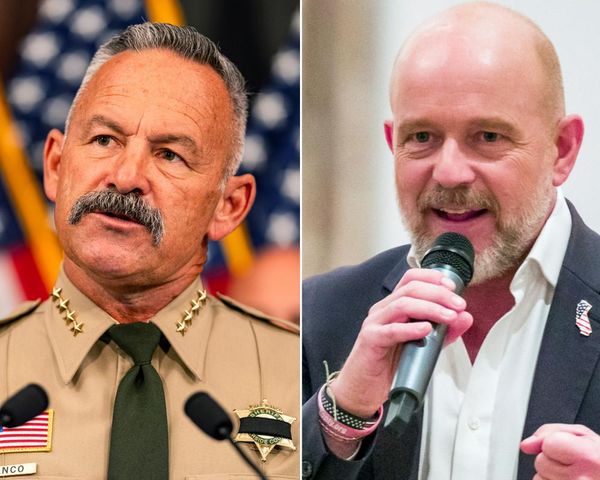
Donald Trump rails at China ahead of Shanghai trade talks
The president of the United States is awake, and he appears to be doing his best to prevent any progress in trade talks with China that are taking place in Shanghai.
Donald Trump clearly is not holding out much hope for the latest round – which will not be welcomed by jittery investors hoping for a resolution.
The trade war between the two countries has been highlighted as one of the major risks to the global economy for months.
China is doing very badly, worst year in 27 - was supposed to start buying our agricultural product now - no signs that they are doing so. That is the problem with China, they just don’t come through. Our Economy has become MUCH larger than the Chinese Economy is last 3 years....
— Donald J. Trump (@realDonaldTrump) July 30, 2019
..My team is negotiating with them now, but they always change the deal in the end to their benefit. They should probably wait out our Election to see if we get one of the Democrat stiffs like Sleepy Joe. Then they could make a GREAT deal, like in past 30 years, and continue
— Donald J. Trump (@realDonaldTrump) July 30, 2019
...to ripoff the USA, even bigger and better than ever before. The problem with them waiting, however, is that if & when I win, the deal that they get will be much tougher than what we are negotiating now...or no deal at all. We have all the cards, our past leaders never got it!
— Donald J. Trump (@realDonaldTrump) July 30, 2019
Raoul Leering, head of international trade analysis at the ING investment bank, said:
Markets could be in for another disappointment because, as of yet, there are no other concrete signs that negotiators are getting closer to a deal. On the contrary, China has demanded that the US lift all tariff hikes before a deal can be cut, which doesn’t align well with the American approach to keep the pressure on even after a deal.
However, both China and Trump could do with a deal, one to help its economy, ther other to parade his trade negotiating successes. But “Trump will need to back down”, said Leering.
Markets were yesterday pricing in a 50% chance of a Bank of England interest rate cut before the end of the year, Archer added.
However, a fiscal boost from a free-spending new government could add to pressure not to cut interest rates.
In yet another complication, the UK economy is weakening. Indeed, the influential National Institute of Economic and Social Research (NIESR) last week said there was a one in four chance the country is in a recession already.
That is backed up by recent Bank of England data, said Costas Milas, a professor at the University of Liverpool.
According to fresh Bank of England data, “divisia money” grew in June 2019 by only 3.5%, the worst rate of growth for more than seven years. “Divisia money”, which has been found to predict GDP movements quite well, weights different forms of money according to their likelihood of being spent (hence, notes and coins have a higher weight than money held in mutual funds, for example). Milas said:
The fact that divisia money is now slowing down rapidly indicates that GDP contraction is almost imminent which, of course, is hitting our currency in addition to the no-deal Brexit talk.
There has been something of an about-turn in views on the Bank of England’s interest rate path in recent weeks.
Governor Mark Carney and co had been hinting that interest rates could rise in the event of a smooth Brexit – their central assumption. But as government policy has taken on more of a no-deal flavour that is looking increasingly strained.
The Bank also runs the risk of being out of step with other major central banks – an uncomfortable feeling for policymakers who meet regularly at various economic fora. The US Federal Reserve is expected to cut rates tomorrow, and the European Central Bank’s September rate cut has already been pencilled in by investors.
It would be a “major surprise” if there is anything other than a 9-0 vote in favour of leaving policy unchanged, but the Bank could back away from its guidance that rates will rise gradually, according to Howard Archer, chief economic advisor to the EY ITEM Club.
Until very recently (including the June MPC meeting), the main focus on UK monetary policy was when the Bank of England is most likely to raise interest rates. However, there has been a marked turnaround in sentiment regarding likely Bank of England action and the key question is now whether the central bank’s next move will be to raise or cut interest rates.
We suspect that the Bank of England will acknowledge that the risks to the UK economic outlook have increased but play down the prospects of an interest rate cut unless there is a disruptive “no deal” Brexit in October.
It would probably take conciliatory noises from the government or the EU to push the pound back up, although perhaps don’t hold your breath for any change in tone any time soon, given that many key figures on either side will be on holiday in August.
Currency traders are trying to work out what it will take for sterling to fall further, given that markets appear to have finally priced in Boris Johnson’s no-deal Brexit threat.
Added to that is the complication that the Bank of England (due to meet tomorrow before Thursday’s decision) would likely have to cut interest rates if there is a no-deal Brexit.
John Goldie, a dealer at foreign exchange company Argentex Group, said:
The market finally seems to be waking up to the potential for No Deal Brexit, despite the fact that it has been the legal default for over two years now and consecutive prime ministers have maintained that they would prefer to leave without a deal than with a bad deal. The difference is that, this time, people believe Boris Johnson just might be crazy enough to carry out the threat.
The Bank of England corrected its panic cut post-referendum when they raised rates in 2017 and then took interest rates to the highest since the financial crisis in mid-2018. With this buffer, as well as a seemingly synchronised dovish shift across the major economies, the market is already pricing over 50% likelihood of a reduction in rates later this year.
There is not likely to be any change from the MPC this week but any suggestion that a cut has been considered would cement the expectation for action in the coming months and likely undermine the pound further.
The number of insolvent companies in England and Wales hit a five-year high in the second quarter of 2019, in the latest ominous economic signal for the British economy.
There were 4,321 company insolvencies between April and June, 2.6% higher than in the first three months of the year and an increase of 11.9% year-on-year.
The last time insolvencies hit this level was the start of 2014.
Duncan Swift, president of insolvency and restructuring trade body R3, said:
Today’s figures are evidence of a difficult period for UK businesses. Tighter constraints on consumers and significant uncertainty about the future of the UK economy and the UK’s relationship with the EU are just some of the key factors at play that are making the business climate a challenging one.
Questions around what Brexit really means have hit investment and growth levels, and led to a degree of economic stagnation.
Businesses in a variety of industries are struggling right now. Retailers are suffering as the world in which they operate changes and more and more people shop online. Manufacturing output and confidence is low. Private and business car sales are down. And businesses which stockpiled items ahead of the original Brexit deadline of 29 March will now be seeing those decisions have an impact on their cash flow levels.
Simply put: it’s an uncertain, difficult time to be in business right now.
The pound has moderated some of its losses for the day: it has now lost 0.3% for the day to trade at around $1.2184 against the US dollar.
The slight recovery has weighed on the FTSE 100, which is now up by only 0.07%.
But any talk of recovery comes in the context of a very difficult month for sterling owners. The pound remains down by 4.5% over the year to date, or 4% in the past month alone – leading to some rather unflattering comparisons:
Contra the doom-mongering, the pound is still up marginally against the Turkish lira this year. pic.twitter.com/CSTeBHKShm
— Mike Bird (@Birdyword) July 30, 2019
Important pensions news from the Financial Conduct Authority.
Britain’s financial watchdog has proposed measures to protect consumers transferring out of defined benefit pension schemes, including a ban on contingent charging for advice and a clampdown on ongoing fees over 20 to 30 years – practices it said were costing customers £2bn a year.
Many savers have been encouraged to move their pensions when they would be better advised to stay put.
You can read more from the Guardian’s Julia Kollewe here:
Giffgaff has been fined £1.4m for overcharging 2.6 million mobile phone customers.
An Ofcom investigation revealed the network, which is owned by O2’s parent company Telefónica, overcharged users a total of almost £2.9m, writes the Guardian’s Mark Sweney.
The communications regulator said the billing mistake was “unacceptable” and imposed a further £50,000 fine because Giffgaff failed to provide accurate information during its investigation.
You can read more here:
Some more interesting detail on the UK from the eurozone economic survey: consumers don’t appear to be that bothered by the Brexit chaos.
Here’s more from Samuel Tombs, chief UK economist at Pantheon Macroeconomics:
The overall sentiment indicator for consumers jumped to -7 in July – its highest level since August 2018 – from -11 in June. Confidence among households about the economic outlook recovered in July, while households’ optimism about the 12-month outlook for their personal finances rose further above its long-run average.
Although caveated by the fact that the survey was carried out before Johnson ascended to the premiership, “there’s no sign yet that consumers are going to tap the brakes on spending in the run-up to the October Brexit deadline”, Tombs said.


The weakening in the eurozone is reflected across the world, and it has drawn a response from central bankers who are planning to add support to their ailing economies.
The Federal Reserve is expected to cut interest rates tomorrow, and the European Central Bank has all but committed to moving in September (although the Bank of England is expected to remain on hold until the Brexit path becomes clearer, for better or worse).
The Bank of Japan’s Haruhiko Kuroda this morning added to the sense of wariness among central bank governors, saying that he was prepared to ease monetary policy if need be.
While the BoJ did not change interest rates, it said it would add more stimulus “without hesitation” if there is a global slowdown that threatens to weaken inflationary pressures.
Freya Beamish, chief Asia economist at Pantheon Macroeconomics, said Kuroda echoed what other policymakers have been saying in recent weeks.
The language now promises further easing if downside risks materialise, mainly regarding developments in overseas economies.
European business confidence falls to nearly six-year low
Eurozone business confidence fell to an almost six-year low in July, according to closely followed indicators published by the European commission.
Business confidence for the eurozone fell “markedly”, the commission said, from a reading of 0.17 points in June to a negative reading of 0.12 in July.
That was the first negative reading for business confidence since October 2013, and the lowest since August of that year. It was also well below economists’ average expectations of 0.08.

The commission’s economic sentiment indicator, which combines consumer and business confidence, fell to its lowest since 2016.
The figures add to an ominous picture for the eurozone economy, which has been blighted in particular by the struggles of the German manufacturing industry – with fears rising of a global economic slowdown.

British bakery chain Greggs has reported a 58% rise in profits today, after the buzz around its vegan sausage roll boosted sales.
The Newcastle-based company announced a special dividend of 35p per share – a vegan sausage roll payout, perhaps.
Greggs launched its vegan sausage roll in January with a hugely successful marketing campaign that drew the ire of famous ranters but boosted sales.
Underlying pre-tax profits came in at £40.6m for the six months to 29 June, up from £25.7m the year before.
There were heavier sterling trading volumes than normal in Asia trading hours, say analysts at Deutsche Bank led by Jim Reid.
The renewed selling this morning has left the pound just a percent away from hitting a 34-year low (if ignoring the “flash crash” of October 2016). They said:
With 93 days until the UK’s scheduled departure from the EU on October 31, and with Johnson’s policy of leaving that day “no ifs or buts”, fears of a no-deal outcome are increasingly being reflected in the currency.
It isn’t only sterling markets that are being affected: the yield on the 10-year gilt, the benchmark rate for UK government borrowing, has matched its almost-three-year low of 0.628% this morning.
Yields fall as prices rise in response to higher demand for the bonds. That demand has been driven in part by expectations that a no-deal Brexit would lead to economic stimulus from the Bank of England. Lower interest rates tend to make the returns from bonds more attractive.
Remember that Johnson and much of his cabinet have already voted in favour of the withdrawal deal that Theresa May agreed with the EU. But his new-found conversion to leaving without a deal if necessary reflects the apparent impossibility of getting enough votes to pass that deal.
Kit Juckes, chief foreign exchange strategist at Société Générale, said:
UK PM Boris Johnson’s position that there is no point talking about the exit deal with the EU until the Irish border backstop arrangement is removed, reflects his inability to get the deal in its current format through Parliament.
His hard-line stance is seeing the Conservatives win voters back from the Brexit Party, according to recent polls, and he needs either to get a deal from the EU that he can get through Parliament or win back enough Brexiteer votes to be able to win an election. Either way, he is committed to a hard-line stance towards the EU that will of course, be rebuffed aggressively. In the process, sterling moves to the bottom of its post-referendum ranges and re-tests historical trade-weighted lows.
Oh, to be a fly on the wall in 10 Downing Street today as they discuss a fall in sterling at peak holiday season.
Perhaps, counterintuitively, Boris Johnson and his new strategy supremo, Dominic Cummings, may welcome the fall (or what it represents), says Craig Erlam, senior market analyst at foreign exchange firm Oanda.
The weakness in the pound is a reflection of the fact that Boris Johnson’s plan is working. He wants his no-deal threats to be taken seriously by the EU in the hope that it forces them to re-engage on the backstop. Clearly he has traders convinced.
Ultimately, May failed to convince anyone that no-deal was ever an option, despite repeated warnings that it was better than a bad deal. Boris Johnson is determined not to make the same mistake and it now remains to be seen whether the EU will take his threats as seriously as the market is. Traders are currently not optimistic but it’s still early days. For now, the currency may remain under severe pressure.
The FTSE 100 is the one gainer among major European stock markets, still up by 0.14%.
Elsewhere Germany’s Dax index has been shaken by poor earnings from the Lufthansa airline and chemicals company Bayer. It fell by 0.5%.
Italy’s FTSE MIB benchmark index has hit a four-week low after falling by 0.8%.

British Gas owner Centrica’s shares are sputtering: they are now at a 21-year low.

Silver and gold miner Fresnillo is the second-worst performer on the FTSE 100, after it reported a drop in production and higher costs. Profits dropped by two-thirds.
And consumer goods company Reckitt Benckiser missed analysts expectations for sales thanks to slower sales of infant formula in the giant Chinese market.

A bit more detail on those BP earnings: profits fell by 35% in the second quarter on the back of sliding crude oil prices.
But investors of course know the effect of lower oil prices on oil company earnings; better than expected production figures helped make up for the lower prices. (Despite all of its talk of supporting the energy transition, BP is in the middle of a five-year plan to expand production.)
Via AFP:
BP said that its underlying replacement cost profit – a widely-watched measure which strips out exceptional items and changes in the value of oil inventories – was broadly unchanged at $2.8bn. That beat the average analyst forecast of $2.48bn, according to Bloomberg.
Centrica shares have fallen by 10% in early trading on the FTSE 100.
Here is the chart which probably goes some way to explaining why Centrica boss Ian Conn is being shown the door.

London’s benchmark index is up by 0.35%, however, after stronger-than-expected BP results boosted the weighty mining contingent.
And don’t forget that the FTSE 100’s multinationals are usually boosted by the falling pound, which makes their foreign currency earnings more valuable in sterling terms.
Back on sterling, it’s “relentless selling pressure” says Neil Wilson, chief market analyst at Markets.com.
If sterling weakens further “it’s anyone’s guess where cable [sterling against the dollar] could land,” he said.
Remember the previous post-2016 low was before no-deal was on the table – it was all talk of a hard v soft Brexit – no deal wasn’t even being discussed.
The reasons behind the slide are well trodden but worth noting again: increased risk of a no-deal Brexit as the new government regime pivots squarely towards making no-deal a reality.
And Johnson will not be endearing himself to many families about to go abroad ...
Terrible timing for the holidays. Why is it always August?

Ian Conn’s departure came after what he described as an “exceptionally challenging environment in the first half of 2019”, resulting in Centrica slashing its dividend in half.
Centrica slumped to a loss of £446m in the first six months of 2019, after making a profit of £704m in the same period last year.
The company blamed a litany of factors for the £1.1bn downturn in its fortunes: the UK default tariff price cap, low UK natural gas prices, extensions to outages at the Hunterston B and Dungeness B nuclear power stations, and warmer than normal weather in both the UK and North America.
The British Gas owner’s adjusted earnings for shareholders, which attempts to strip out one-off costs, slumped by 63% year-on-year to £134m. The dividend to be paid to investors fell to 1.5p per share, down from 3.6p last year.
Centrica’s UK consumer business will be “fundamentally rebased”, and it will seek another £250m of efficiencies per year, part of a £1bn cost-cutting programme.
Centrica boss Ian Conn to step down
British Gas owner Centrica has announced that its chief executive, Ian Conn, will step down next year.
Conn will remain with Centrica at least until the 2020 annual general meeting and “provide his full support to help with the transition”, the company said.
The board said it will plan for his succession and provide an update at a later point.
Conn will remain on the same pay policy until the end of his employment, Centrica said. However, bonus payments whose conditions have not yet been fulfilled will “lapse in full” and no further bonuses will be granted.
Conn has previously been the object of criticism after receiving a 44% pay rise to £2.4m for 2018, despite a difficult year in which the company imposed two bill increases, warned on profits and announced thousands of job cuts.
Charles Berry, Centrica chairman, said:
Iain has now agreed with the Board that, while he will continue to focus on driving [the] transformation, including pursuing the announced divestments and continuing to drive performance and efficiency, he will also support an orderly succession before stepping down in due course.

Here’s a graph regular readers will have seen yesterday, but it certainly bears repeating: sterling against the US dollar since the start of 2016, ahead of the June 2016 referendum.
Note that sterling popped to above $1.50 as the results of the referendum started to come through. It has since suffered, recovered somewhat, and then fallen back as it became clearer that a no-deal Brexit was increasingly likely.
Introduction: Sterling hits new 28-month low
Boris Johnson’s financial markets welcoming party has delivered another blow this morning, sending sterling to fresh lows.
When campaigning for the Conservative leadership, the new prime minister made it very clear that he intended to leave the EU on 31 October with or without a deal. Markets appeared not to believe him; they now appear to have caught up.
Johnson again rejected the backstop, the insurance policy that aims to prevent a hard border between Northern Ireland and the Republic of Ireland. Speaking in Scotland, he said:
We can’t accept the backstop, it was thrown out three times, the withdrawal agreement as it stands is dead and everybody gets that. But there is ample scope to do a new deal and a better deal.
Investors were not reassured and sterling tumbled again this morning, losing as much as 0.7% against the US dollar and 0.6% against the euro. One pound bought as little as $1.2121 US dollars this morning, the lowest since 14 March 2017. Watch for the $1.2106 level: that will be the lowest since January 2017.
It has been an uncomfortable month for the pound, making it one of the worst-performing currencies across the world in recent days.
On the bright side, the pound sterling is not the worst performing currency in the world today. That accolade goes to the Madagascan Ariary. The pound, on the other hand, is only the second-worst performing currency in the entire world pic.twitter.com/bwJLNID8Ho
— Ed Conway (@EdConwaySky) July 29, 2019
Sterling’s Johnsonian weakness will also have tricky implications for the Bank of England, whose rate-setting monetary policy committee will be looking at the fall in the pound with a certain trepidation ahead of their latest interest rate decision on Thursday.
Falls in the pound feed eventually through into higher inflation – but it is not the kind of inflation that signals an economy that is heating up. That leaves an uncomfortable decision to leave rising inflation, or to raise interest rates to combat it at a time when the economy may be struggling even more.
The agenda
- 10am BST: Eurozone business confidence (July)
- 10am BST: Eurozone consumer confidence (July)
- 1pm BST: Germany inflation rate (July)
- 1:30pm BST: US personal spending (June)