Sterling has fallen three quarters of a percent against the dollar in the wake of official data showing a surprise fall in inflation.
The value of the pound retreated to $1.4176 – down 0.76 per cent on the day – in the wake of the ONS’s report earlier on Wednesday that inflation in March was just 2.5 per cent, below the 2.7 per cent estimate of City of London analysts.
Against the euro the pound was off 0.67 per cent on the day at €1.1470.
Traders had been expecting the Bank of England to hike interest rates again to 0.75 per cent next month, following the first increase in a decade last November.
But weaker than anticipated inflation could put that in doubt and the decline in sterling reflects a pull back of their bets on May increase.
Inflation sell-off
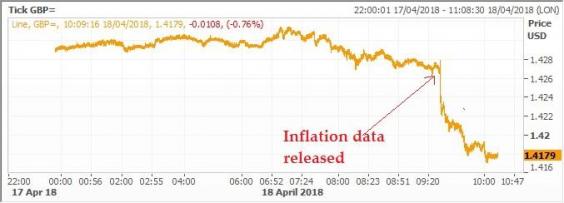
“Today’s data is unlikely to cause the Bank of England to shy away from a rate rise next month. But with economic growth expected to come in weaker in Q1 owing to the snowy weather, and the need for further evidence of rising wage pressures, it will be a less clear-cut affair than anticipated,” said Tej Parikh of the Institute of Directors.
Earlier this week sterling had risen to its highest level against the dollar since the Brexit vote - $1.4335 – as expectations grew of a May rate rise by the Bank of England.
Sterling suffered a record intra-day plunge against the dollar of more than 11 per cent on the night of the June 2016 referendum, falling to $1.32.
In January 2017 it hit a low of $1.21, before recovering over the course of the year.
Despite the pound’s gradual clawing back of post-referendum losses against the dollar, the trade-weighted value of sterling – which values the UK currency against a basket of the currencies of our major trading partners – still stands 10 per cent down on its level before the Brexit vote.