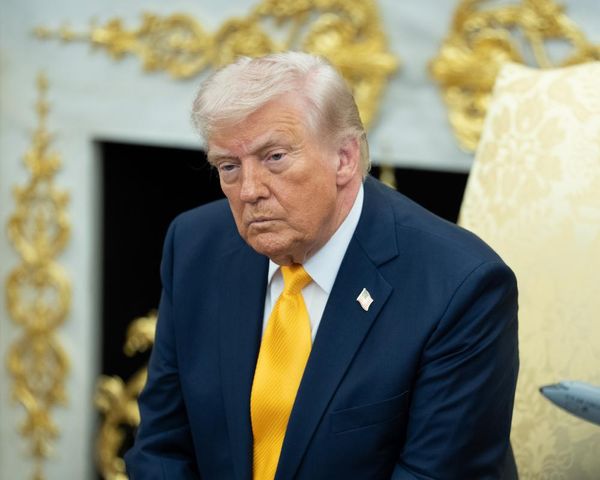
Dow drifts away from 20,000 level
Over in the US, having come within a whisker of the 20,000 barrier on Friday, the Dow Jones Industrial Average continues to head in the other direction on Monday.
At the moment the Dow is down 50 points 19913, a fall of around 0.25%.
On that note, it’s time to close for the evening. Thanks for all you comments, and we’ll be back tomorrow.
European markets edge lower
A strong euro has taken the shine of European markets which - in contrast to the FTSE 100 - are down on the day. The final scores showed:
- Germany’s Dax dropped 0.3% to 11, 563.99
- France’s Cac closed 0.45% lower at 4887.57
- Italy’s FTSE MIB fell 1.66% to 19,360.02
- Spain’s Ibex ended down 0.24% at 9492.8
- In Greece, the Athens market dipped 0.15% to 659.33
FTSE 100 closes at fresh high
For the eighth day in a row, the FTSE 100 has closed at a new peak, equalling a record set back in 1997. If it closes higher on Tuesday, we would be in uncharted territory.
It is also the tenth trading day to see a positive close, itself a new record.
Bolstered by the weakness in the pound - partly thanks to Theresa May’s latest comments which seemed to suggest to traders that a hard Brexit is on the way - overseas earners and mining companies are among the main gainers.
Overall the FTSE 100 has finished up 27.72 points or 0.38% at a new peak of 7237.77.
Chris Beauchamp, chief market analyst at IG, said:
Yet again the fall in sterling has become the primary means by which the FTSE has risen, with some of the big names from the summer bounce, such as Reckitt Benckiser and Imperial Brands, making gains.
Updated
Oil price slides 3%
Oil prices are under pressure, with signs of increased US production and record Iraqi exports in December threatening to undermined the recent output curbs agreed by Opec and other producers.
Brent crude is currently down 2.9% at $55.43 a barrel while West Texas Intermediate is 3% lower at $52.37. Michael Hewson, chief market analyst at CMC Markets, said:
Oil prices have slipped back...after US rig counts rose again for the tenth week in succession, and their highest level in twelve months, which has helped temper further gains in the short term, after the highs seen last week.
While the prospect of Opec production cuts is expected to underpin the oil price, talking about them and doing them are two different things and given that Iraq saw production hit a record in December, cutting back is likely to be easier said than done, while Iran also reported a rise in exports.
MP Andrew Tyrie, chairman of the Treasury committee, will call for clarity on Brexit in a speech on Monday evening. As the pound suffers on fears of a “hard Brexit” Tyrie will say:
The Prime Minister’s decision to come forward soon with high-level objectives is welcome, if not overdue. A document is needed that enables a full and considered consultation with Parliament and the public.
Clarification can and should be provided on at least three major issues.
First, there is the question of whether the UK will seek to remain a member of the single market, or if not, seek at least to obtain equivalent access for trade in goods and services...
Second, the UK needs to decide whether to participate in a customs union with the EU....

Third, and perhaps most important of all, the Government should take the opportunity to clarify whether the UK will seek transitional arrangements under Article 50. This provides that the EU Treaties may continue to apply to the UK, for an agreed period, after the withdrawal negotiations have been completed. This is a very important but apparently misunderstood provision. It has been confused with the separate provision in Article 50, which allows the two-year negotiating period to be extended. The latter requires unanimity; the former would be subject to QMV [qualified majority vote], and is therefore readily negotiable. A “standstill” at the completion of the negotiations under Article 50 could provide certainty, both about the operating environment for a specified period, and about the point at which the “standstill” would expire...
Given the need to build a broad-based support for its position, at home and abroad, the sooner the Government can provide clarity, the better.
The comments come ahead of a select committee hearing on Tuesday concerning the UK’s future economic relationship with the EU. This will hear evidence from HSBC chairman Douglas Flint, Elizabeth Corley, vice chair of Allianz Global Investors, and Xavier Rolet, chief executive of the London Stock Exchange.
Here’s Reuters story on German chancellor Angela Merkel’s latest comments relating to the UK and single market access:
The European Union must consider limiting Britain’s access to its single market if London fails to accept the bloc’s four freedoms in Brexit negotiations, German Chancellor Angela Merkel said on Monday.
Adding pressure on British Prime Minister Theresa May who at the weekend hinted at a “hard Brexit” - in which border controls are prioritized over market access - Merkel said there could not be negotiations based on “cherry picking.”
Merkel said it was important that “we also make clear on the other hand that access to the single market can only be possible on the condition of respecting the four basic freedoms. Otherwise one has to talk about limits (of access).”

If Britain does not accept the EU’s four freedoms - free movement of goods, capital, services, and people - in Brexit negotiations, there will have to be talks about restricting access to the single market.
That’s the latest from German chancellor Angela Merkel, as quoted by Reuters, and reaffirms the EU’s position that single market access is inextricably linked to freedom of movement.
Wall Street opens lower
US markets have made a negative start to the new week.
After coming close enough to touch the elusive 20,000 level on Friday, the Dow Jones Industrial Average is slipping away from the record breaking level. A slip in oil prices and downgrades to Procter and Gamble and Coca-Cola, as well as a fall in Goldman Sachs, have helped push the Dow down 64 points to 19899.
The S&P 500 opened down 0.13% but the Nasdaq Composite edged up a similar amount.
The pound’s new slide could arguably mean it is now looking cheap, says Fawad Razaqzada, market analyst at Forex.com:
Though the Brexit vote has only had a limited impact on the economy thus far, the uncertainty could weigh on business spending in the months ahead. Indeed, the resignation of Britain’s top official in Brussels last week has raised question marks over the government’s self-imposed deadline of triggering the official EU exit clause by the end of March. The real impact of Brexit will not be known until after the fact. So, things could look and feel a lot different in the months and years ahead.
But the markets are forward-looking by nature and a lot of the negativity has been priced in. Some would argue even that the markets may have overreacted as the economic implications of Brexit may not be as bad as many fear, so the pound should not be this “cheap.”
And even if the Bank of England does not actually increase interest rates in the near future, we could have seen the end of the UK’s extraordinary loose monetary policy, he says:
When the UK government finally triggers Brexit Article 50 to start the formal process of leaving the EU, the BoE may not necessarily further loosen its policy further in response. The weakness of the pound and the rising prices of oil means inflation could easily overshoot the Bank’s 2% target. Although Mark Carney, the BoE Governor, has indicated that the MPC will tolerate a temporary rise in price levels, it will become hard to justify maintaining that policy if inflation remains high for a long period of time. Thus the MPC may be forced to tighten its belt in order to prevent inflation turning into an unlikely period of hyperinflation, which will be very costly for the economy.
If this view is correct, then the pound should start to get its mojo back in the coming months. In the short-term however the technical outlook on the GBP/USD looks rather bearish as it continues to make lower lows and lower highs within its 3.5 month consolidation period. But with the cable now at the lower end of its range, the probability of seeing a bounce rises at an increasing rate by each passing day.
A quick recap
Time for a quick catch-up, before Wall Street opens for the week - giving the Dow Jones industrial average another tilt at the 20,000 mark.
The pound has slipped to a 10-week low after Theresa May appeared to hint on Sunday that Britain will lose its membership of the single market after Brexit.
Amid volatile trading, sterling is currently down almost 1.5 cents at $1.214.

The pound is also having a bad day against the euro, down 1.1% at €1.153.
Investors are reacting to May’s appearance on Sky News’s Sunday with Sophy Ridge, in which she insisted Britain wouldn’t retain bits of its existing EU membership. “We are leaving. We are coming out. We are not going to be a member of the EU any longer.”
Asked about the selloff, the PM insisted her comments were consistent with her previous stance - and again vowed to get a good deal for the UK.
But experts believe some UK firms are going to suffer if Britain sheds its single market membership, with Commerzbank flagging up the risk of a Brexit disaster.
This is from Robin Bew of the Economist Intelligence Unit:
#UK PM interviewed on #Brexit. Her red lines on immigration, justice suggest tough ride for services, finance industries.
— Robin Bew (@RobinBew) January 9, 2017
All very well for #UK PM to rebut link between trade, immigration in #Brexit. But if #EU sees a link, that's the negotiating reality we face
— Robin Bew (@RobinBew) January 9, 2017
Other City experts have predicted months of volatility as Britain prepares to trigger Article 50 of the Lisbon Treaty, starting the clock ticking on its departure from the EU. Here’s a round-up of the latest comments.
And here’s a graph showing how the pound has been nearly as troubled as the Turkish lira and the Mexican peso of late.
But the weak pound is good news for the share prices of global companies listed in London. The FTSE 100 is up 17 points, and on track for a record-equalling 8th closing high in a row.
Updated
We’ve now got hold of Commerzbank’s latest comments about the pound, and fears of a Brexit disaster (as flagged up earlier).
It’s by analyst Esther Reichelt, who says:
Sterling is suffering after Prime Minister Theresa May said over the weekend that more detailed plans for the UK’s exit from the EU would be announced over the coming weeks.
This announcement was in defence of claims made during the recent resignation of Britain’s ambassador with the EU Ivan Rogers that the British government’s exit plans were muddled. She did not succeed there.
Until the government finally presents a concrete and convincing strategy market participants will increasingly fear a disaster. In particular as she signalled once again that the aim of controlling immigration was a red line she would not be willing to cross. That means that following Brexit the country is likely to lose access to the single market. Even though the US President-elect has already signalled an interest in closer ties with its former colonial masters which may well cushion the economic impact of the decision for the UK, what Larry Summers said in his interview about the US also applies to the UK: “if our strategy is to trade only with people that speak English that’s going to be a poor strategy”.
The FX market shares this view and as a result Sterling has come under pressure again this morning.
Updated
Ministers talk a lot about guaranteeing “access” to the European single market, but that’s not the same as being a member, of course.
Writing in the FT, legal expert David Allen Green puts his finger on the difference...
Clangers cited in FT in explaining EU trade policy?
— David Allen Green (@DavidAllenGreen) January 9, 2017
ACHIEVEMENT UNLOCKED. pic.twitter.com/fs96qXj4m8
This is the second time that the pound has stumbled after Theresa May gave a Sunday TV interview.
Back in October, sterling suffered several sharp falls after the PM announced she’d trigger Article 50 within six months. Then, she also pledged to tighten up immigration from the EU, which fuelled fears that the UK would leave the single market (as the free movement of people, goods, services and capital are linked).
Trading has been volatile since, with the pound enjoying some good weeks (although plenty of bad ones too), as this chart from Bloomberg shows:

Erik Nielsen, global chief economist at UniCredit, told Bloomberg that:
“It looks almost certainly now like a hard Brexit, and the market doesn’t like it.
It’s a political crisis in the brewing here, for sure.”
Updated
Theresa May’s insistence that she’s not aiming for a ‘hard Brexit’ hasn’t brought much relief to the pound.
Sterling is still down 1% against the US dollar at $1.216, as traders continue to worry about Britain’s exit from the EU.
Kathleen Brooks of City Index says the PM is confusing investors with these messages:
The pound has dipped to its lowest level since October on Monday after Prime Minister May said on Sunday that we couldn’t keep bits of the EU, fuelling fears of Hard Brexit. On Monday she said that she doesn’t accept the terms ‘hard’ and ‘soft’ Brexit, and denied that her comments yesterday were a change of stance.
This ‘back-pedalling’ has done nothing to reverse the decline in the pound, which dropped to a low of 1.2125 before lunchtime, and instead makes it likely that further interviews with the Prime Minister will become even harder to score, due to her far from clear message about what Brexit will entail.
May: Wrong to talk about Hard Brexit
Prime minister Theresa May has just insisted that she didn’t announce a new policy change on Brexit yesterday.
She has told reporters that what she said on Sky News yesterday is consistent with what she’s been saying for the last few months.
And the PM also criticises those who write about a ‘hard’ or ‘soft’ Brexit, saying she doesn’t accept such terms.
We are going to get an ambitious, good, a best possible deal for the United Kingdom, in terms of trading with and operating within the single European market.
But it will be a new deal, as the country will be outside the EU, May adds.
On sterling's slide after her single market comments on @skynews: PM: "What I said yesterday is what Ive been saying for past few months"
— Faisal Islam (@faisalislam) January 9, 2017
"The people who are getting things wrong are those who say 'it's inevitable there'll be a hard Brexit' - I don't accept the term" says PM
— Faisal Islam (@faisalislam) January 9, 2017
.@theresa_may attacks those "writing" we are getting "hard" Brexit. She's aiming for Brexit best for Britain (just in case you doubted)
— Robert Peston (@Peston) January 9, 2017
May was speaking after giving a major speech on mental health policy; our Politics Live blog has all the details:
After hitting a new alltime high in early trading, the FTSE 100 has dipped back to 7,207, down 3 points.
After seven record closing highs in a row, the index may have run out of breath. But if it can struggle into positive territory by 4.30pm, the Footsie will equal its best ever run, set in 1997.
If #FTSE100 closes up today, it will match the longest record-setting streak in the FTSE's 33-year history. (8 record closes in a row in 97) pic.twitter.com/DhiBTtwoWw
— Tara Cunningham (@TaraSCunningham) January 9, 2017
Some chart action
Today’s selloff reinforces the pound’s status as one of the weaker currencies of the last 12 months.
This neat chart, from City fund manager Paul McNamara of GAM, shows how sterling has performed little better than two struggling emerging market currencies - the Turkish lira and the Mexican peso - since January 2016.
UK £. Clearly a different league to basket cases like Turkey or Mexico. pic.twitter.com/tdyTmb5jeJ
— Paul McNamara (@M_PaulMcNamara) January 9, 2017
As you can see, the pound (in white) had a major slump after the Brexit vote, while the Mexican peso (in green) took a dive when Donald Trump won the US election.
Having said that, the pound did strengthen between 2013 and 2015, as economist Rupert Seggins artfully points out:
Don’t mean to alarm you, but sterling’s been in Toblerone formation for a while now… @DuncanWeldon pic.twitter.com/a1hTHcDZRg
— Rupert Seggins (@Rupert_Seggins) January 9, 2017

The boss of Rolls-Royce Motors has given Britain a Brexit boost -- saying that the company remains committed to the UK even though it’s leaving the EU.
The move calms fears that the luxury carmaker could shift its HQ overseas, as my colleague Rob Davies explains:
“Success for Rolls-Royce is success for Great Britain and we reaffirm our commitment to maintaining the home of Rolls-Royce in the UK,” chief executive Torsten Müller-Ötvös, told Sky.
In a letter leaked to the Guardian last year, Müller-Ötvös told British staff an exit from the European Union would drive up costs and prices and could affect the company’s “employment base”.
But the comments issued alongside the company’s sales figures indicate that even if staff are affected, the company does not plan to abandon its headquarters at Goodwood in West Sussex, southern England.
“We are deeply committed to a long-term, sustainable, successful growth strategy and this result, amid a backdrop of global uncertainty, affirms this approach,” Müller-Ötvös said.
Here’s the full story:
Pound pummelled by Brexit fears: What the experts say
The slide in the value of sterling against the dollar and the euro this morning has got City experts chattering.
Several analysts are predicting more volatility in the next few months, with Britain aiming to trigger Article 50 by the end of May.
Here’s some of the best comments:
Naeem Aslam of Think Markets:
The political crisis is brewing and you can see that when you look at pound. The UK government is playing with fire and creating more uncertainty. Last year, we said that the British pound has tendency of touching the mark of 1.18 against the dollar and we are still maintaining our call.
The government needs to be consistent with their message so that market can digest all the bad news and move on with it. You cannot carry on giving conflicting messages as this puts more traders on the side line.
Arnaud Masset, market analyst at Swissquote bank:
The pound was under renewed pressure on Monday as Theresa May suggested that she is willing to go for a full Brexit rather than trying to maintain the UK’s access to the common market by giving up part of the UK’s sovereignty.
Since Thursday evening the pound has fallen more than 2% against the greenback as GBP/USD broke the 1.22 support level and continued to move south as traders increased their bearish bet. After last week’s resignation of EU ambassador Ivan Rogers and muddled ongoing talks with the EU, the pressure will continue to mount on the pound. The next support that lies at 1.1841 is within reach and could be reached by the end of the week.
John Hardy, Saxo bank’s head of FX strategy
“The most significant thing is May’s comments over the weekend (on a Brexit deal) triggering a significant sterling slide.
“My feeling is we kind of knew this so what did the market expect really, but her making it explicit gives another reason to short sterling maybe” (via Reuters).
Neil Wilson of ETX Capital:
Domestic populist politics trumps the trade card for now, it seems and that is weighing on the pound, whilst simultaneously giving another boost to the FTSE 100. It’s on track for another record close, in large part because of the weakness in sterling, which has now slumped to its lowest versus the dollar since October.
It’s an interesting example of how politics is the key driver for the pound at the moment. And it’s fascinating that a spokeswoman for the prime minister has commented on it - Downing Street may be concerned about what a collapse in the pound means psychologically for voters. For many it can be summed up simple as ‘weak pound = weak Britain’.
Given the susceptibility of the pound to such remarks - which are liable to change and be contradicted by ministers and other officials over the coming weeks - we have to assume that there is going to be more volatility, which may include plenty of short-term upside in sterling - i.e. that it could easily bounce back to levels we’ve seen in the last two months as the tone of the argument swings away from today’s hard Brexit talk, back to soft Brexit.
For example, we recently had a rally in sterling when David Davis suggested Britain could pay for access to the single market. Soft Brexit language could help GBPUSD retrace the losses accrued in recent days, but don’t count on it. If cable falls below October’s lows and breaks through the $1.20 level it might be a sign that traders think Britain is heading for a hard landing and it could fall further.
The latest economic news from the eurozone is quite encouraging.
Unemployment in the euro area remained at 9.8% in December, matching November’s seven-year low (still far too high, of course).
And investor sentiment in the euro area has jumped this month. Research group Sentix’s monthly healthcheck has risen to 18.2, from -- with some investors hoping that a Trump presidency could be good for growth.
Downing Street: Nothing ruled in, or out
A Downing Street spokeswoman has insisted that Theresa May “hasn’t ruled anything in or out” ahead of Brexit negotiations, after the pound tumbled against the dollar this morning.
Reuters has the details:
British Prime Minister Theresa May is ruling nothing in or out before starting departure talks with the European Union and wants the best deal for businesses to trade with the single market, her spokeswoman said on Monday.
The pound fell to two-month lows after traders felt May had indicated during an interview on Sunday that Britain would dramatically rework trade ties with the EU after Brexit.
“She hasn’t ruled anything in or out - she’s said she wants the best possible deal for trading with and operating within the single market,” the spokeswoman said.

Updated
City analyst Ipek Ozkardeskaya says the pound will remain under pressure until the City gets more details of Britain’s post-Brexit deal.
Details on single mkt to follow in coming weeks, selling pressures on #GBP will certainly stay until more details.https://t.co/JJgRQkJORd
— Ipek Ozkardeskaya (@IpekOzkardeskay) January 9, 2017
The pound is extending its losses, and is now down almost 1.5 cents against the US dollar at $1.2145.
That’s a 10-week low.
The official pound sterling soundtrack this morning is "AGHAHAhaghhhhh" pic.twitter.com/d2YkeKzi4x
— Mike Bird (@Birdyword) January 9, 2017
Brexit uncertainty hasn’t hit the UK housing market, according to new figures from the Halifax today.
Halifax reports that house prices jumped by 1.7% in December, surprising economists who only forecast a 0.2% rise. On a annual basis, prices were 6.5% higher.
This survey only includes data from Halifax’s own customers, so should be treated cautiously (rival mortgage broker Nationwide reported annual growth of 4.5% in December).
City PR boss George Trefgarne argues that the pound is suffering from more than just Theresa May’s appearance on the new Sophy Ridge show on Sunday.
Market commentators are saying sterling 2c drop overnight is due to Sky interview, I am not so sure. It is economic uncertainty
— George Trefgarne (@GeorgeTrefgarne) January 9, 2017
FDI flows and business decisions have been slowing; and Govt hasn't moved fast enough to undo Osborne's damage, eg stamp duty
— George Trefgarne (@GeorgeTrefgarne) January 9, 2017
(FDI= foreign direct investment, or money flowing into the UK from abroad).
More clarity on Brexit would also help. Sterling could actually rise after A50 triggered
— George Trefgarne (@GeorgeTrefgarne) January 9, 2017
Updated
The pound is getting close to 31-year lows against the US dollar (if you exclude October’s wild ‘flash crash’ that saw sterling briefly fall below $1.15).

PA’s Ian Jones tweets:
The pound is nearing its lowest value against the dollar since the referendum. Might a senior govt minister have been interviewed yesterday?
— Ian Jones (@ian_a_jones) January 9, 2017
Commerzbank: City fears Brexit disaster
The Financial Times has got hold of a research note from Germany’s Commerzbank, which says investors fear a Brexit ‘disaster’ unless the UK produces a decent strategy for leaving the EU.
Commerzbank’s Esther Reichelt argues that Theresa May’s opposition to “keeping bits” of EU membership raise the chances of a hard Brexit, and the loss of full access to the single market.
Here’s the key section:
Until the government finally presents a concrete and convincing strategy market participants will increasingly fear a disaster. In particular as she [May] signalled once again that the aim of controlling immigration was a red line she would not be willing to cross. That means that following Brexit the country is likely to lose access to the single market.
Even though the US President-elect has already signalled an interest in closer ties with its former colonial masters which may well cushion the economic impact of the decision for the UK, what Larry Summers said in his interview about the US also applies to the UK: “if our strategy is to trade only with people that speak English that’s going to be a poor strategy”.
The FX market shares this view and as a result Sterling has come under pressure again this morning.
"market participants will increasingly fear a disaster"#sterlinghttps://t.co/771aVaB392 pic.twitter.com/12e8V6Zzee
— Katie Martin (@katie_martin_fx) January 9, 2017
Updated
Brexit uncertainty appears to be overriding recent solid UK economic data, including strong service sector growth in December.
Jeremy Cook, economist at currency firm World First, explains:
Comments made by the Prime Minister on a Sunday morning political talk show suggested, once again, that she and her government therefore favour tighter controls over immigration than access to the single market. This is nothing new but with 11 weeks or so until the proposed invocation of Article 50 details seem to be few and far between. The PM seemed happier to talk about her domestic agenda and will outline further thoughts on the ‘shared society’ later today in a speech.
Of course, the sterling weakness comes despite a strong run of UK data last week; despite the good news markets are reticent to back a currency with such a political schism still unresolved and further economic fall out further unrealised. That being said, conditions are decent for a little bit of sterling strength this week as a result of weakness elsewhere. Trump could go off the rails* when pressed on China, protectionism or the new series of The Apprentice while the euro will have to deal with the latest round of minutes from the ECB (Thursday) and a possible ratings downgrade of Italy (Friday).
*--President-elect Trump is due to give a press conference on Wednesday.
Updated
This chart, from Bloomberg’s Peter Hoskins, shows how the pound has been choppy since its slump in late June:
Pound under pressure this morning after Theresa May's comments on leaving EU single market.#Brexit pic.twitter.com/xxVyrQlblr
— Peter Hoskins (@PeterHoskinsTV) January 9, 2017
FTSE 100 hits fresh record (again)

The slump in the pound today has driven Britain’s index of leading blue-chip shares up to a new alltime high in early trading.
The FTSE 100 index jumped to 29 points to 7239 points, putting it on track for eight record closing highs in a row.
Mining companies are leading the rally, with Anglo American up 2.7% and Glencore gaining 2.2%.
A cheap pound drives up the value of multinational firms listed on the Footsie, as it means their overseas earnings are worth more when converted into sterling.
So worries about a ‘hard Brexit’ can quickly translate into a weaker currency, but a higher stock market, as Connor Campbell of SpreadEx explains:
The main driver of the index’s growth seemed to be the latest plunge from the pound, which dropped by 0.8% against both the dollar and the euro following Theresa May’s Sky News interview at the weekend.
The Prime Minister’s comments were read as falling decidedly on the ‘hard’ end of the Brexit spectrum, with ‘control of [the UK’s] borders’ likely to be prioritised over continued access to the single market.
Updated
The Sun’s Tom Newton Dunn points out that today selloff has wiped out the pound’s recent rally (it rose from $1.21 to $1.27 in November, before dipping in December).
Pound falls to £1.219 overnight - down 1% - after Theresa May's single market departure hint. So much for the rebound.
— Tom Newton Dunn (@tnewtondunn) January 9, 2017
Kit Juckes of French bank Société Générale says that the pound has been main mover in the currency markets “after UK PM May indicated that the UK won’t try to negotiate continued full access to the European single market when it leaves the EU”.
Updated
Brexit fears send pound sliding
Newsflash! The pound has fallen to its lowest level in over two months, as fears of a ‘hard Brexit’ sweep through the City.
Sterling has shed 1% against the US dollar in early trading to $1.2166, down from $1.228. That’s its lowest point since the end of October, and 18% below its value before last June’s referendum.
British Pound at weakest level against dollar since October. https://t.co/AIBRogtxmS pic.twitter.com/56eStDSII0
— Holger Zschaepitz (@Schuldensuehner) January 9, 2017
The pound is also suffering against the euro, shedding almost 1 cent as it slips to €1.155.
The selloff has been triggered by Theresa May’s comments yesterday that she wasn’t interested in keeping “bits of membership of the EU” and was determined to control immigration from Europe.

In her first major interview of 2017, May told Sky News that:
“Often people talk in terms as if somehow we are leaving the EU but we still want to kind of keep bits of membership of the EU. We are leaving. We are coming out. We are not going to be a member of the EU any longer.
We will be able to have control of our borders, control of our laws.”
That is being taken as a sign that the UK will not retain access to the Single Market after Brexit.
Analysts at RBC Capital Markets are certain that this has spooked traders into selling the pound this morning. They say:
Comments from UK PM Theresa May in a TV interview broadcast Sunday are being interpreted as an indication that the UK government will prioritise immigration control over single market access in its negotiations on exiting the EU.
More reaction to follow....
Updated
The agenda: Another FTSE record high today?
Good morning, and welcome to our rolling coverage of the world economy, the financial markets, the eurozone and business.
City traders trudging to work this morning have two issues on their mind (well, three, if you include today’s tube strike).
Settling in for a long bus journey to Victoria. Only standing room left in some buses departing from Hackney #TubeStrike pic.twitter.com/7XPYPwPfuw
— Kalyeena Makortoff (@kalyeena) January 9, 2017
The first is whether the FTSE 100 can hit a record closing high for the eighth day in a row, which hasn’t happened for 20 years
The blue-chip index closed at 7210 points on Friday, and traders reckon it’s going to rise again today.
Our European opening calls:$FTSE 7233 +0.32%
— IGSquawk (@IGSquawk) January 9, 2017
$DAX 11635 +0.31%
$CAC 4925 +0.31%$IBEX 9546 +0.32%$MIB 19770 +0.42%
The FTSE’s recent rise is partly due to the weakening pound.
And the second issue is whether sterling is heading for another Brexit-induced bath, as worries over Britain’s exit from the EU mount.
A 8.30am, the Halifax building society publishes its house price figures, which will show if the sector slowed in December.
Europe’s economy is also on the agenda today. The Sentix research group will release its latest survey on investor confidence at 9.30am. And at 10am, we get the latest eurozone unemployment figures for November.
We’ve already had solid news from Germany; new figures show that its industrial sector grew by 0.4% last month:
German industrial production rises in sign of economic recovery https://t.co/6IBgQjPK1N via @carolynnlook pic.twitter.com/tJkP5teZlc
— Zoe Schneeweiss (@ZSchneeweiss) January 9, 2017
We’ll be tracking all the main events through the day...