With the postponed Tokyo Olympics set to open in July 2021, the training regimes for the six male and female athletes provisionally chosen to represent Japan in the marathon events will have to be thoroughly reconsidered.
The four athletes who secured their place on the Olympic team last September at the Marathon Grand Championship (MGC) will compete in the Games after an unusually long preparation period of about two years. However, marathon and track events that had been scheduled for this April and later are being canceled or postponed one after another.
The different athletes' support staff are concerned, uncertain of what lies ahead.
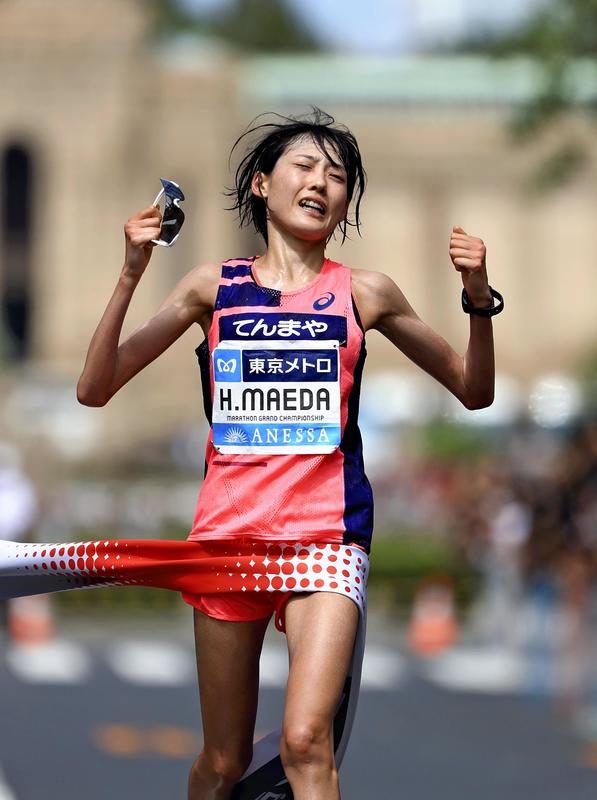
The first male athletes to be chosen for the Japan marathon team were Shogo Nakamura, who finished first at the MGC, and Yuma Hattori, who finished second. They were joined by the top female finisher at that event, Honami Maeda, and second-place finisher Ayuko Suzuki.
Suguru Osako also secured a place on the team with his performance in the Tokyo Marathon in March of this year, while Mao Ichiyama joined the women's team based on her finish in the Nagoya Women's Marathon.
The Japan Association of Athletics Federations (JAAF) has said it will not change the roster and is set to make an official decision at a meeting of its board of directors in June.
The first MGC was held in the summer of 2017. The intention was to ascertain which athletes could produce stable results over time and secure plenty of preparation time. However, plans will have to be reworked due to the postponement of the Games.
"We were working hard with an eye on this summer, so right now we're in the processing stage," said coach Yutaka Taketomi, who guided Maeda to a new Japan record for 30 kilometers in February.
Runners must participate in high-level events to maintain their competitive fire, and Nakamura is considering running in international races, including the Berlin Marathon in September. However, "those tournaments might not even be held," said his coach Tadashi Fukushima.
Numerous domestic events meant to be held this spring have also been canceled or postponed. A track race in Kumamoto Prefecture and a half-marathon in Gifu Prefecture that Hattori had planned to participate in this April have been called off.
"[The athletes] might be even stronger after two years," said Tadasu Kawano, director of long-distance races and marathons for JAAF. However, the attempt to choose athletes early so that all possible efforts could be made may end up backfiring.
Mizuki Noguchi, gold medalist in the women's marathon at the Athens Olympics, expressed her hope that the athletes would stir their fighting spirit.
"Marathons require meticulous planning, so redoing [training programs] won't be easy. But all we can do is look at the positive side and now there is more time to prepare," Noguchi said. "I think these runners made the team because they're capable of doing that."
Read more from The Japan News at https://japannews.yomiuri.co.jp/