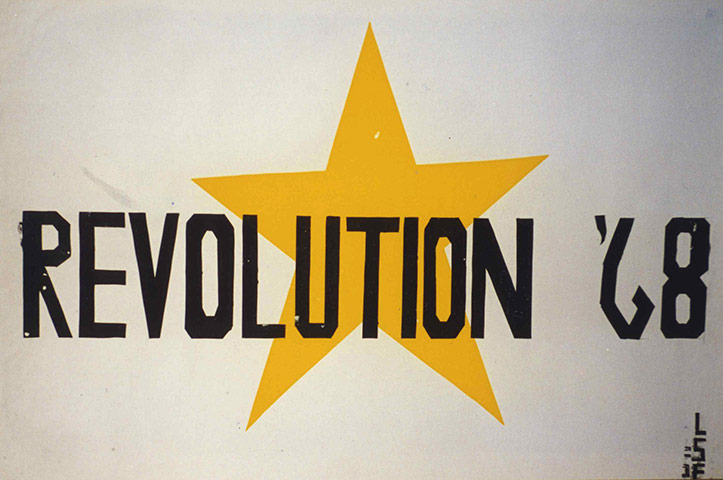
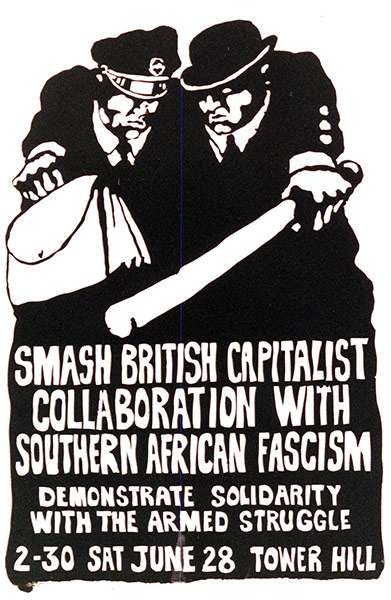
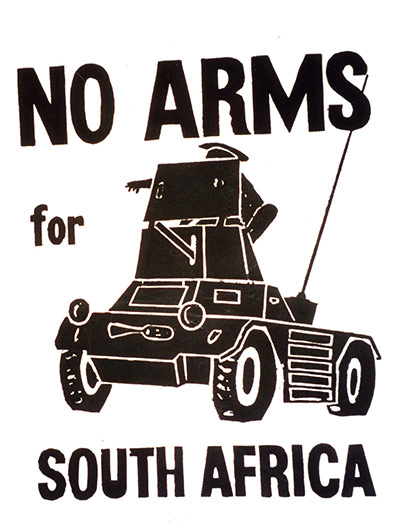
'It felt like there was going to be a revolution at any minute,' says Jo Robinson, who joined the Poster Workshop as an ex-art student.Photograph: Poster WorkshopThe posters were designed to make a clear, immediate impact with great economy. Photograph: Poster WorkshopThe Poster Workshop print in support of striking workers at the Dagenham Ford factory.Photograph: Poster Workshop
'So many movements came through, you just had to be there and you learned about all these things going on around the world,' says Poster Workshop artist Sarah Wilson.Photograph: Poster WorkshopSilkscreen protest prints became a cheap, easy, fast and capable way of delivering a powerful, graphic message.Photograph: Poster WorkshopWhen the posters served their immediate purpose, they were routinely ripped down or posted over. Photograph: Poster WorkshopUniversities were the scene of many demonstrations during the turbulent protest years of the late 60s. Some students even boycotted exams and forfeited their degrees.Photograph: Poster Workshop'Young people really didn’t have a lot of say in how their lives were run, especially at universities,' says Sarah Wilson, another art student who had been 'radicalised' by visits to Paris, Algeria and Cuba before joining the Poster Workshop.Photograph: Poster WorkshopBeing a portable operation, the Poster Workshop travelled to Northern Ireland at the start of the Troubles.Photograph: Poster WorkshopThe images are crude and unprofessional by today’s standards, but that was really the point. Everything was done by hand.Photograph: Poster WorkshopThe Brixton arm of the Black Panthers would drop round and ask for a poster demanding the release of Huey Newton, their imprisoned American leader. Photograph: Poster WorkshopProducing 200-odd posters would take a whole day – or night, if it was urgent. Photograph: Poster WorkshopAll manner of groups would turn up with requests to the Poster Workshop, from a group of draft-dodging American expatriates campaigning against the Vietnam war, to the 'Indian Marxist-Leninist Association'.Photograph: Poster Workshop‘All the printers wore gas masks because of the highly flammable solvents . . . But everyone still smoked,’ says Sarah Wilson. Photograph: Poster WorkshopTo collect or preserve the posters was against the group's ethos. As the Atelier Populaire in Paris put it: 'To use them for decorative purposes, to display them in bourgeois places of culture or to consider them as objects of aesthetic interest is to impair both their function and their effect.'Photograph: Poster Workshop
Sign up to read this article
Read news from 100’s of titles, curated specifically for you.