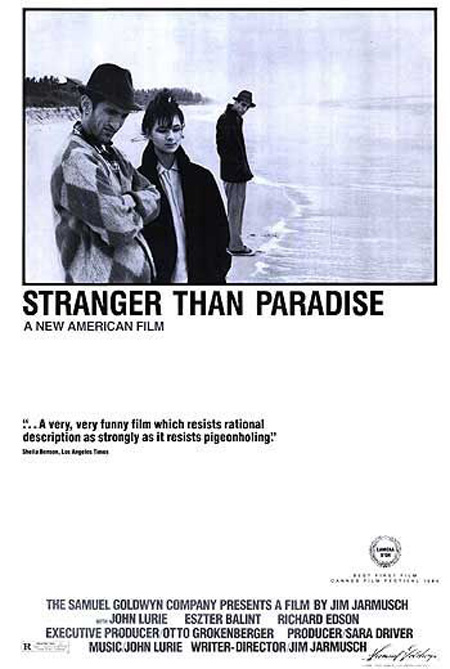
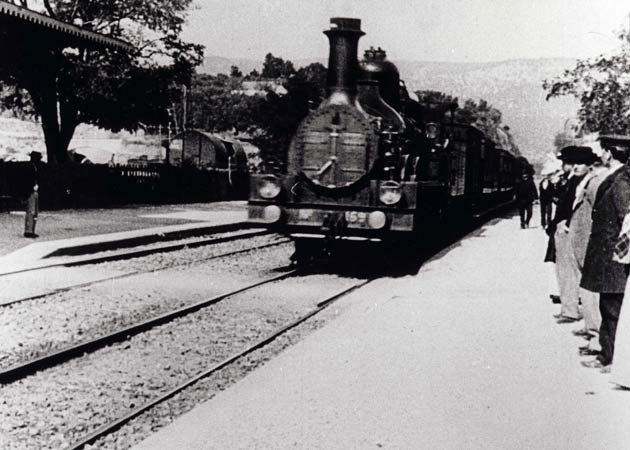
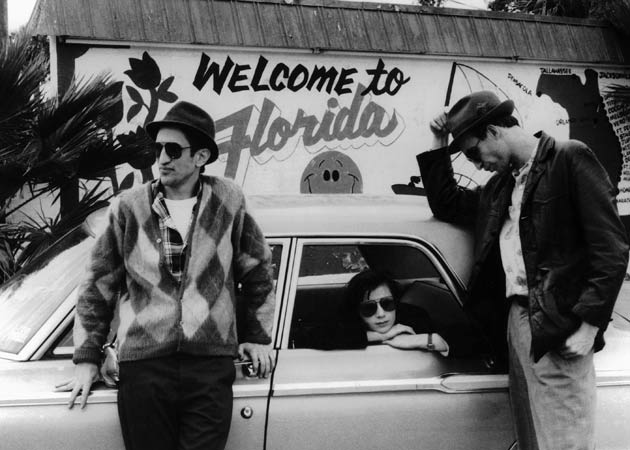
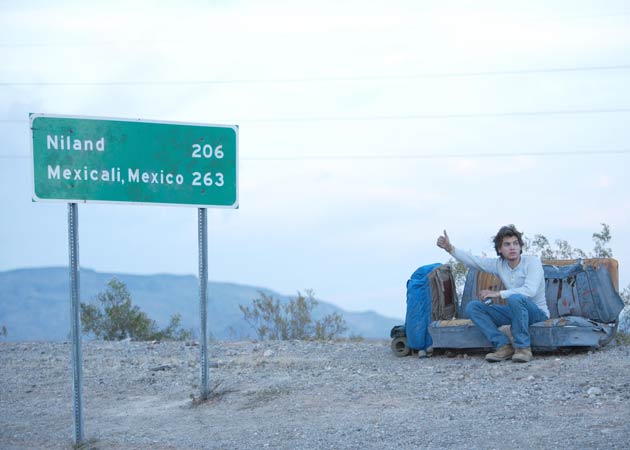
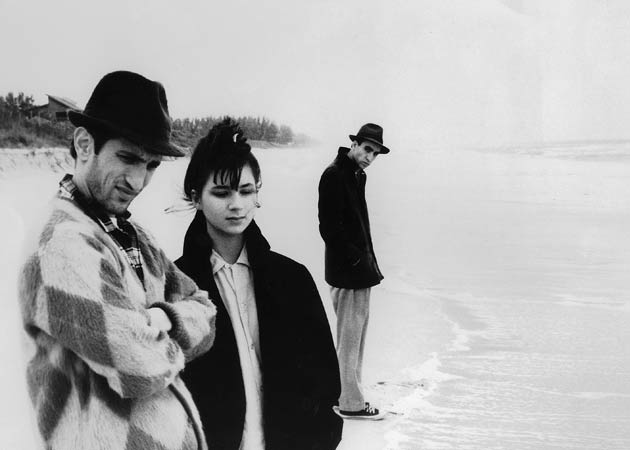
The poster for Stranger than Paradise (1984)Photograph: Public domainAt the end of the 19th century, the motorcar and cinema were developed commercially at the same time. It’s not surprising then, that mechanical motion should be a driving force right from the earliest days of cinema. The Lumiere brothers' The Arrival of a Train at La Ciotat Station (1895) terrified audiences with its realistic illusion of unstoppable momentumPhotograph: KobalIn American cinema the car chase became a staple of early cops-and-robbers films. At the turn of the century, the surge of mechanical development and the simultaneous appearance of a powerful technology of visual illusion combines to create new concepts of identity amongst the metropolitan classes.Photograph: Kobal
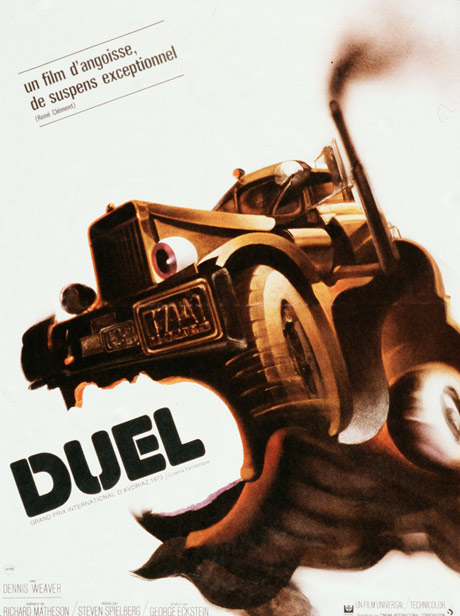
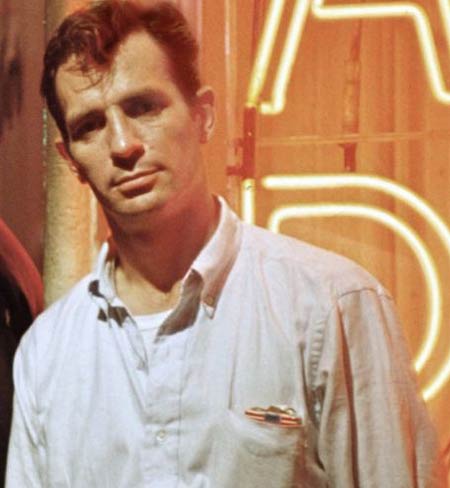
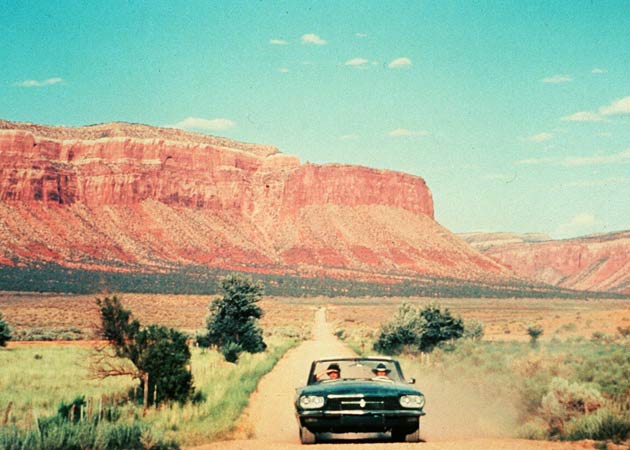
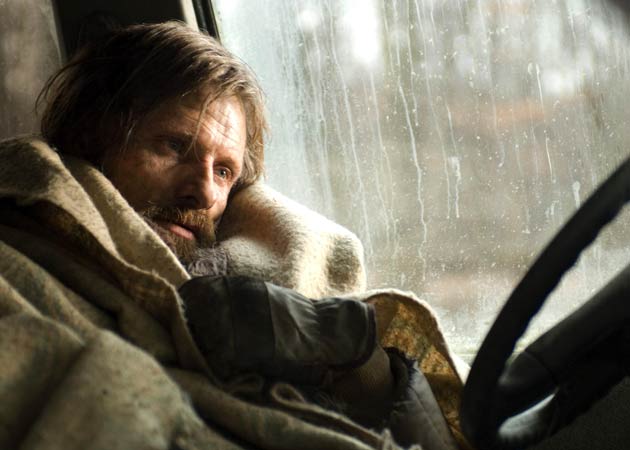
In America, the founding popular mythology of westward migration placed an additional layer of subliminal meaning on these moving images of people, machines and landscape.Photograph: KobalIn film, the road movie became an instant genre classic. The simple narrative structure of travel combined literal movement with allegorical potential. As a bonus, the cast, crew and expenses could all be kept within reasonable limits. Inevitably perhaps, Stephen Spielberg’s first feature, Duel, was a road movie with bells and whistles. Photograph: KobalBy the 1980s, a new generation of American film directors were emerging whose education had been completed in a university rather than within the industry. They combined a technical grounding with a comprehensive set of critical tools, informed by European philosophy and social sciences. Jim Jarmusch studied at Columbia university, New York, in the 1970s – an environment in which he was able to combine film school and professional work.Photograph: ReutersEventually, Jarmusch dropped out of university to work as an assistant with the German film director, Wim Wenders. Wenders had pioneered a style of film that combined erudite references with an appreciation of American film culture. Wenders, and Jarmusch after him, were able to avoid the usual referential clichés of sentiment and irony. The result was a style of deadpan delivery that undermined the usual whizz-bangery of post-modern reflection.Photograph: AFPStranger than Paradise immediately established Jarmusch as a powerful and independent voice in American cinema. The film, in three sections, follows a trail from New York to Florida, by way of Cleveland. The film is conceptualised as a serious comedy and as an allegory of the American dream as road movie.Photograph: KobalThe road, pointing west, has become the most powerful symbol of the American potential of renewal by personal emancipation and work. The sheer hard graft of travelling across the mid-western plains made heroes of all those who reached California. During the 1920s, the nascent American film industry migrated west from the Eastern seaboard to Hollywood. The Californian sunshine played a part, but so too did the space and freedom of the West and the tax advantages.Photograph: KobalIn the 1930s, another wave of westward migration was initiated by the rural poverty of the homesteaders. John Steinbeck wrote about the pain and punishment of those long journeys. But it was Jack Kerouac who conceptualised the road as an itinerary of personal discovery and linked this to the bigger myths of American identity. For the generations that followed, a trip along the great interstates became the right-of-passage into an adult world.Photograph: APSo, the road movie became a natural staple for indie cinema in America, a genre rooted in myth and folklore and, at the same time, connected to a set of ideas about technology, movement and identity - an active expression of independence. There has always been indie cinema in America. Thomas Edison defined the origins of cinema in America as fairground entertainment. In the early years, the structures of ownership within the industry supported a rich and varied output.Photograph: KobalIt was the megalomania of DW Griffiths and Cecil B de Mille that pushed early American cinema towards the industrial specialisations of the studio system and the disciplines of corporate accounting. Photograph: KobalBeyond the studio system there have been maverick producers and independent directors. During the 1950s and 1960s Roger Corman provided a steady output of low-budget films, all financially successful, that provided an education for at least two generations of actors and technicians. In the later 1960s and early 1970s, an independent American cinema began to emerge around a group of New York based directos. Jarumusch included - who, like the genre, is still going strong.Photograph: KobalThe film poster image for Stranger than Paradise includes distinct elements that communicate each of these ideas. The design is made up of a single black-and-white image with a relatively austere typographic arrangement below. The combination of sans-serif letters and black-and-white immediately suggests European sophistication. Photograph: KobalThe sans letters were first designed as a reaction to the excessive decorations of display types during the early 19th century. After the first world war, the sans letter became, in combination with asymmetric settings, the default for the new typographic expression of modernity. In England, Eric Gill and Edward Johnston designed specialised sans serif alphabets of machine composition and for London Transport. Photograph: GuardianThe large areas of white space are part of a pared-down visual culture, which may be austere but is critically informed, intelligent and not without humour. In magazine art-direction, Alexey Brodovitch pioneered the dramatic use of white space. Coincidentally, he also encouraged his photographers to abandon the studio and work in more dynamic ways. His magazine stories are characterised by a combination of economy and dynamism.Photograph: GuardianThe black and white image is intended, by association with photographic history, to be artistic and culturally significant. The sharp contrast between dark sky and white clouds is an aesthetic effect drawn from the traditions of black and white. The reference to candid, press and hand-held traditions create an image understood as more real. The contrast with the lush colour, glossy production values and special effects of Hollywood couldn’t be clearer.Photograph: KobalThe palm, dark glasses and casual style of the protagonists are combined to create an impression of a comfortable, relaxed space, as a sort of paradise. The same sort of effect was being pioneered, elsewhere and in a fashion context, by the style of easy post-punk metropolitan bohemia. The appeal of this simplicity was picked up by the fashion mainstream through Ralph Lauren, Bruce Weber and others.Photograph: Guardian
Sign up to read this article
Read news from 100’s of titles, curated specifically for you.