As the old joke goes, I love work; in fact, I could watch it all day. I suspect this is true for many of us, but the way things are going with the global economy, even opportunities to watch work may be strictly limited for some time to come. Who knows – we may all come to long for the days when we could actually find some to do ourselves.
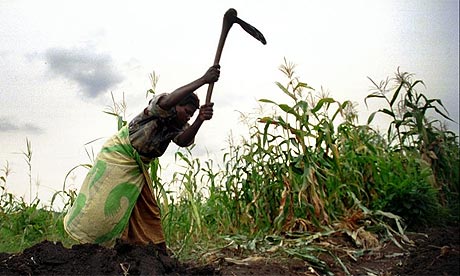
There is a long tradition of writing about the joys and sorrows of labour. In the classical world, poetry tended more towards a celebration of the former. This is an attitude that can be traced back to the Greek poet Hesiod, whose long poem Works and Days is both an exhortation to an industrious life of self-sufficiency and a practical handbook for those who wish to follow that path.
Hesiod's poem was a model for, among others, Virgil, whose Georgics also take the form, at least superficially, of a practical manual for farmers. I say superficially for two reasons. First, the four poems that comprise Virgil's work are distinctly lacking in the kind of detail necessary in a useful farmers' manual. More importantly, Virgil used the trope of the hard-working farmer in the Georgics as a kind of allegorical representation of what he felt the industrious, moral, useful citizen of the empire should be like.
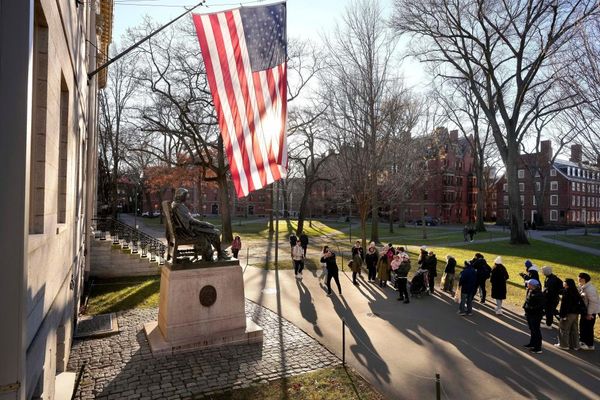
It's an approach that must surely have chimed with Walt Whitman 1,900 years later when he wrote I Hear America Singing. In this poem, Whitman celebrates work as representing everything that is good about the United States. Labour represents freedom, opportunity, individuality and everything hopeful about the American Dream.
It is salutary, then, to balance his optimism with other, less sanguine, views. Two poems that contradict Whitman are Brass Spittoons by Langston Hughes, which reflects the experiences of those at the bottom of the American work ladder, and Maya Angelou's Woman Work, which brings us into the world of those whose work is the vital, unpaid trudge of the homemaker.
In Britain, at least since the Industrial Revolution, there hasn't been a whole lot of poetry written to celebrate the glories of work; poets have seemingly been more concerned with chronicling the hardships of the labouring classes and the disintegration of their traditional communities and way of life. Two examples of this tendency – both, as it happens, from the north-east of England – are Basil Bunting's ballad of poverty and emigration, Gin the Goodwife Stint and Anne Stevenson's lament for the victims of Durham's coal-mining industry, Forgotten of the Foot.
Of course, poets have also been concerned to convince the rest of us that the making of poems is also work of a sort. Some, such as Samuel Taylor Coleridge, have seemed less than entirely convinced by the strength of their case; what are we to make of a poem on this theme called Work Without Hope, in which the poet is "the sole unbusy thing"? We need to return to an American optimist for a more upbeat view of the poet's exertions. Gary Snyder, in his I Went Into the Maverick Bar, turns his back on the workers he sees in the bar to return to what he sees as "the real work". I like the poem, but I'm not sure I can go all the way with the sentiment.
But now it's your turn to pick up the tools of this particular trade, and do some "real work" of your own. This week's challenge is for poems on the theme of work. Don't just sit there; get cracking.