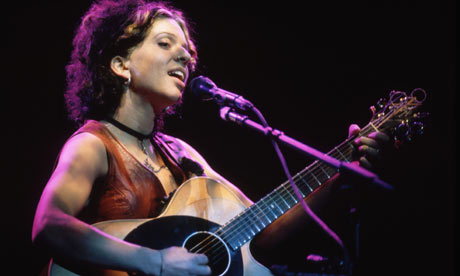
After last week's fairly open theme, I thought I'd go with something a bit more structured this time. As I type this, I'm listening to Steeleye Span and thinking about the great ballad traditions of Britain and Ireland. What is a ballad? I suppose the most inclusive definition would be that it's a singable narrative poem: that covers a multitude but will do for the moment.
Ballads in English stretch back to the middle ages, with fine examples to be found among the Scottish border ballads and the English Robin Hood poems. These early ballads are among the best-known poems and stories in the language, and form part of the common heritage of English speakers everywhere. They gave rise to a tradition of ballad-making that endures down to the present day.
In fact, most poets since have tried their hand at the ballad at one time or another, and the result has been to deny any definition more specific than the one I ventured in my first paragraph. If you look around the internet, you'll come up with a wide selection of poems that are called ballads but have little in common formally. Stanza length varies from two to 10 or more lines, and all sorts of metrical and rhyming patterns are used. A good number will be singable in only the loosest possible sense, and at times the narrative tends to get lost in a mesh of more-or-less successful verbal embroidery.
So, what should a ballad be? Well, "proper" ballad stanzas are quatrains in which the first and third lines have four stresses and the second and third have three. The lines will rhyme A-B-C-B or A-B-A-B. It's as simple, and as difficult, as that. Here's an example, from Robert Burns's extremely singable Comin Thro' the Rye:
Gin a body meet a body
Comin thro' the rye,
Gin a body kiss a body –
Need a body cry.
Burns wrote a good number of ballads, and his lead was followed by many 19th-century poets. Two examples that I particularly like are Robert Browning's Confessions and Christina Rossetti's Up-Hill, but you can find ballads by just about any Romantic or Victorian poet if you look for them.
There is a long, strong tradition of ballads and ballad singers in Ireland, too. It is hardly surprising, then, that the great appropriator of tradition, WB Yeats, tried his hand at the form. At least four of his poems have the word "ballad" in the title; the pick of the bunch, for my money, is The Ballad of Father Gilligan, which may have benefited from having been written with a specific tune in mind.
Ballads continued to be written in the 20th century; perhaps the most unexpected exponents were Ezra Pound, with his Ballad of the Goodly Fere, and WH Auden. In fact, the ballad The Quarry is probably my favourite Auden poem.
And so, this week I invite a chorus of balladeering. You may choose to go the whole hog and write in ballad stanzas or you might prefer to take a more liberal view of the formal requirements. Either way, sing up and – as they say at all the best Irish sessions when calling for a bit of hush for the singer – one voice please.