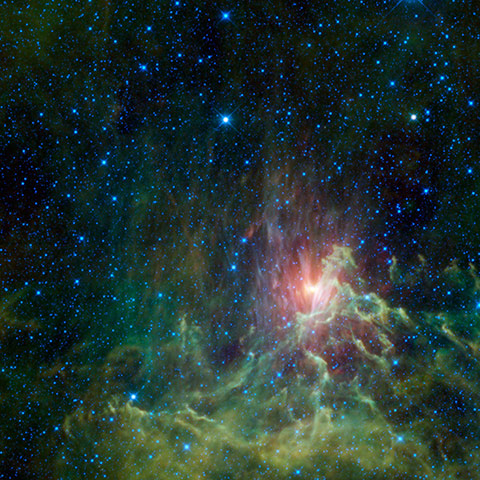
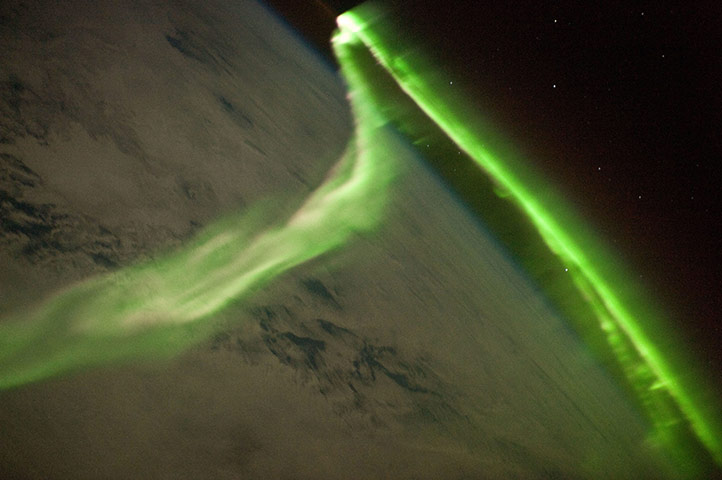
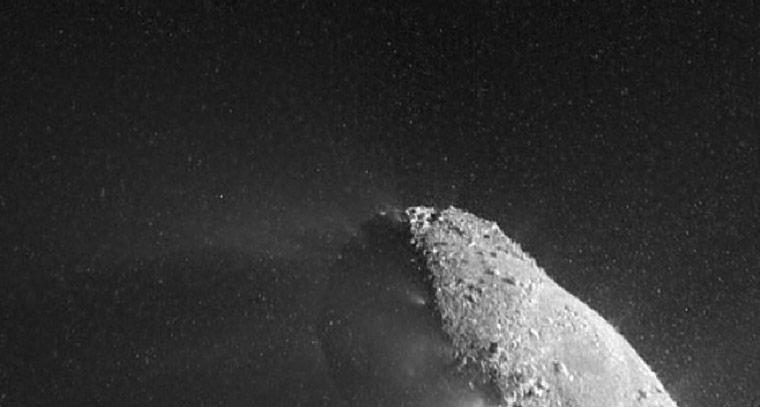
The Flaming Star nebula. Nasa's Wide-field Infrared Survey Explorer (Wise) took this image of the star AE Aurigae surrounded by a glowing cloud of gas and dustPhotograph: WISE/NasaThe aurora australis during a geomagnetic storm on 29 May 2010, as seen from the international space station. At the time the ISS was over the southern Indian Ocean at an altitude of 350 kilometres (220 miles)Photograph: Johnson Space Center/ISS/NasaA cometary snow storm surrounding the comet Hartley 2, created by carbon dioxide jets spewing out tons of ice particles. Some of the particles are as big as basketballs. The photo was taken on 4 November by the High-Resolution Instrument on Nasa's Epoxi spacecraft at its closest approach to the cometPhotograph: EPOXI/NASA/EPA
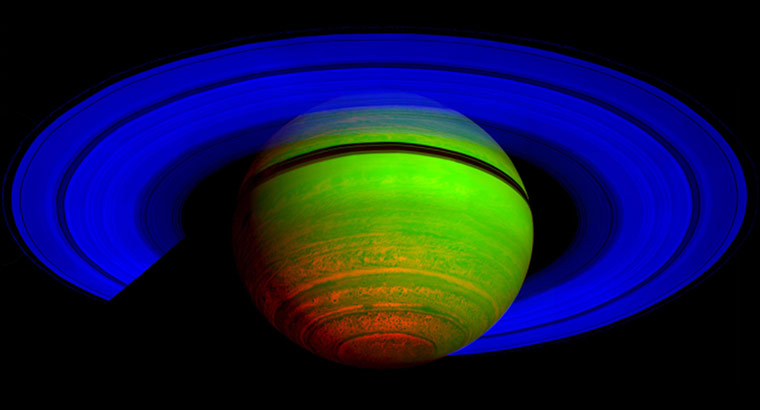
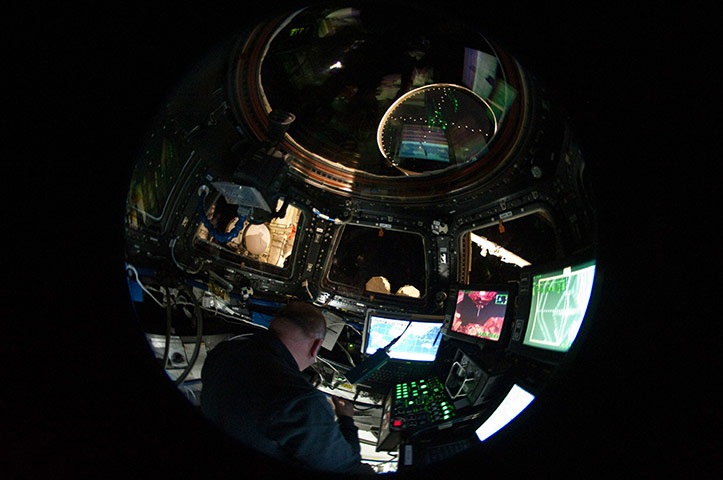
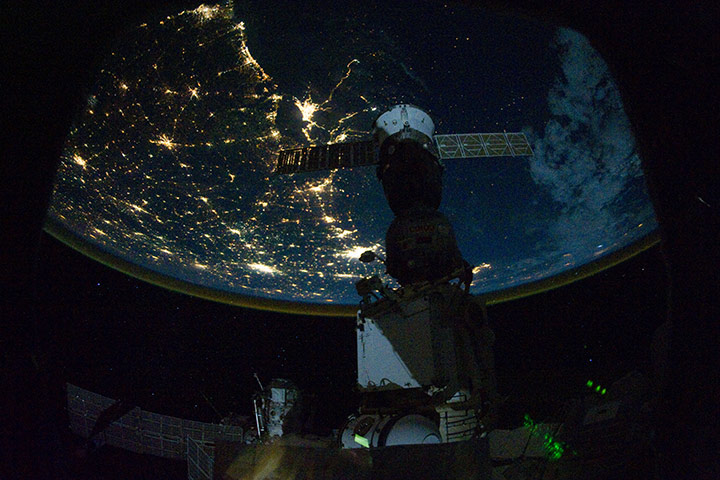
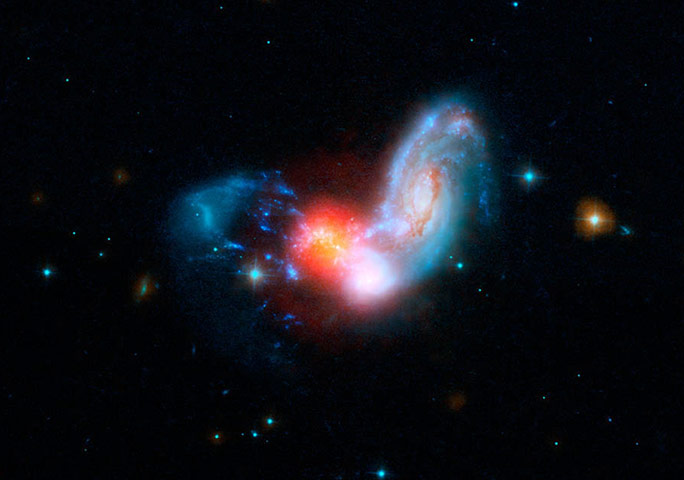
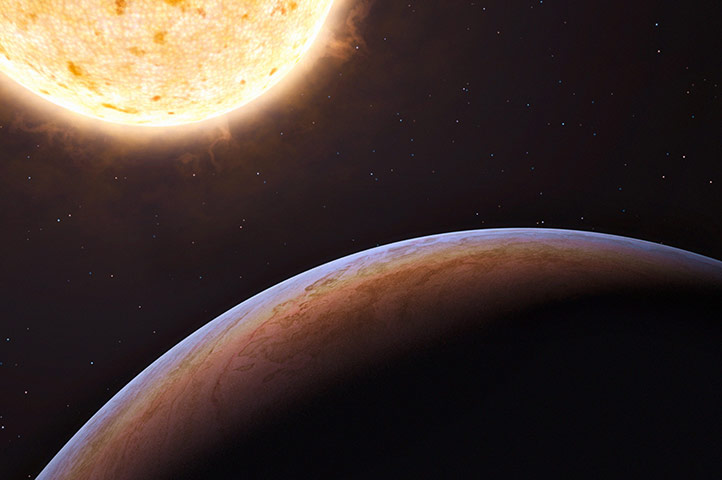
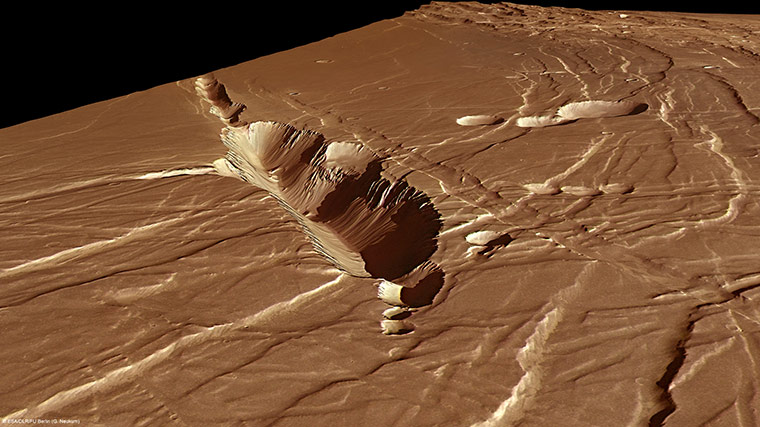
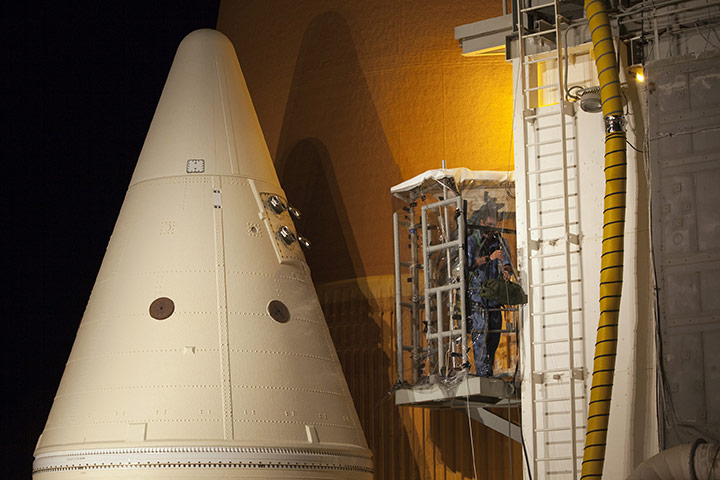
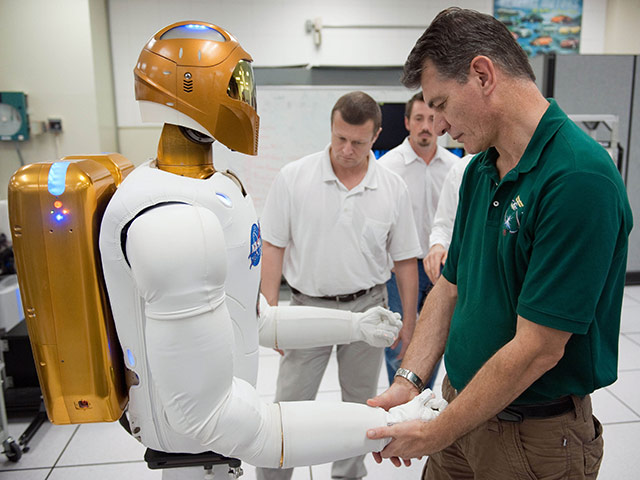
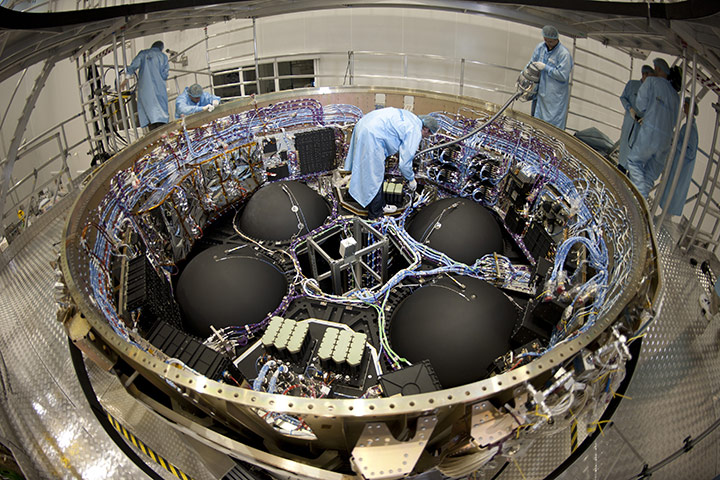
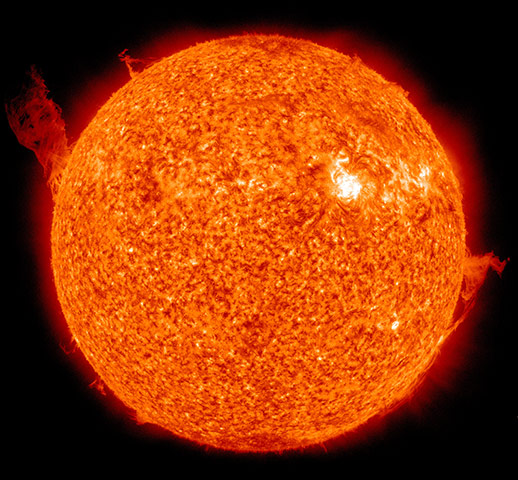
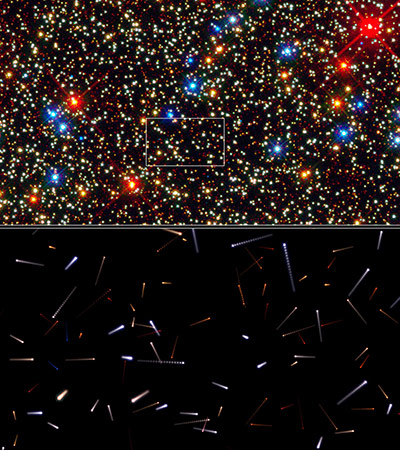
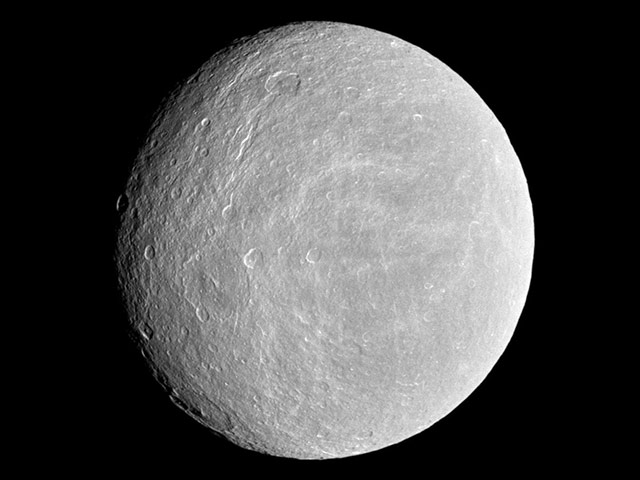
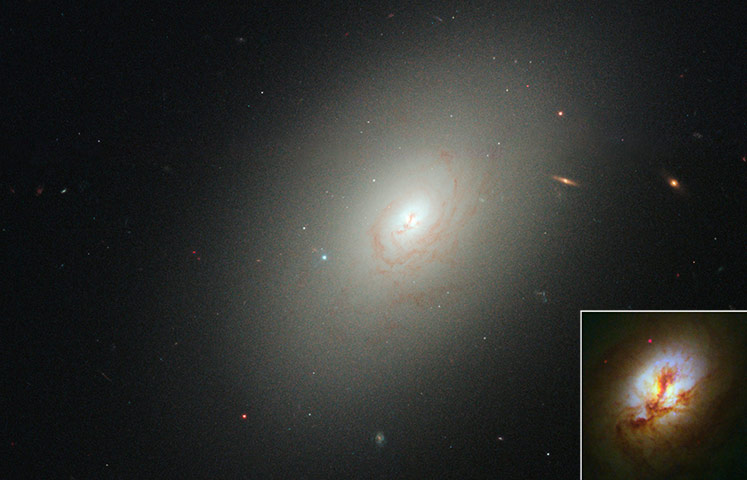
Heat from the interior of Saturn shows red in this false-colour composite image, constructed from data gathered by the Visual and Infrared Mapping Spectrometer on Nasa's Cassini spacecraftPhotograph: Cassini/NasaThe largest window in space: the Cupola observatory platform on the international space station. The circular top window is 80cm in diameter and the six side windows offer views in all directions. Cupola houses a workstation for the astronauts to control the station's robotic arm. It also serves as a control centre for supporting astronauts in other parts of the station or during spacewalksPhotograph: ESA/AFP/Getty ImagesThis night-time image of the northern Gulf coast of the US was shot by a crew member on the international space station 350 kilometres above Earth. In the foreground is one of the solar panels of a docked Russian Soyuz spacecraftPhotograph: NasaA brilliant burst of star formation is revealed in this image combining observations from Nasa's Hubble and Spitzer space telescopes. The collision of two spiral galaxies has triggered this luminous starburst, which researchers estimate is creating stars at around 100 solar masses (100 times the mass of our sun) per yearPhotograph: Spitzer Space Telescope/NasaAn artist's impression of HIP 13044 b, an exoplanet orbiting a star that entered the Milky Way from another galaxy. The Jupiter-like planet is part of a solar system that once belonged to a dwarf galaxy that was devoured by our own Milky Way galaxy. The star, HIP 13044, is nearing the end of its life and is 2,000 light years from EarthPhotograph: L. Calcada/ESO/EPAStrong volcanic activity in the Tharsis plateau of Mars created this 'collapse feature' in a region know as Phoenicis Lacus (phoenix lake). The canyon is 3 km deep and its walls offer a glimpse of what may be extensive basalt layers. Sand dunes can be seen on the canyon's floor in this image from the Mars Express missionPhotograph: G. Neukum/FU Berlin/DLR/EsaLaunch of the shuttle Discovery on its final mission to the international space station was postponed after cracks were found in 'stringers' for one of the external fuel tanks. Technicians have been surveying the tank at Nasa's Kennedy Space Center in Florida. Click here for the latest news on the delayed launchPhotograph: NasaRooky astronaut Robonaut 2 was due to ride to the ISS on the final flight of the space shuttle Discovery. R2 is pictured here undergoing a familiarisation session with the human astronautsPhotograph: James Blair/Nasa/JSCThe Johannes Kepler automated transfer vehicle at Europe's spaceport in Kourou, French Guiana. Johannes Kepler, scheduled for launch on 15 February 2011, is the second European ATV built to resupply the international space station Photograph: Stephane Corvaja/EsaImaging the sun in extreme ultraviolet light, the Solar Dynamics Observatory recorded a swirling mass of plasma (right) that kept spinning above the star's surface for more than two days (27-28 October). A shorter-lived prominence also rose up and blew away into space near the upper left edge of the Sun. View a video of the activityPhotograph: SDOThe Wide Field Camera 3 aboard Nasa's Hubble Space Telescope captured the central region of the giant globular cluster Omega Centauri. All the stars in the image are moving in random directions. Astronomers used Hubble to measure stars' positions in 2002 and 2006 and from these predicted their future trajectory. The lower image charts the future positions of the stars in the box above. Each streak represents the motion of the star over the next 600 years, with consecutive dots representing 30 years' motionPhotograph: Hubble Telescope/Nasa/EsaNasa revealed that a spacecraft had tasted oxygen in the atmosphere of another world for the first time. The Cassini space probe detected the gas as it flew over Saturn's moon Rhea at an altitude of 97 kilometres in March this yearPhotograph: Cassini/NasaThese images from Hubble reveal star birth in the ageing elliptical galaxy NGC 4150 about 44 million light-years away. The images combine observations taken in visible and near-ultraviolet light with Hubble's Wide Field Camera 3. Ultraviolet light traces the glow of young stars. The blue areas are young stars less than a billion years old. The dark strands of dust in the centre are tentative evidence of a recent galactic merger, which may have breathed new life into the old galaxyPhotograph: Nasa/Esa'Gamma ray bubbles' snapped by the Fermi Gamma-ray Space Telescope. The bubbles, which extend above and below the plane of the Milky Way, may have originated from the black hole at the centre of the galaxy. Hints of the bubbles' edges were first observed in X-rays (blue) by the German telescope ROSAT in the 1990s. View an annotated version of this imagePhotograph: Nasa
Sign up to read this article
Read news from 100’s of titles, curated specifically for you.