
Glasgow’s George Square, one of the most vibrant gathering points during last year’s referendum campaign, when it was often awash with Saltires, was surprisingly subdued on Friday.
In the aftermath of Labour’s near wipeout north of the English border there were few signs of celebration, just people going to work as usual or sitting on benches enjoying a rare sunny day.
Yet it was far from business as usual. Although Scotland might look as it did the day before, it has become a very different country. A psychological change has taken place, part of a process that began with the referendum and has been reinforced by the Scottish National party’s general election triumph. The thought of independence no longer alarms.
A Glasgow teacher, Victor Cannon, said that looking around the square it was obviously subdued but people were happy. Why no exuberant celebrations? He was pleased about the SNP’s 56 MPs but this had to be balanced against sadness over the Conservatives winning a majority.
“I think we are a step closer to independence,” said Cannon, who is from Motherwell, a former Labour supporter who voted SNP. “We might be a step closer to federalism.” If it was a choice between independence or federalism? He did not hesitate: “Independence. But I would take federalism.”
Scotland has shifted a long way over the past 20 years when Labour’s then shadow Scottish secretary, now Lord Robertson, confidently – and, at least at this juncture, wrongly – predicted that “devolution will kill nationalism stone dead”.
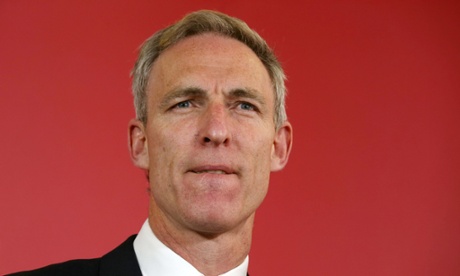
Labour, with 41 of Scotland’s 59 seats in 2010, has just one left standing. Labour politicians talked about being “stunned” and “befuddled”, and of “a cold bitter morning”. The mood at the party’s headquarters in Bath Street, Glasgow, was beyond grim. Scottish Labour’s leader, Jim Murphy, could not do otherwise than admit the outcome had been catastrophic.
Reporters looked on bemused when he began quoting a passage from the East German socialist poet Ernst Toller about “it not being seemly to mourn”, but otherwise it was an admirably frank press conference, free at last of the platitudes and cliches that have too often been the norm in Labour’s campaign.
“We have been overwhelmed by history and circumstance,” said Murphy, who lost his Renfrewshire East seat. He is now a leader with a presence at neither Westminster nor the Scottish parliament. He made absolutely no attempt to try to find anything positive to say about the result, a sensible option given the scale of his own defeat and that of his battered party. “We know it is bloody awful for the Labour party in Scotland,” he said.
Why has it all gone wrong for Labour north of the border? A straw poll in George Square repeatedly threw up people who had been Labour supporters but switched to the SNP. Some cited dislike of Blair and New Labour, and the Iraq war. Others reflected an anti-Westminster, anti-austerity mood, distrust of Ed Miliband, the poor quality of some Labour politicians at Westminster and Holyrood. A recurring theme was the numbers brought into politics and energised by the referendum campaign.
Another Glasgow teacher, William Brown, from Irvine, said he gave up on Labour in 2004 because of the Iraq war and joined the SNP last year during the referendum. He had not been active in politics until then but threw himself into campaigning for independence. Asked why the square seemed quiet, he said: “I am a glass half-empty person. I think it is fantastic what the SNP has achieved but the Conservatives have achieved a majority so that does not leave me in a party mood.”
The SNP celebrations in the early hours of Friday morning at count after count tended to be low-key, with little sign of gloating, in spite of the decades-long rivalry between the SNP and Labour, one that is much fiercer and heartfelt than the Labour-Conservative divide in England.
When the SNP’s youngest candidate, Mhairi Black, beat Labour heavyweight Douglas Alexander in Paisley, the presiding officer at the count only managed to get out the start of her vote, saying “twenty three thousand … ”, before the rest was lost in cheering, knowing she had won.
But otherwise she and the other winning SNP candidates maintained discipline, basically repeating the same message in interview after interview about the SNP promoting “progressive politics”, and opposition to austerity and renewal of Trident. Asked how she would celebrate, Black said she was going home to sleep and then have breakfast. Other new SNP MPs were making plans to hold their own victory parties throughout Glasgow over the weekend, but, it seemed, relatively quiet ones.

While people in the square expressed unhappiness with David Cameron’s victory, the Conservatives in power could well turn out to be a boon for the SNP, driving even more voters into the SNP and independence camp.
It is hard to see where Labour is to begin to win back former voters, at least in the near future. Murphy suggested next year’s election to the Scottish parliament election, where Labour has 38 members and where the absence of first-past-the post almost guarantees it will retain a presence.
One of Labour’s immediate problems in Scotland was that the SNP proved sharper at articulating its policies and in presenting itself to the left of Labour. One of Labour’s MSPs, Hugh Henry, a former education minister in the Scottish government, acknowledged that the party had failed to connect with the aspirations of ordinary working people, its traditional role usurped by the SNP. “Labour needs to rediscover its values, its purpose and its soul,” said Henry.
But Labour’s resurrection in Scotland, if it happens at all, could be a long time coming. It is in danger of losing – may already have lost – a generation. Louise Honeyman, a 17-year-old from Alloa, was in her graduation gown near the square, having completed a course in childcare before going on, she hopes, to university.
She is too young to vote but if she could have, she would have voted SNP. She did not stay up for the vote but heard about the results in the morning on Facebook, where a lot of her friends said they had voted SNP and were happy with the outcome. “Scotland does not feel different today,” she said. “But it will in the future. Independence? I hope so.”






.jpg?w=600)



