Labor has nominated political novice Daniel Repacholi as its candidate for the Division of Hunter in the next federal election.
The justification, as told by local MP Joel Fitzgibbon and party leader Anthony Albanese, is that Repacholi is a grass roots guy, a good bloke, a family man, a trophy-winning pistol shooter, was once a coal miner, and manages a local branch of a successful company. In his small number of public interviews, Repacholi has emphasised his support for the coal industry and his desire to press for better post-school training for local kids.
No doubt, Repacholi is developing a more elaborate pitch to the electorate. Maybe this piece can help his deliberations.
Let's do coal briefly. The last census found that coal mining employed only 9 per cent of the Division of Hunter's workforce (fact checkers: that's 5882 in coal mining from a total of 65,231 employed people).
Sure the coal sector generates significant multiplier effects across the region. But the Hunter electorate and its region host a vastly more diverse economy than Fitzgibbon and Repacholi acknowledge.
Moreover, this economy is changing in significant ways. The future of workers and families in the electorate actually looks bright.
Post-coal, Hunter won't be a struggling industrial backwater. Indeed, there is much to suggest that the quicker the exit from coal the better the regional economy will be. How so?
The Hunter electorate - stretching 150kms from Wyee to Muswellbrook - has two great advantages. One is location, the other is amenity.
Amenity attracts visitors and new settlers.
Singleton, in the heart of the electorate is only two and a half hours drive from the centre of global Sydney. All around the world quality rural areas are targeted by investors so long as they are only a few hours from a genuinely global city with an international airport, and with access to a regional city with an airport and a research university.
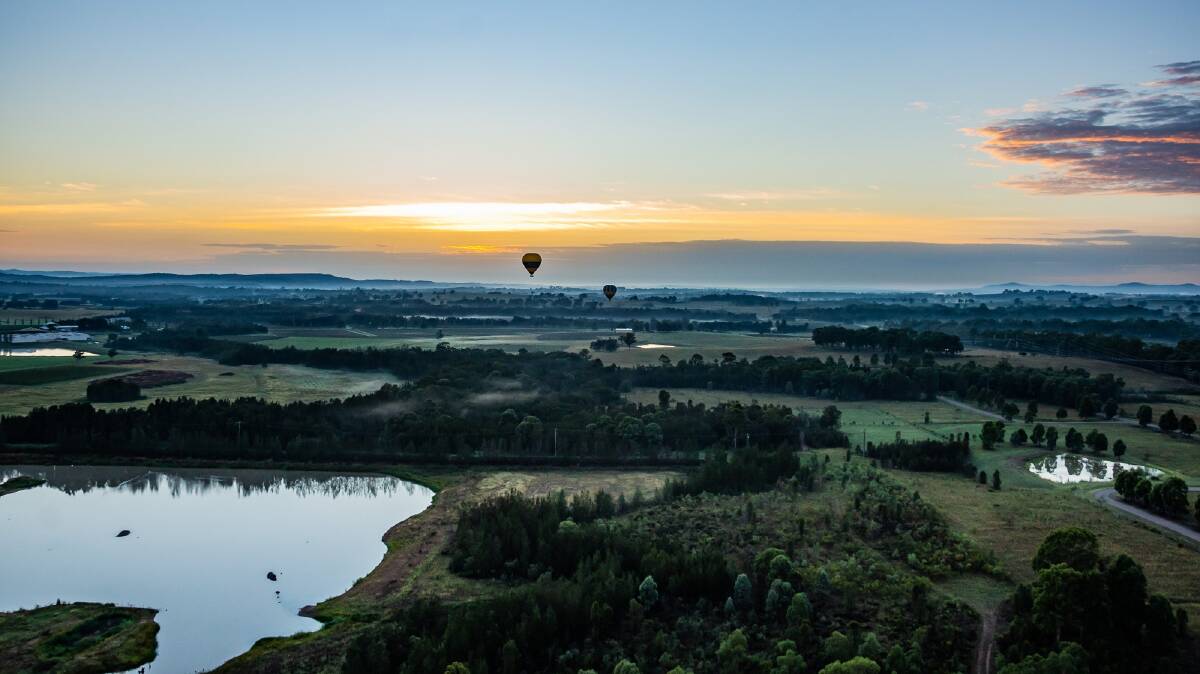
Then there is amenity, a region's seemingly unalterable attributes, top-grade outdoor spaces, beaches, lakes, national parks, wine districts, in stunning settings. The Hunter has all of these.
The rise of the amenity regions can be seen in the rural areas across Spain, Italy and France and in parts of the UK and Ireland. Farming communities are rejuvenated with city money. Local villages rediscover their service functions. Destination restaurants bring tourist dollars.
The amenity region is Westchester County outside of New York City, along the coast from Wellington and Auckland in New Zealand, in the valleys north of Melbourne and down into the Mornington Peninsular, south from Perth to Margaret River. Geographers call all of this rural gentrification.
I recall having an ale in a village in the Chilterns, a couple of hours west from London. My boss makes more money from maintaining turfed riding trails through his property than from growing barley, my drinking buddy laughed. Rural gentrification keeps him in work.
Amenity attracts visitors. But it also attracts new settlers.
Amenity migrants aren't new to the Hunter electorate. The rise of the stockbroker in the 1980s saw Pitt Street farmers buy up Hunter cattle stations and family vineyards.
The equestrian industry followed, the Hunter offering easy access for satellite stallions and their international owners, excellent pastureland, and a rural backdrop to enthuse a punter in search of the next Winx or Redzel.
Likewise, the Hunter's wine industry has intensified its amenity offerings. Local wine remains Pokolbin's backbone. Local jobs growth, however, is in hospitality, restaurants, weddings, golf, beauty spas and the like. Miners' cottages in coalfields villages re-birth as Airbnbs.
And, on the back of exploding capital gains in metropolitan property, investment dollars are flowing into the Hunter electorate seeking competitive returns from land and amenity assets as the regional economy transforms. A virtuous cycle looms.
Post-COVID, young professionals now conjure ways of working for their Sydney salaries, in shorts, from a Hunter verandah with a view.
The Hunter needs to land this next wave of transformation. Building a lively arts scene and rebuilding local towns as funky places for permanent young residents are essentials.
There is a barrier to youthful transformation, however, a reputational flaw in the Hunter's makeup, a clash with the values of the next generation.
Mr Repacholi, the barrier is called 'coal'.