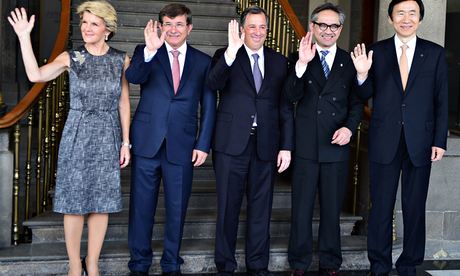
World leaders, diplomats, NGOs, thinktanks and representatives from business meet in Mexico this week to discuss whether the global partnership to eradicate poverty through better international cooperation, created in Busan three years ago, has done enough since its inception.
Already there has been pessimism over whether the meeting with achieve anything. Last week, Jonathan Glennie argued that competing UN and OECD partnerships could negate attempts to improve aid effectiveness and development cooperation. But Helder da Costa said patience was the order of the day.
We'll be reporting from the conference in Mexico City.
Elsewhere on the site
Sierra Leone tax breaks put foreign investment ahead of poor, say NGOs
Syria's children need guaranteed funding to prevent a 'lost generation'
Justine Greening: global humanitarian aid system is near breaking point
El Salvador groups accuse Pacific Rim of 'assault on democratic governance'
Humanitarian news agency faces closure as UN funding comes to an end
On the blog
Jonathan Glennie: Colombian democracy took a backward leap with ousting of Bogotá mayor
Claire Provost: Rwanda: a puzzling tale of growth and political repression
Mónica Arango: Reproductive rights and wrongs: how discrimination blights maternity care
World library
The best books on Somalia: start your reading here
Multimedia
• Video: Awra Amba: an Ethiopian utopia?
• Interactive: Rwanda stories – tales of hope emerge from shadow of genocide
• In pictures: Ebola experts in west Africa battle to stem deadly outbreak
Coming up
We meet the women in El Salvador who are challenging the state's stance on abortion.
Lawrence Haddad asks whether UK development policy is fit for purpose.
We report from Ethiopia on the villagisation scheme that isn't working on the ground.
And watch out for the next Global development podcast, which this month looks at the impact of air pollution.
What you said: this week's top reader comment
On our article exploring why Lebanon's bill on domestic violence fails to tackle marital rape, timetorise wrote:
Making any law is immaterial if the laws aren't implemented. The countries who do have these laws, do not implement them. I think every country should have this law in place, I also think it's time the legal systems were examined and changed to allow victims to use them. Spousal rape is abhorrent and without doubt the worst form of rape. This heinous act is inflicted by violent misogynist men, who the woman has trusted. This is domestic violence at it's [sic] worst. The lack of acknowledgement that this crime is committed, and lack of empathy towards victims, is a disgrace in every society.
Highlight from the blogosphere
Janine Mendes-Franco, on GlobalVoices: Exploring Trinidad and Tobago's Digital Divide
And finally …
Poverty matters will return in two weeks with another roundup of the latest news and comment. In the meantime, keep up to date on the Global development website. Follow @gdndevelopment and the team – @swajones, @ClaireProvost and @LizFordGuardian – on Twitter, and join Guardian Global development on Facebook.