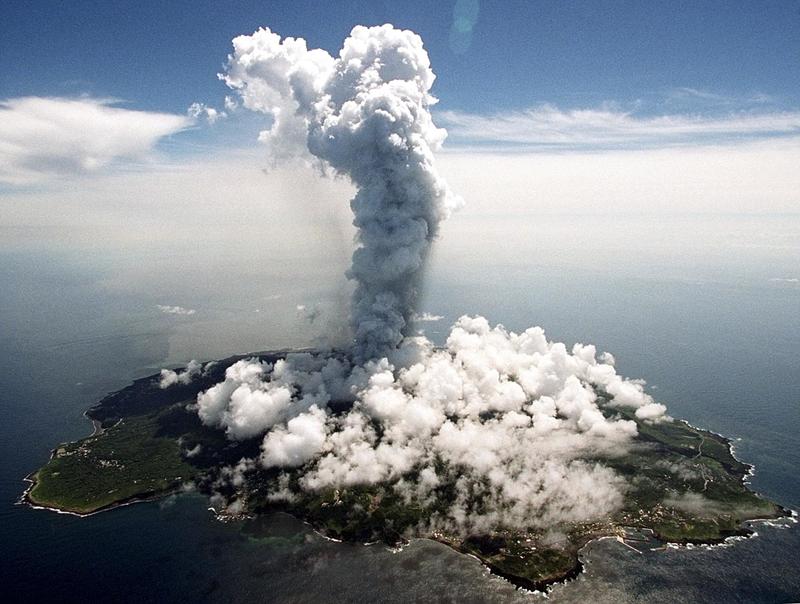
Miyakejima island is itself a volcano that has erupted repeatedly at intervals of about 20 years since the Showa era (1926-1989). In the most recent eruption in 2000, there was an increase in volcanic earthquakes starting in June and small eruptions of Mt. Oyama in the center of the island started in July. A massive eruption occurred on Aug. 18, with its plume reaching 14,000 meters into the air.
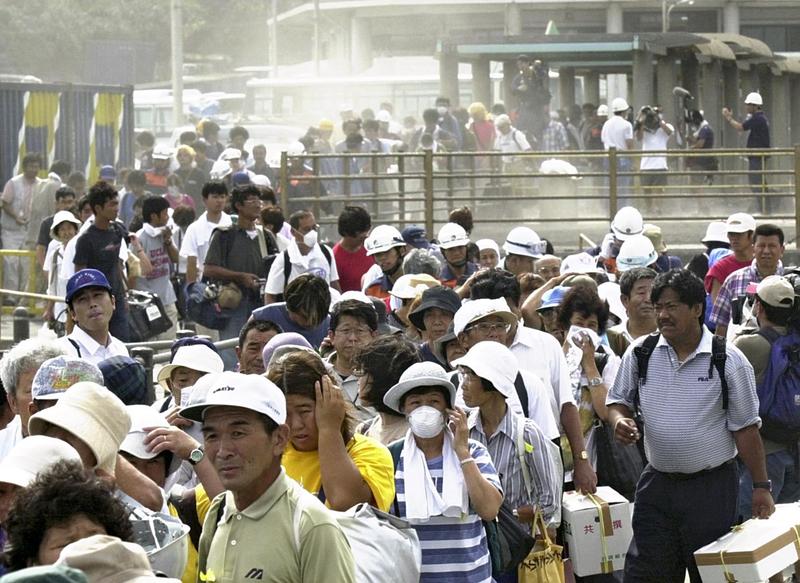
Due to the possibility of more large-scale eruptions and pyroclastic flows, the local government of Miyakejima issued an evacuation order on Sept. 2 for the about 3,800 residents of the island. The islanders left by ship over three days through Sept. 4.
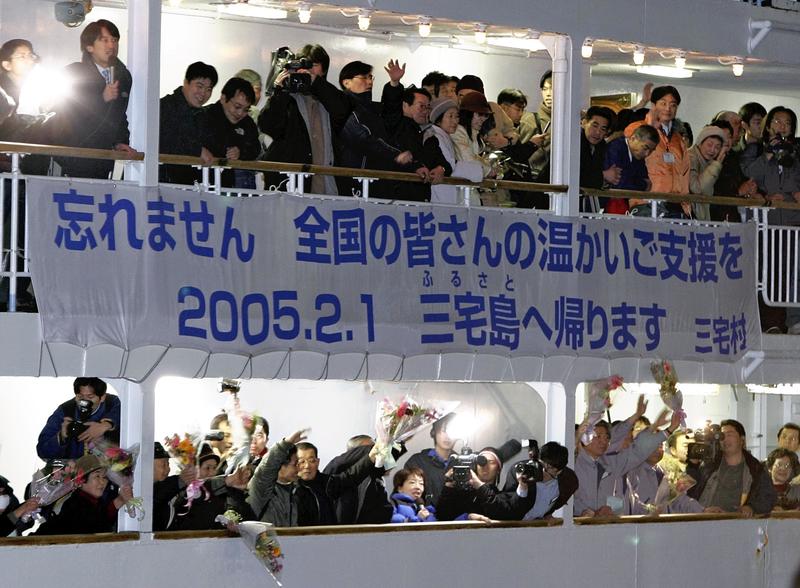
Many of the islanders spent four years and five months in evacuation centers, including in apartments owned by the Tokyo metropolitan government. The village on the island set up a system for monitoring the toxic volcanic gas emitted from the volcano and implemented evacuation measures. In February 2005, the evacuation instruction was lifted. However, the concentration of volcanic gas in some areas was so high that living in or accessing nearly half of the island was restricted.
Later, as volcanic activity calmed down and the concentration of volcanic gas dropped, the restrictions on residency were gradually lifted in each area. In June 2015, the Japan Meteorological Agency lowered the volcanic alert level from 2 (Do not approach the crater) to 1 (Potential for increased activity). In September of the same year, restrictions were lifted on residency in areas around Miyakejima Airport and the Okigataira area, where the village government office was located before the eruption. All residency restrictions that had been in place for more than a decade after islanders began returning to the island were lifted.
According to the village, the population as of Aug. 1 this year was 2,400, which is only about 60% of the number 20 years before. During the same period, the population aged rapidly, with the percentage of people aged 65 years and older rising from 29% to 39%.
The island's main industry of tourism has been sluggish due to a decline in the number of minshuku guest houses and the rise of cheap overseas travel, and the annual number of tourists has dropped by half since before the eruption. The village has developed new tourism resources in the form of bird-watching, fishing and diving, as well as viewing the natural scenery created by the volcano. However, due to the coronavirus outbreak, the lifting of a ban on tours around the crater, which had been planned for April this year, was postponed.
Read more from The Japan News at https://japannews.yomiuri.co.jp/